

Analytical Engine
The Analytical Engine was a proposed mechanical general-purpose computer designed by English mathematician and computer pioneer Charles Babbage....
Explore artifactDiscover artifacts, instruments and engineered systems through the same twelve fields as our History directory.
Printing & Information Machines · 27 entries
The Analytical Engine was a proposed mechanical general-purpose computer designed by English mathematician and computer pioneer Charles Babbage....
Explore artifact
A telegraph is a device for transmitting and receiving messages over long distances, i.e., for telegraphy. The word telegraph alone now generally...
Explore artifact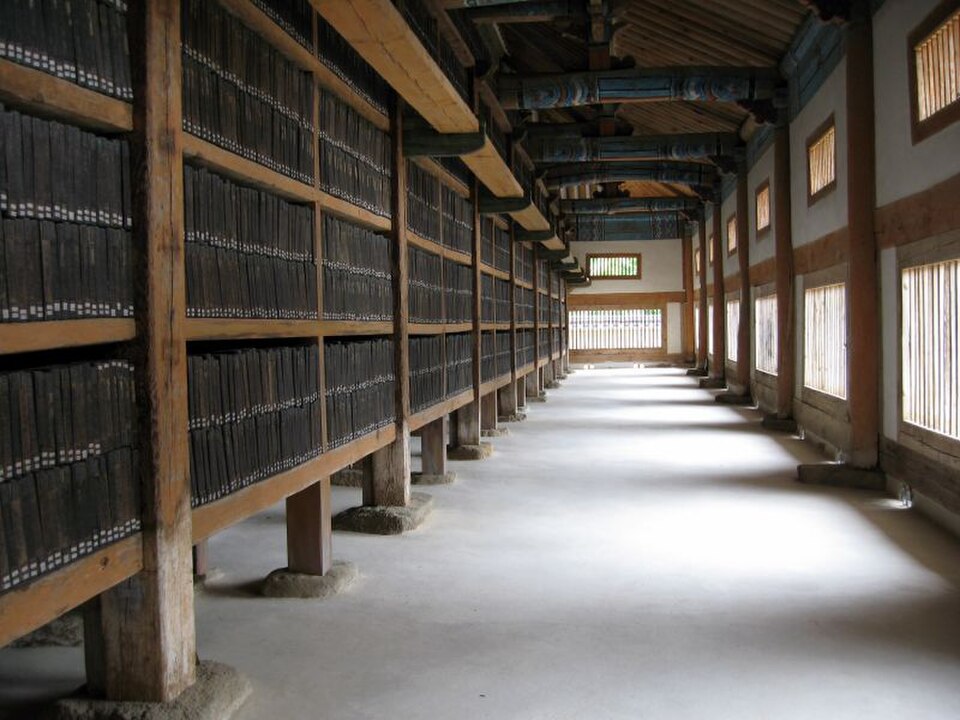
A woodblock printing block carries a reversed image or text carved in relief. Ink on the raised surface transfers to paper or fabric, allowing th...
Explore artifact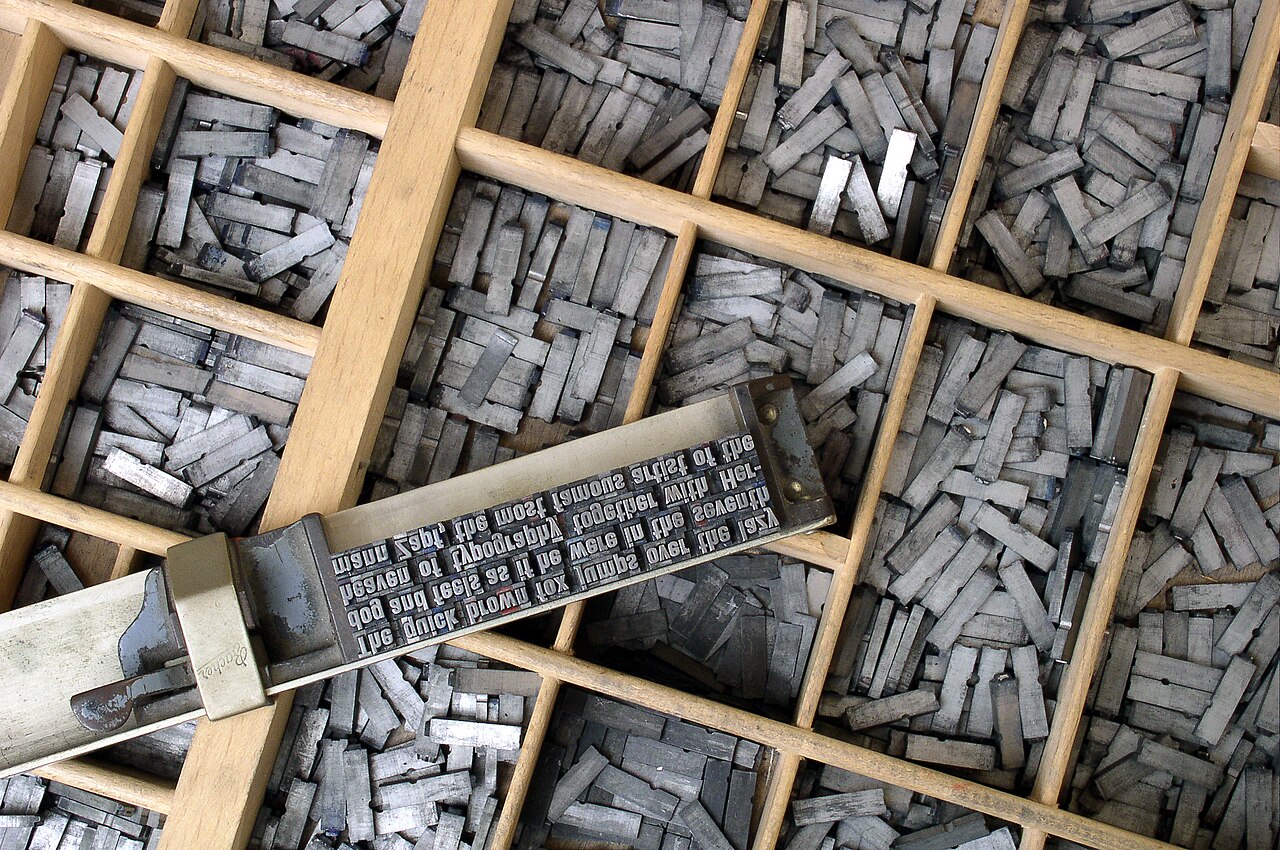
Movable type uses separate reusable pieces for characters or letters. Composing those pieces into a printing surface made it possible to rearrang...
Explore artifact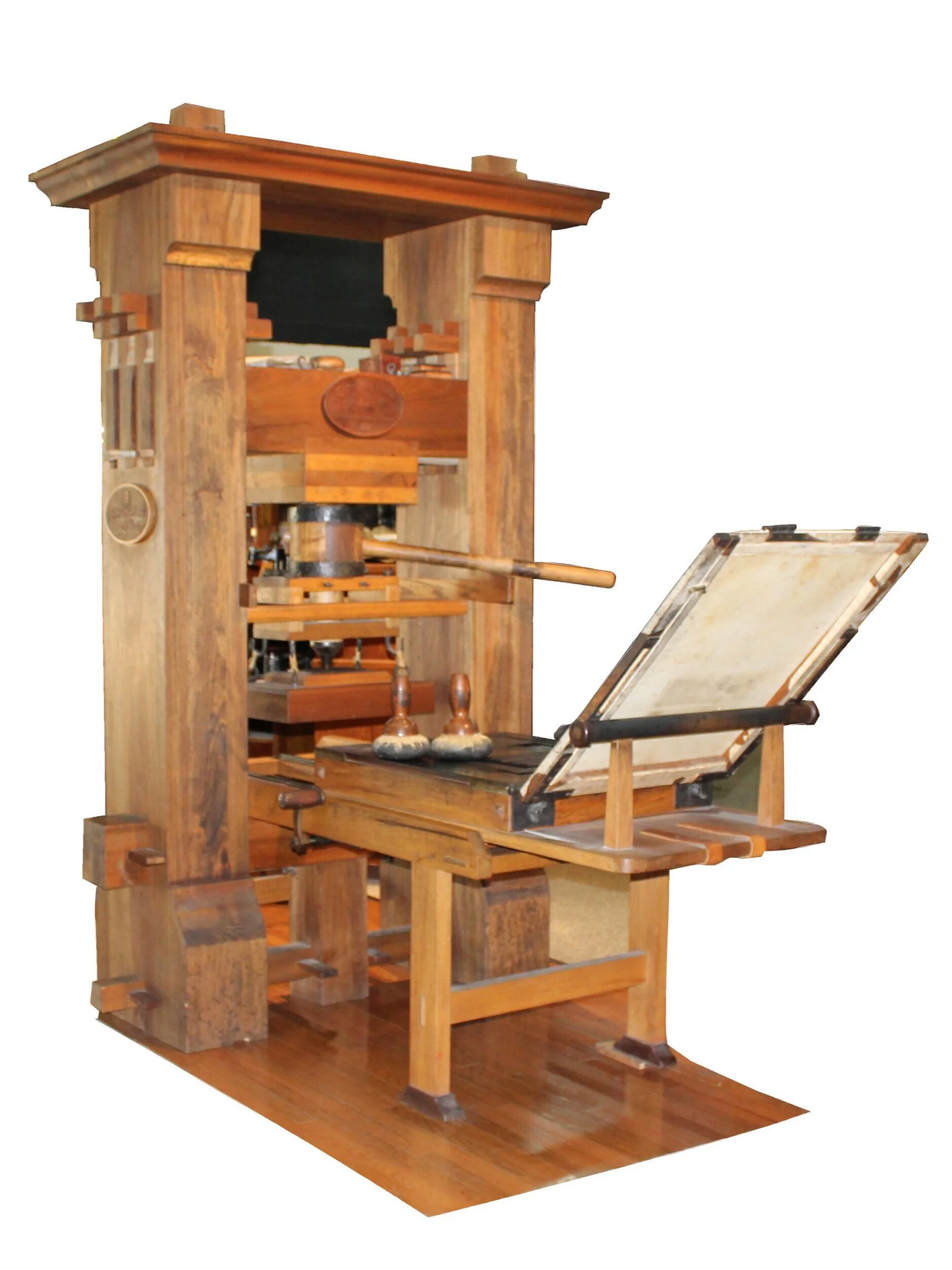
The press associated with Johannes Gutenberg combined movable metal type with a screw-operated impression mechanism. Its system of type preparati...
Explore artifact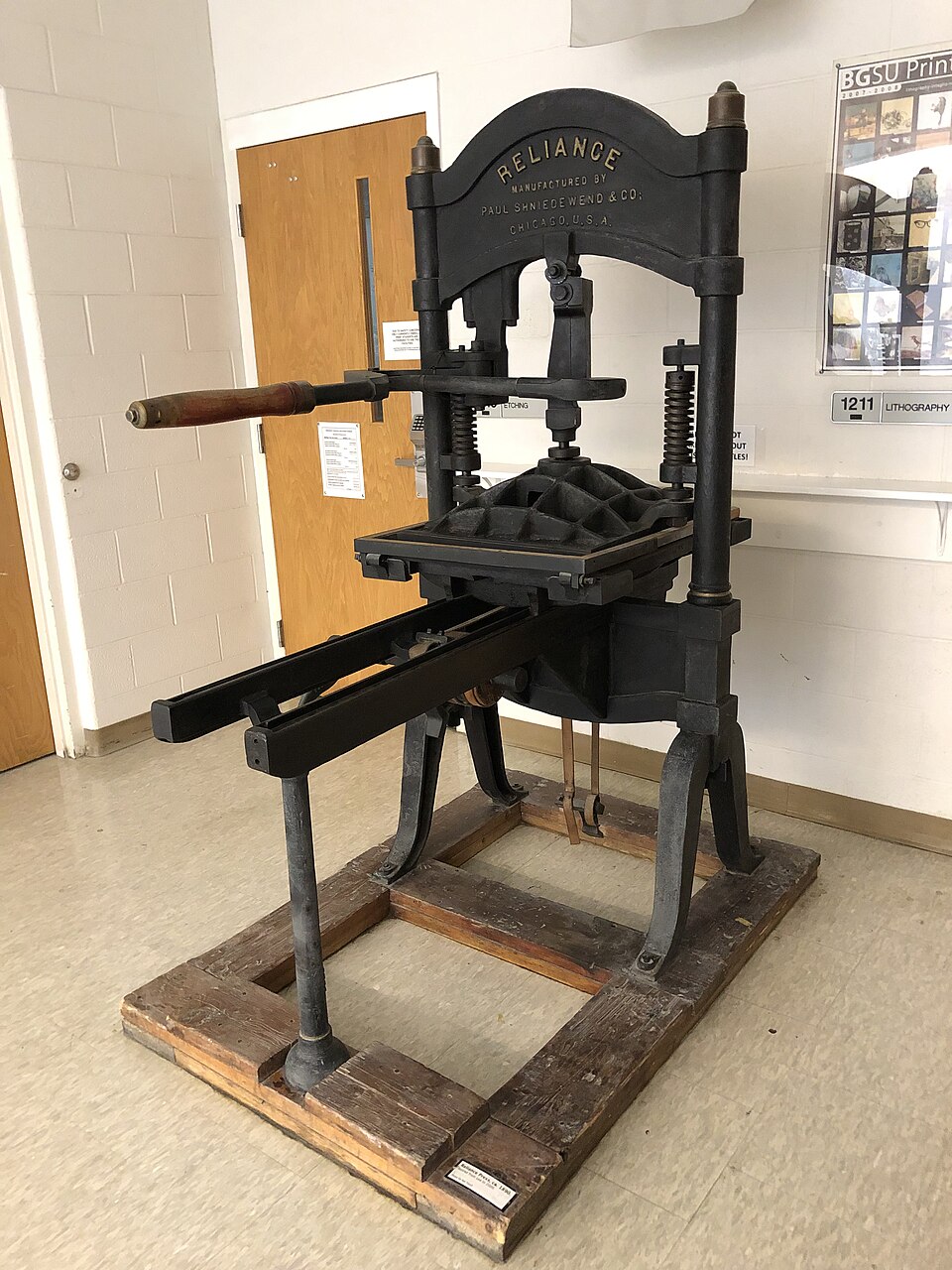
A printing press applies controlled pressure to transfer ink from a prepared surface onto a sheet. Wooden screw presses developed into iron, powe...
Explore artifact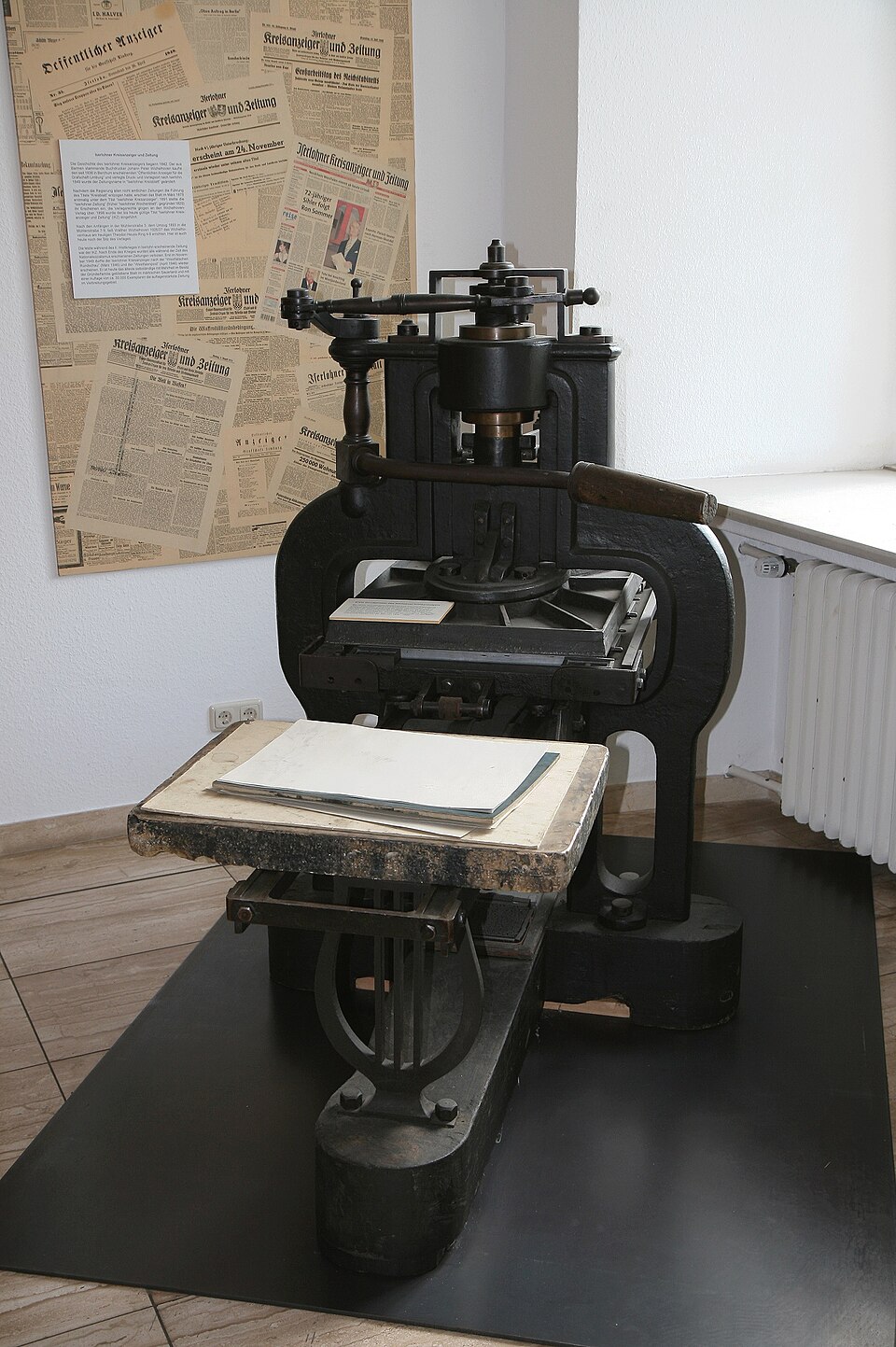
The Stanhope press used an iron frame and compound levers to produce a strong impression. Its construction helped printing move beyond the limita...
Explore artifact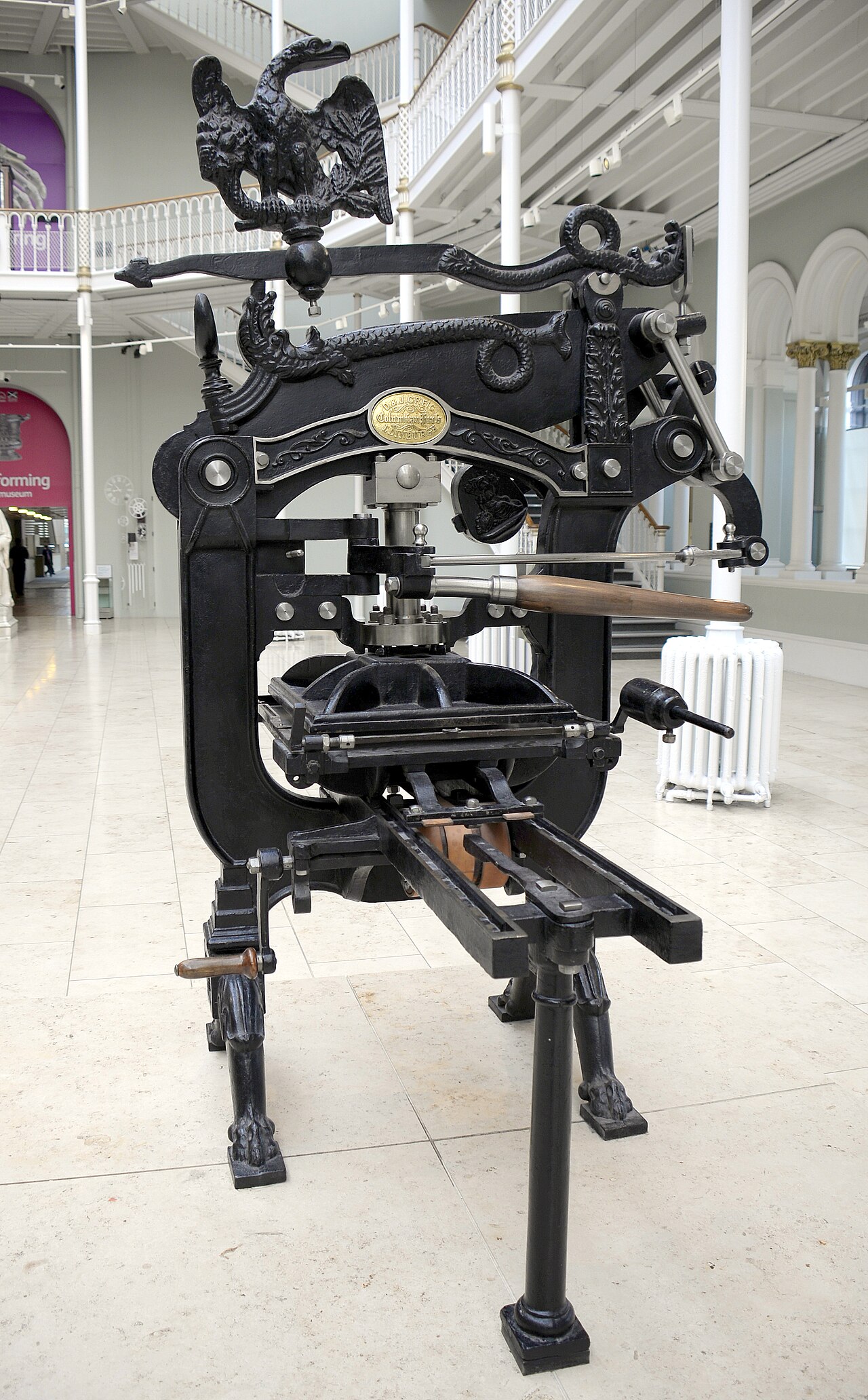
George Clymer's Columbian press uses an arrangement of levers and counterweights to apply printing pressure. Its distinctive eagle counterweight...
Explore artifact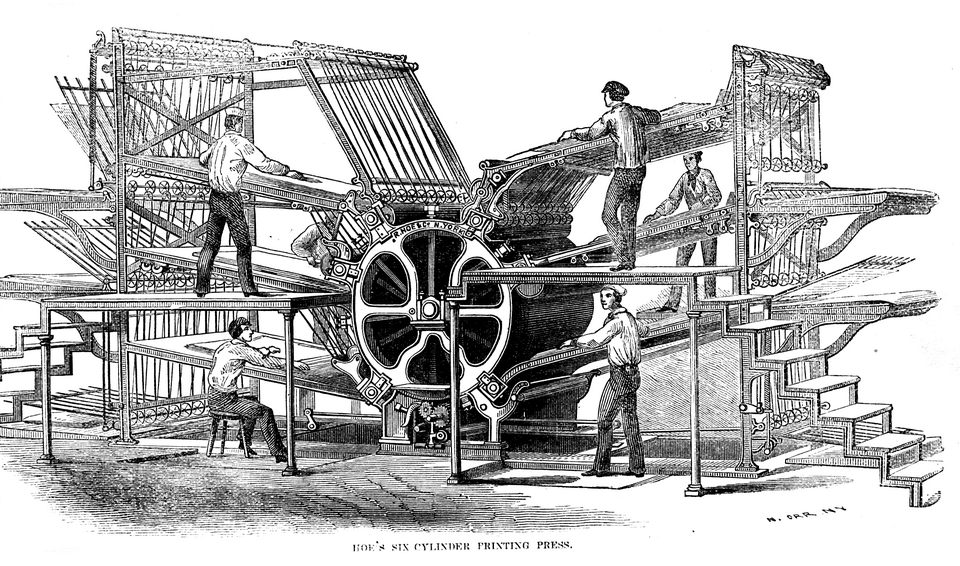
A rotary press prints using rotating cylinders rather than a single flat pressing stroke. Continuous motion and, in some designs, roll-fed paper...
Explore artifact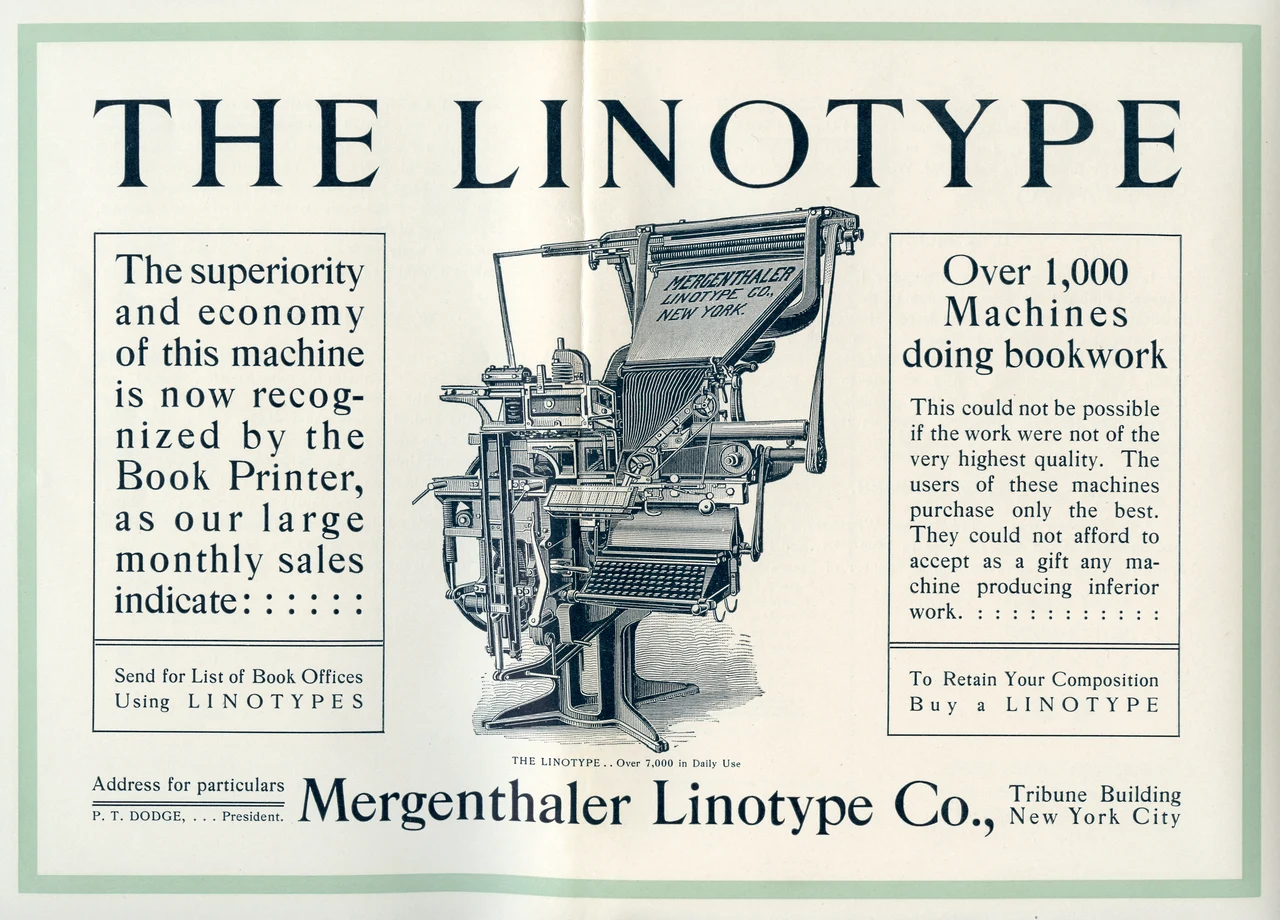
A Linotype machine assembles matrices from keyboard input and casts a complete line of metal type. It joined typesetting and casting in a system...
Explore artifact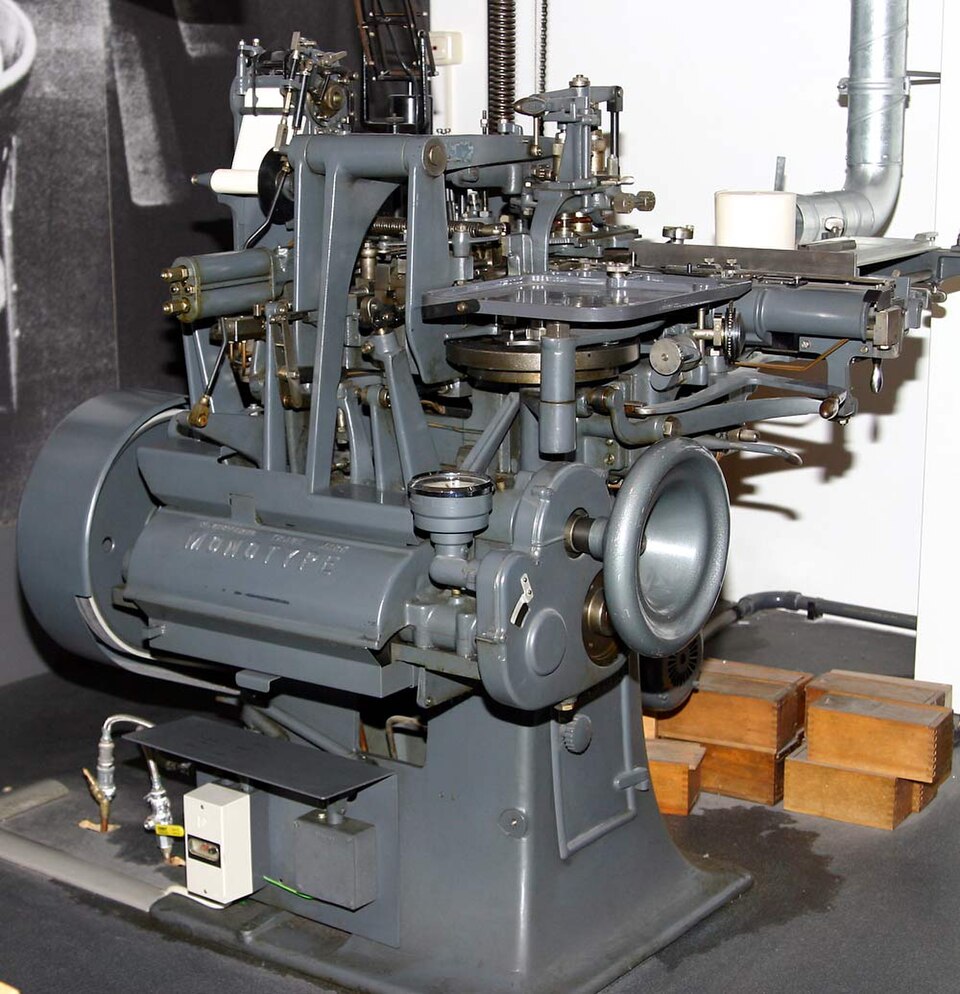
The Monotype system separates keyboard composition from the casting of individual metal characters. A perforated paper tape carries instructions...
Explore artifact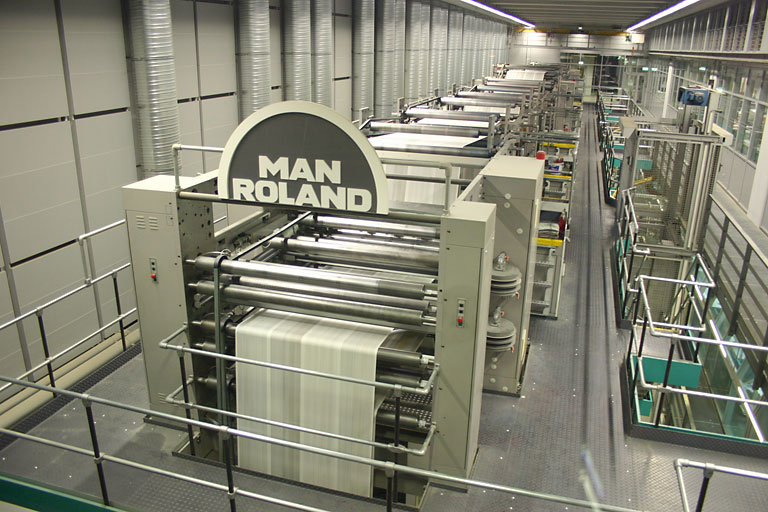
An offset press transfers an inked image from a printing plate to a blanket cylinder and then to paper. This indirect lithographic process became...
Explore artifact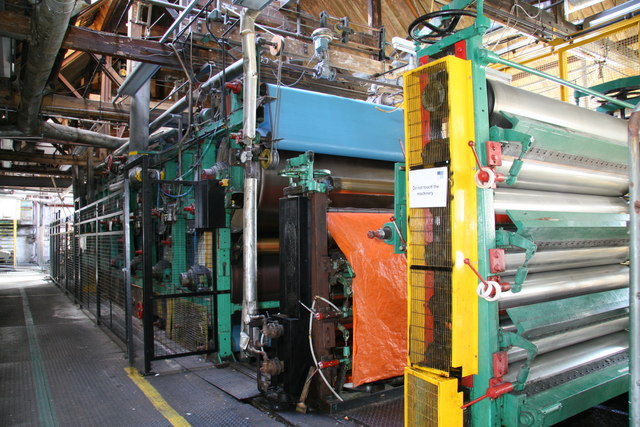
A Fourdrinier machine forms a continuous sheet of paper from pulp on a moving mesh. Water removal, pressing and drying turn a wet fibre suspensio...
Explore artifact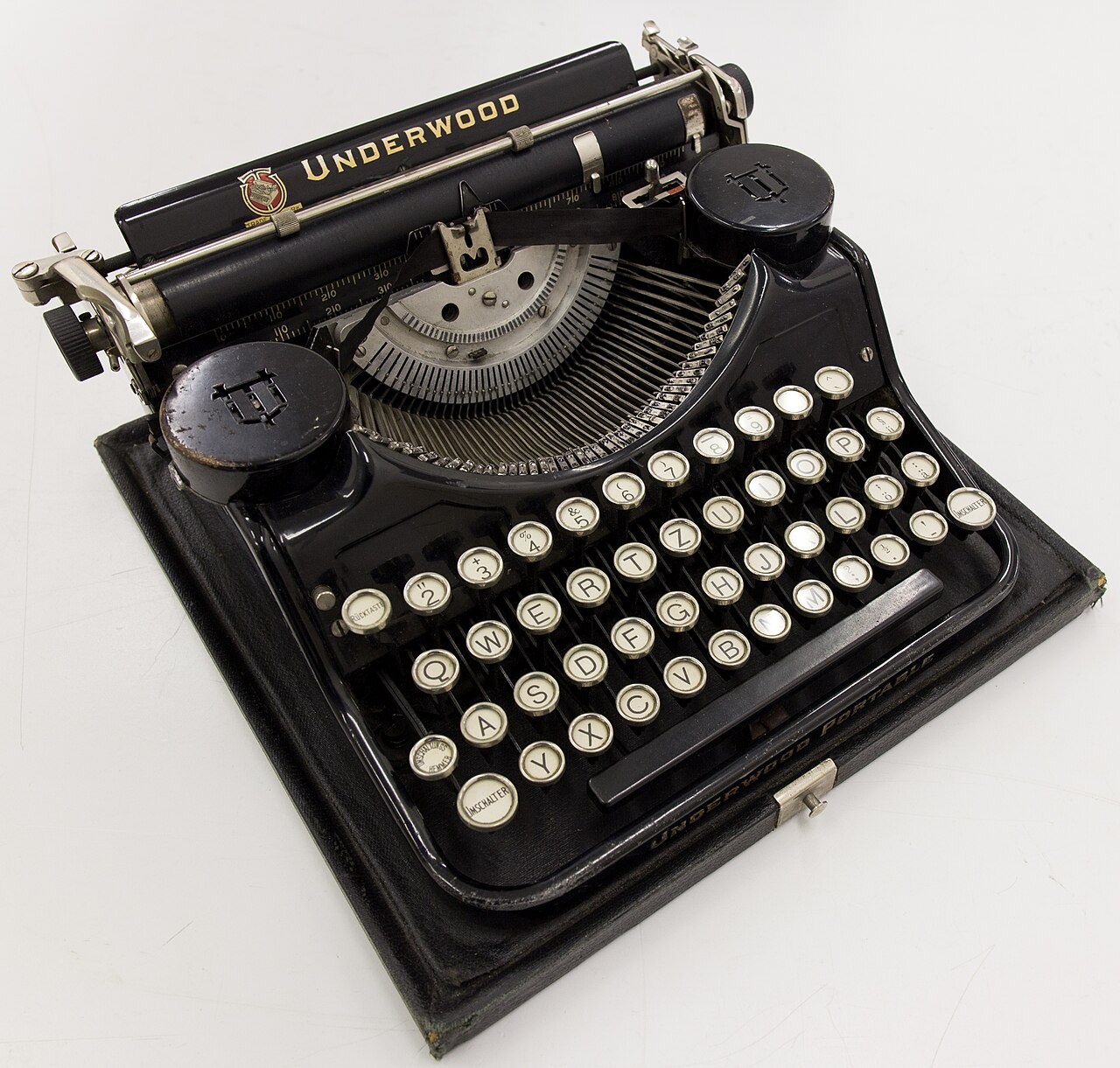
A typewriter links a keyboard to mechanisms that impress characters onto paper. Carriage movement, spacing and ribbon handling organize successiv...
Explore artifact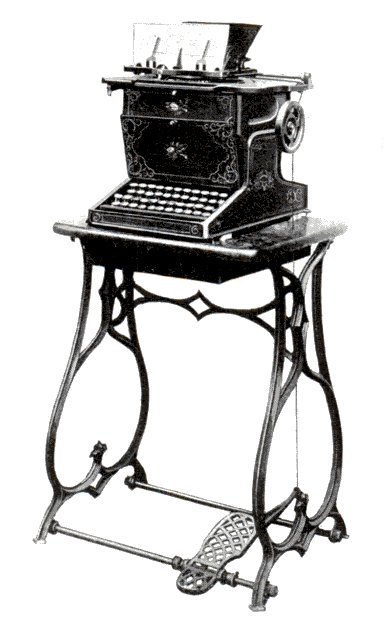
The Sholes and Glidden was an early commercially produced typewriter associated with Remington. Its typebars struck the underside of the paper, a...
Explore artifact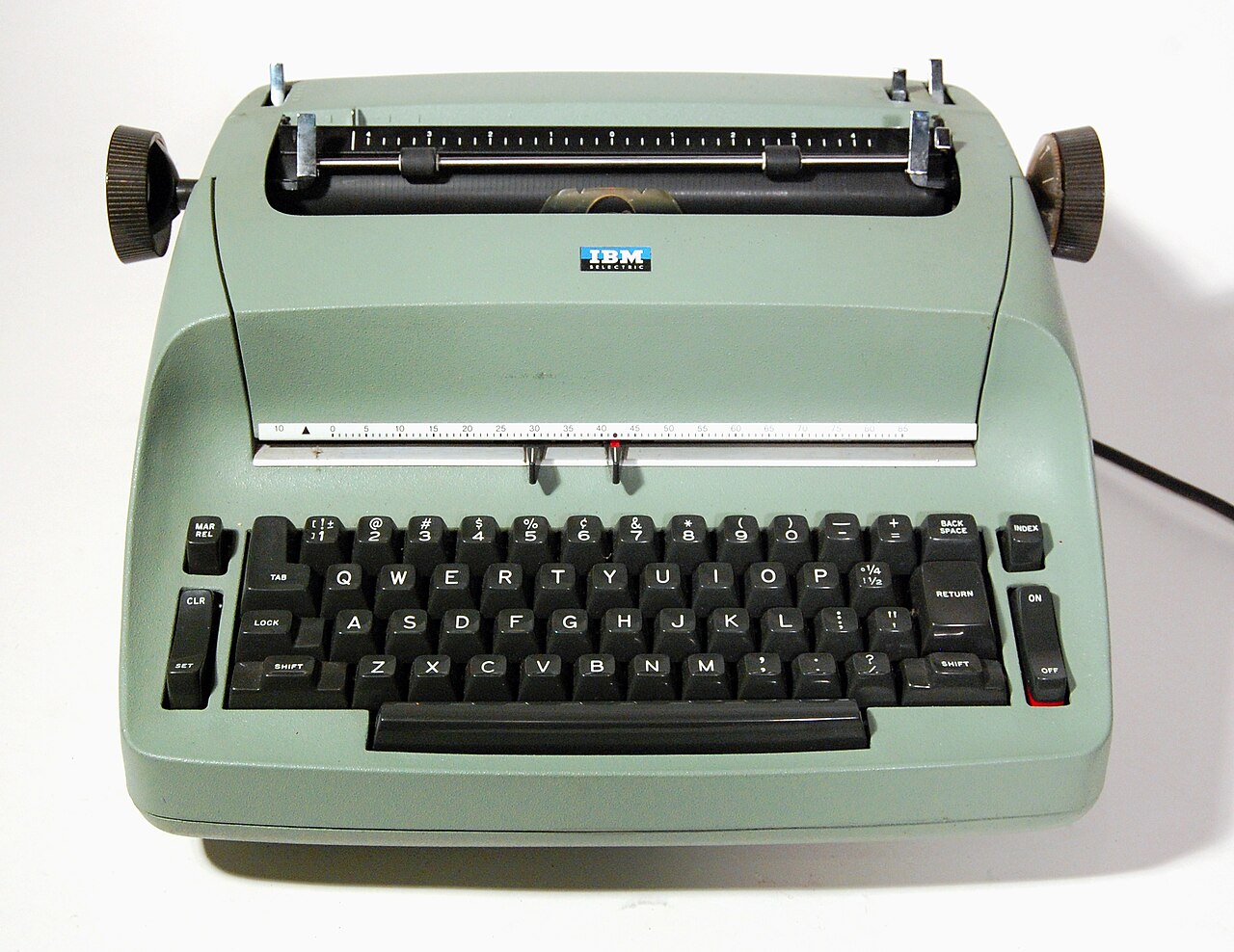
The IBM Selectric uses a moving type element shaped like a small ball rather than separate typebars. Interchangeable elements allow different typ...
Explore artifact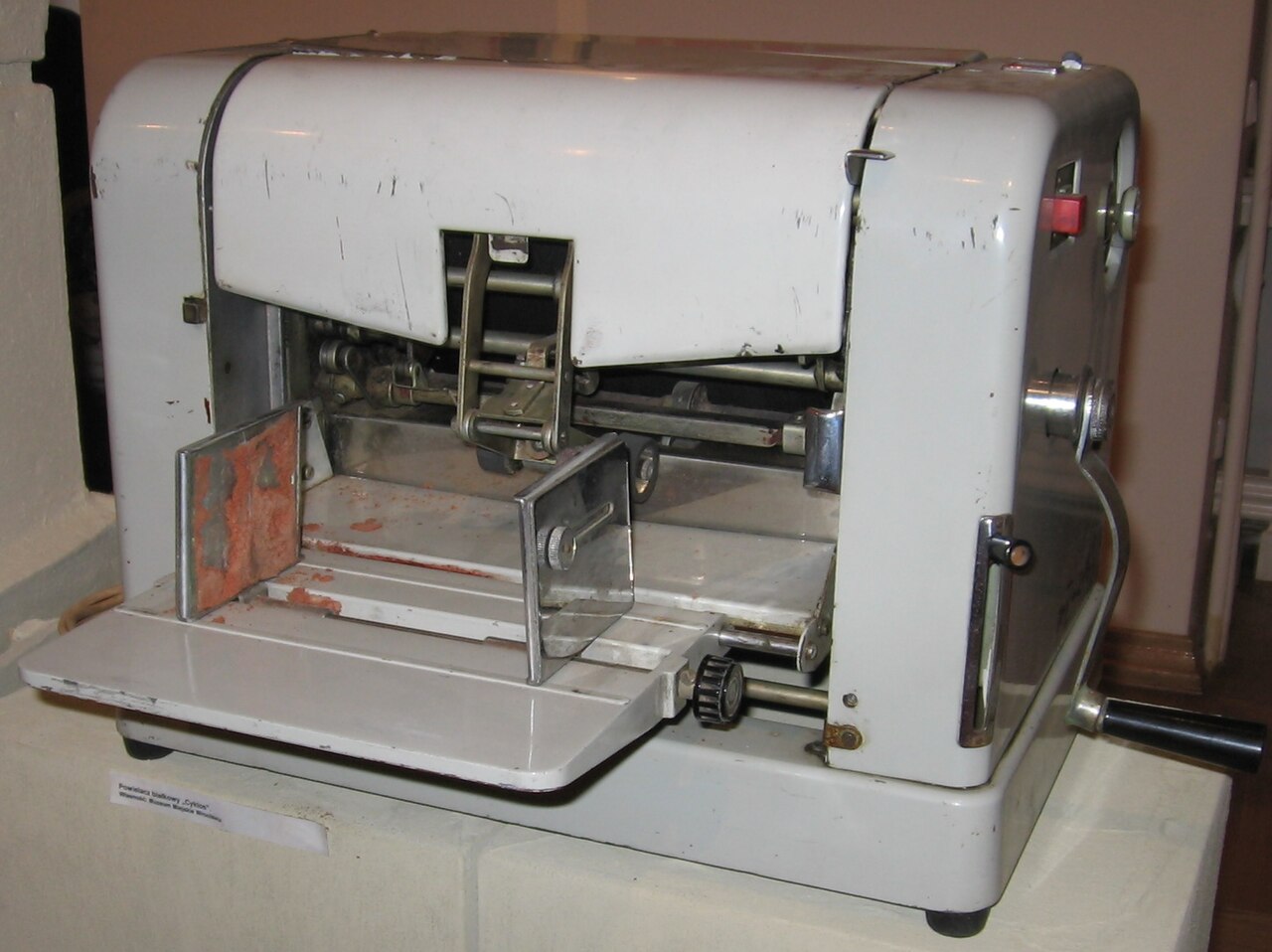
A mimeograph reproduces pages by forcing ink through openings in a prepared stencil. Drum-fed machines provided an economical way to make many co...
Explore artifact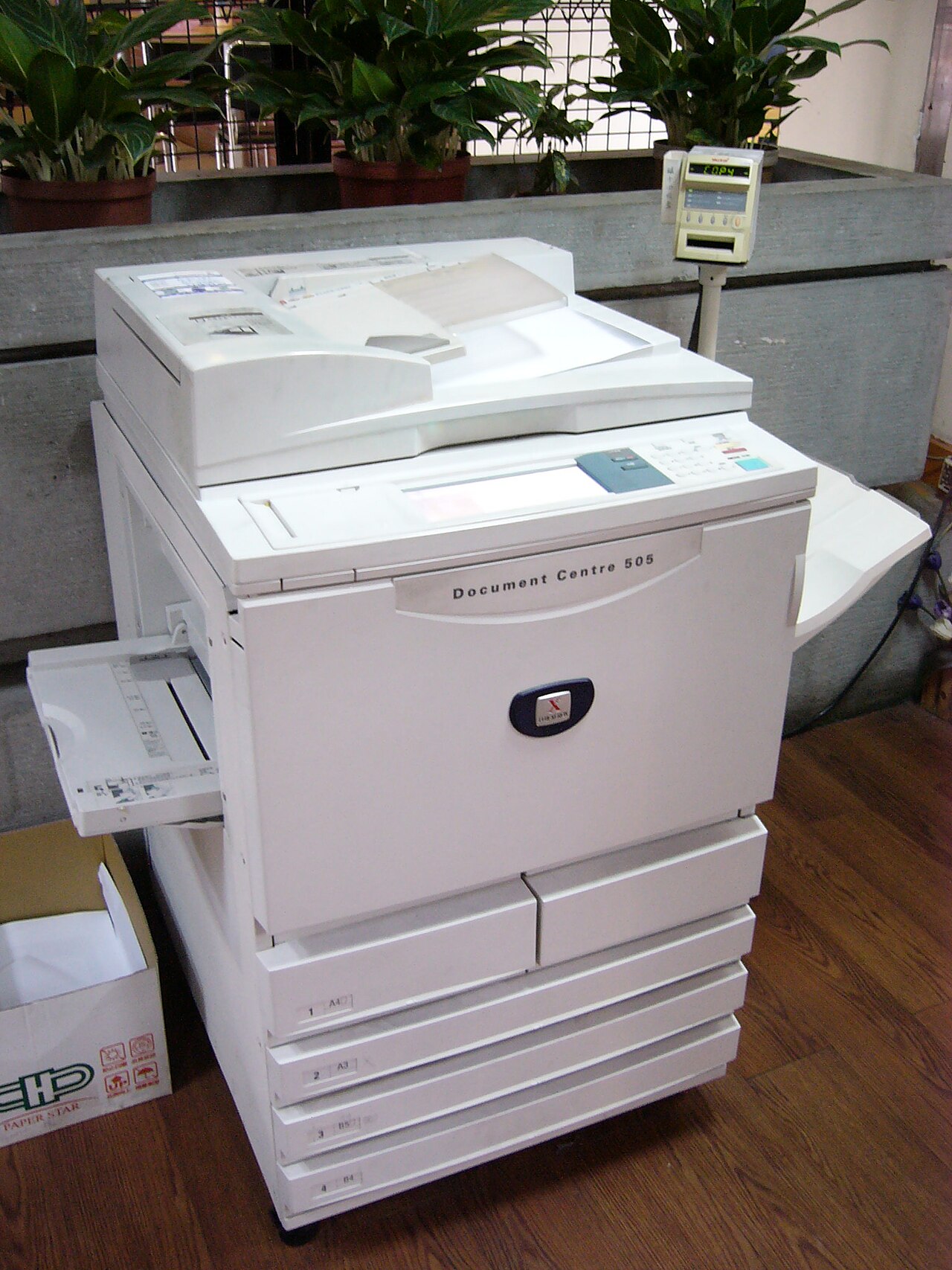
A photocopier reproduces documents through optical and image-forming mechanisms. Xerographic machines use electrostatic charge, toner and heat to...
Explore artifact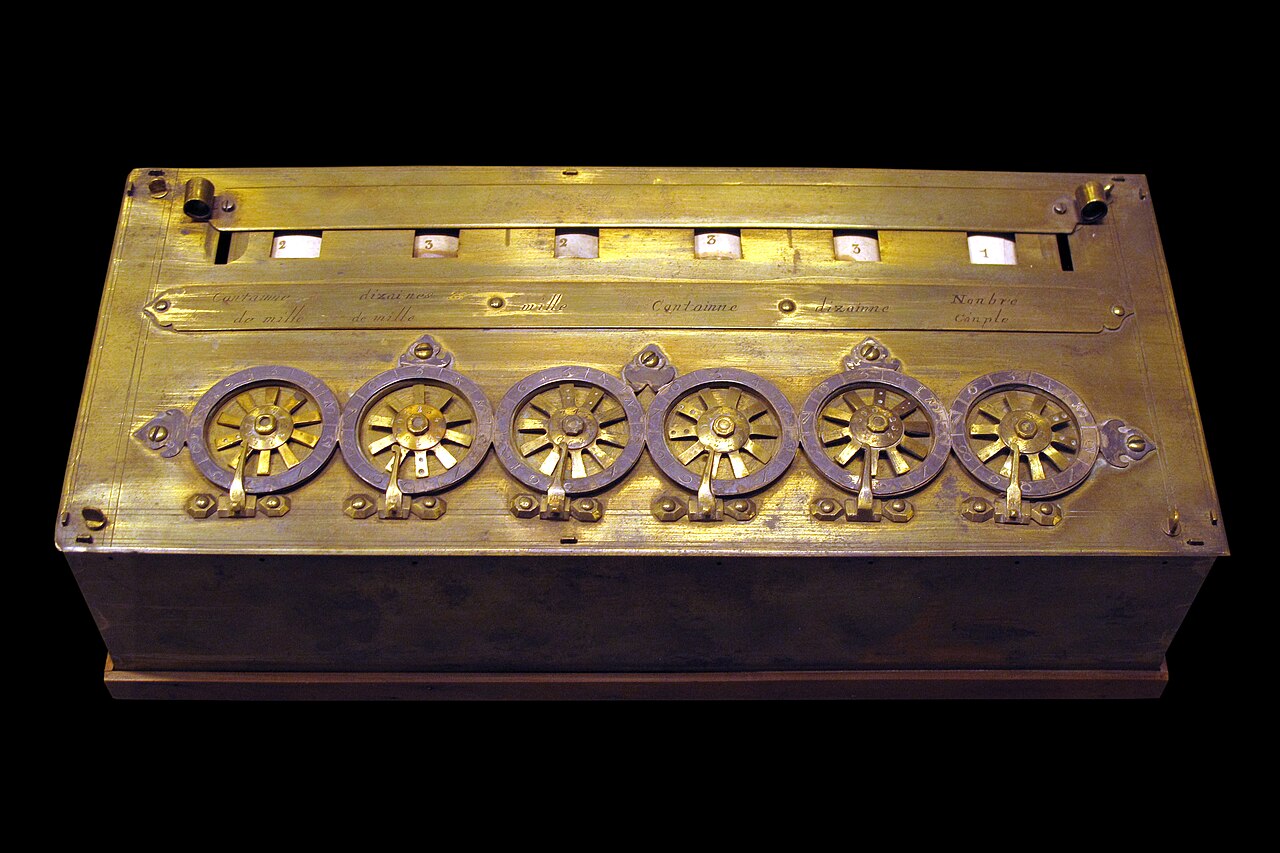
Blaise Pascal's mechanical calculator uses linked digit wheels to perform arithmetic. Its carry mechanism transfers motion from one decimal posit...
Explore artifact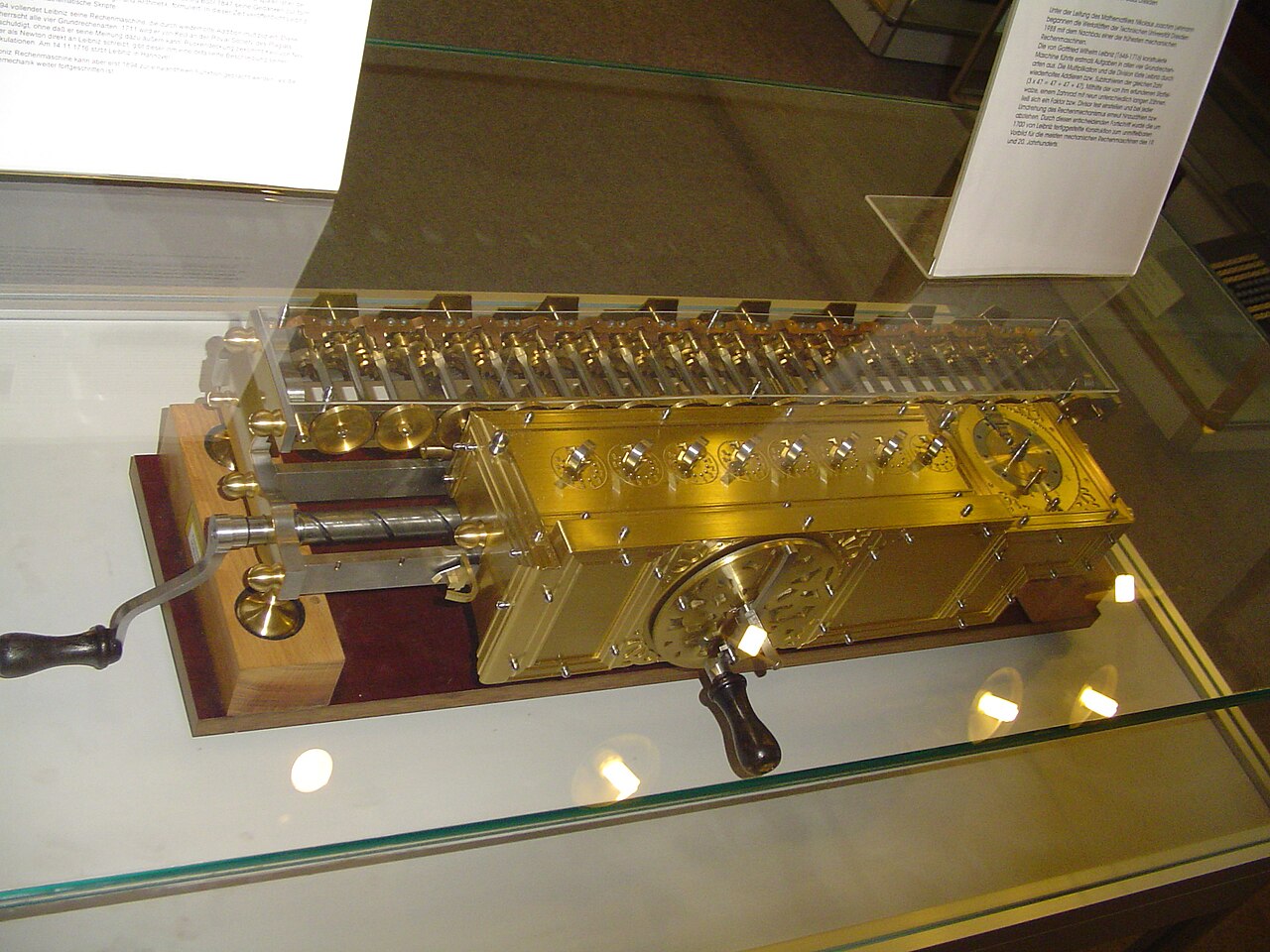
Leibniz's stepped reckoner uses a stepped-drum mechanism to carry out repeated arithmetic operations. The varying tooth lengths became an influen...
Explore artifact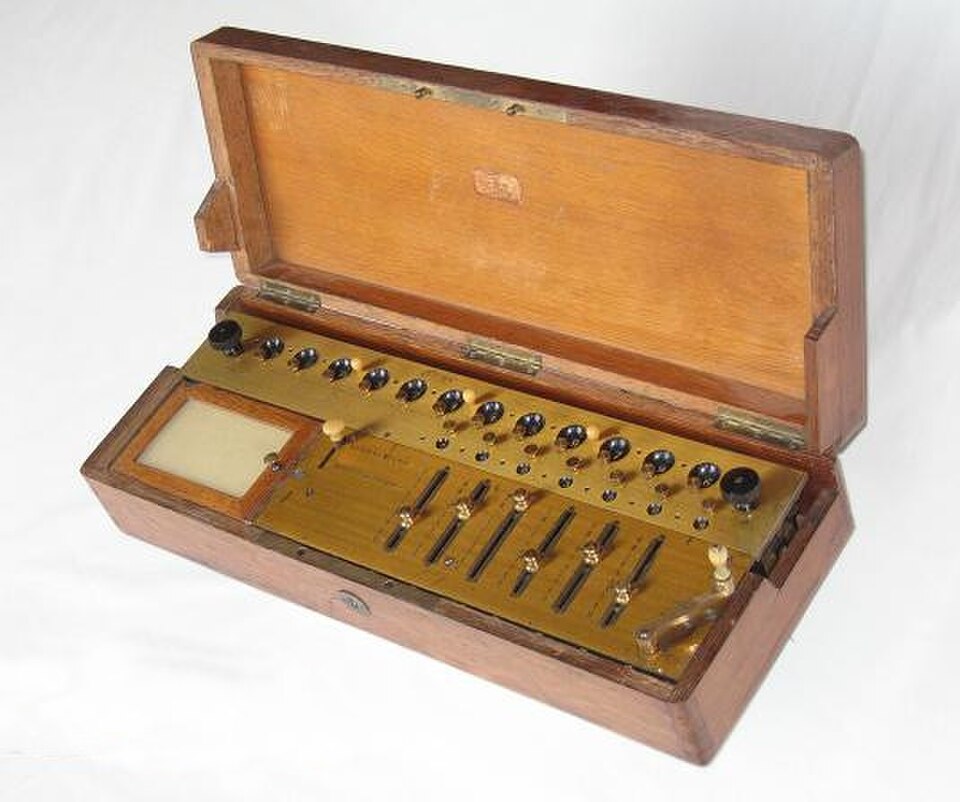
The arithmometer brought stepped-drum calculation into a practical office machine. Its setting controls and movable carriage support addition, su...
Explore artifact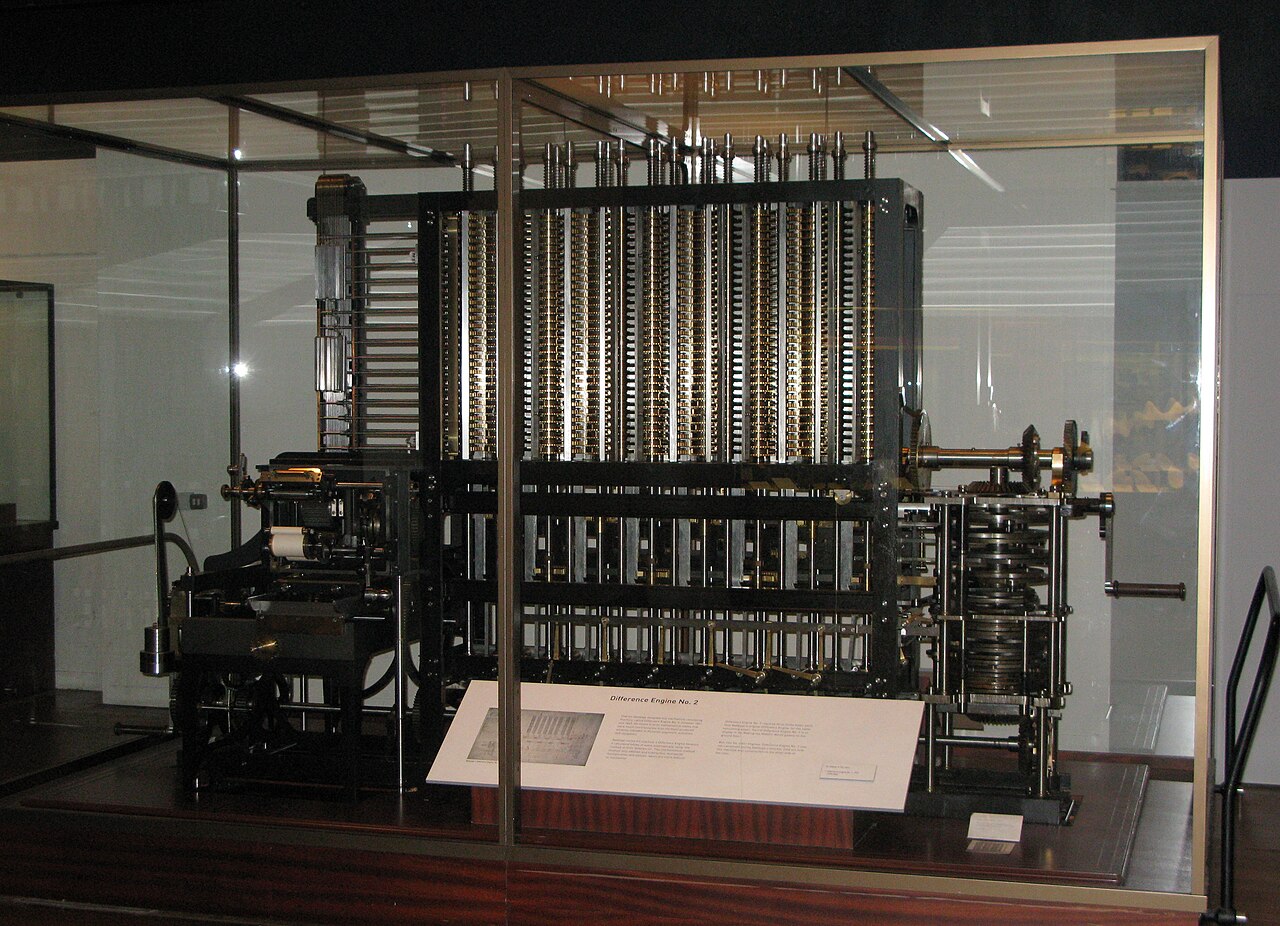
A difference engine calculates tables through repeated additions using the method of finite differences. Charles Babbage's designs linked arithme...
Explore artifact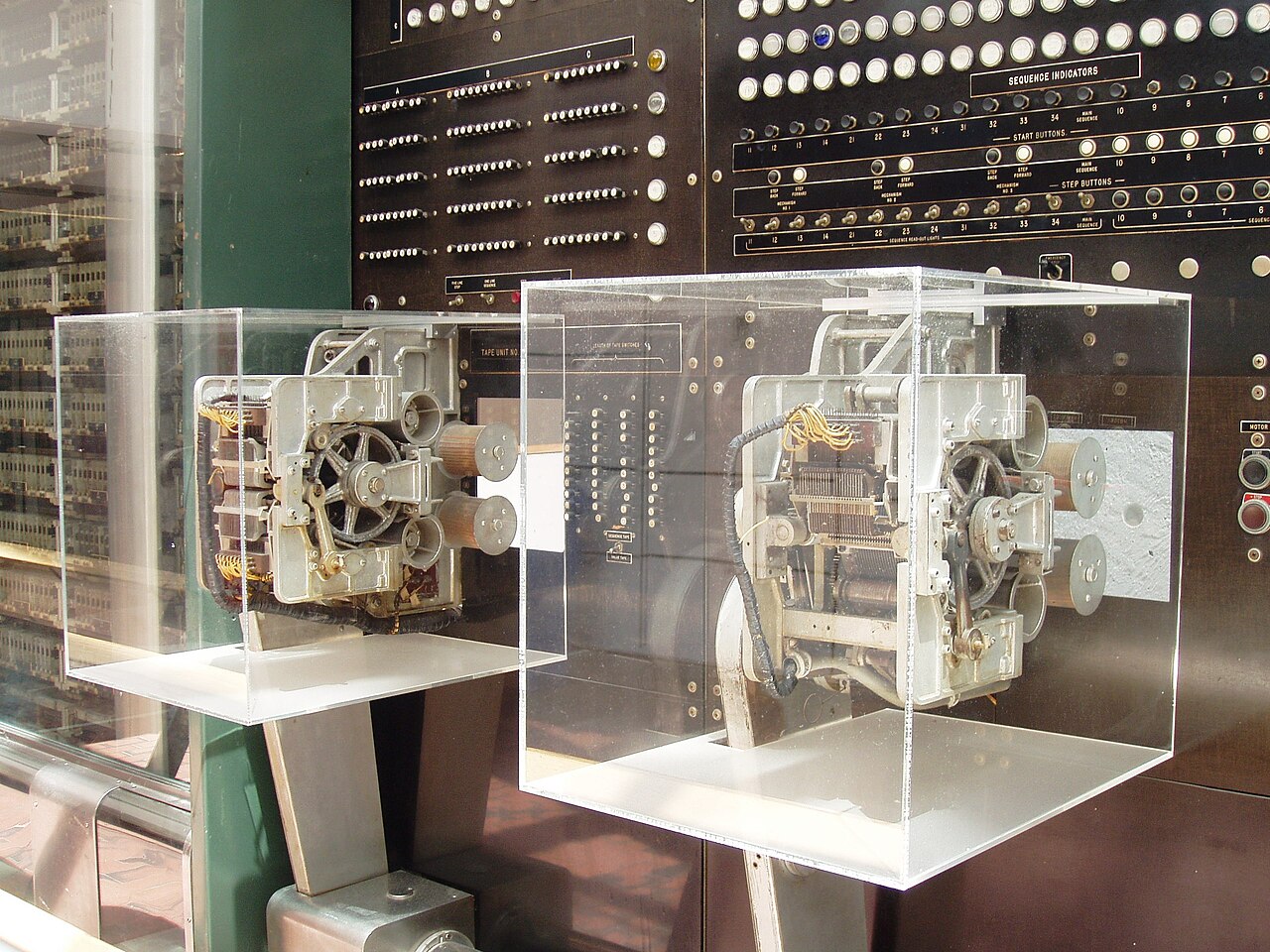
The Harvard Mark I was a large electromechanical calculating machine developed with IBM. Relays, rotating shafts and mechanical counters carried...
Explore artifact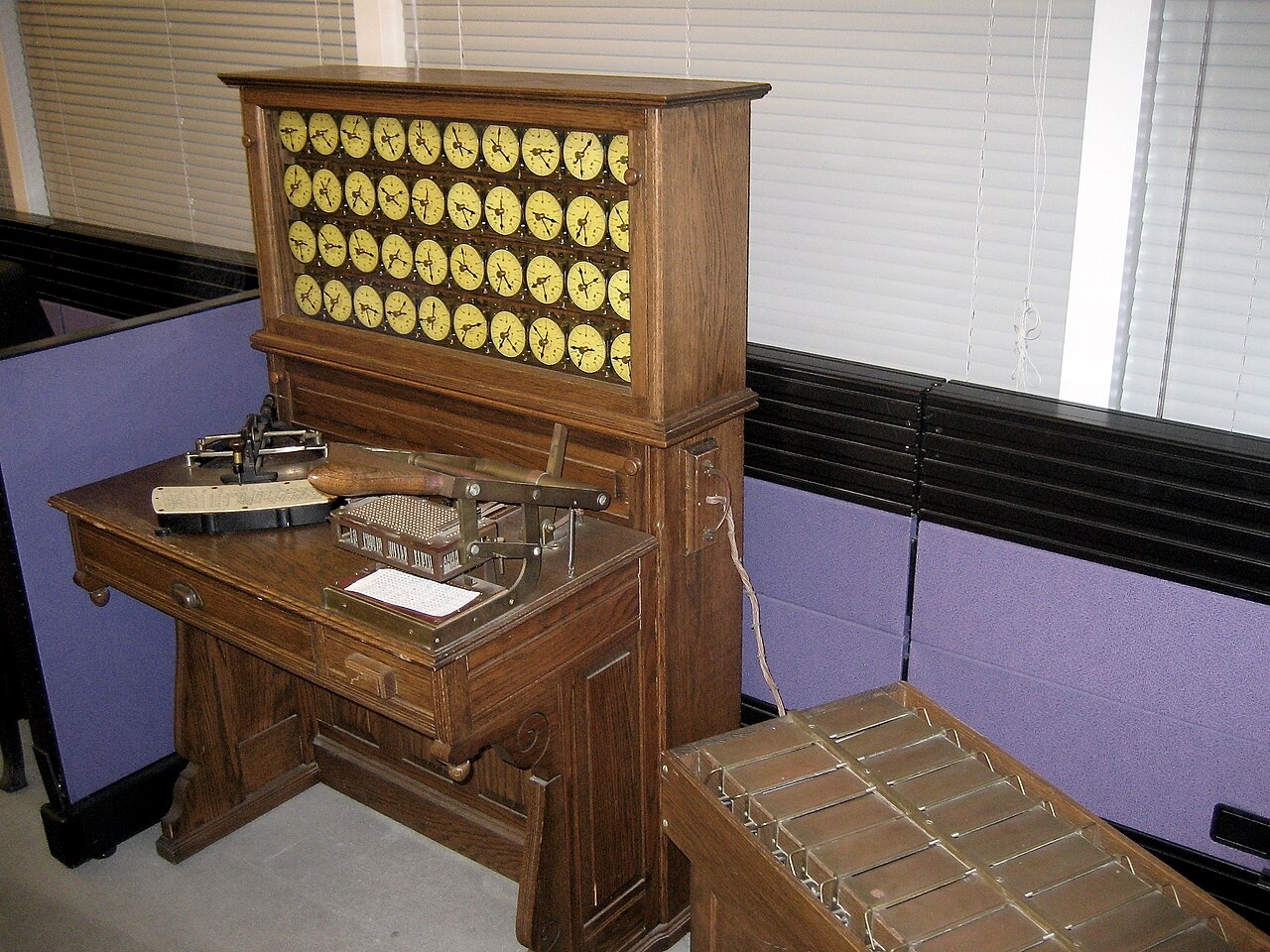
A tabulating machine reads encoded information from punched cards and accumulates results. Herman Hollerith's census work helped establish punche...
Explore artifact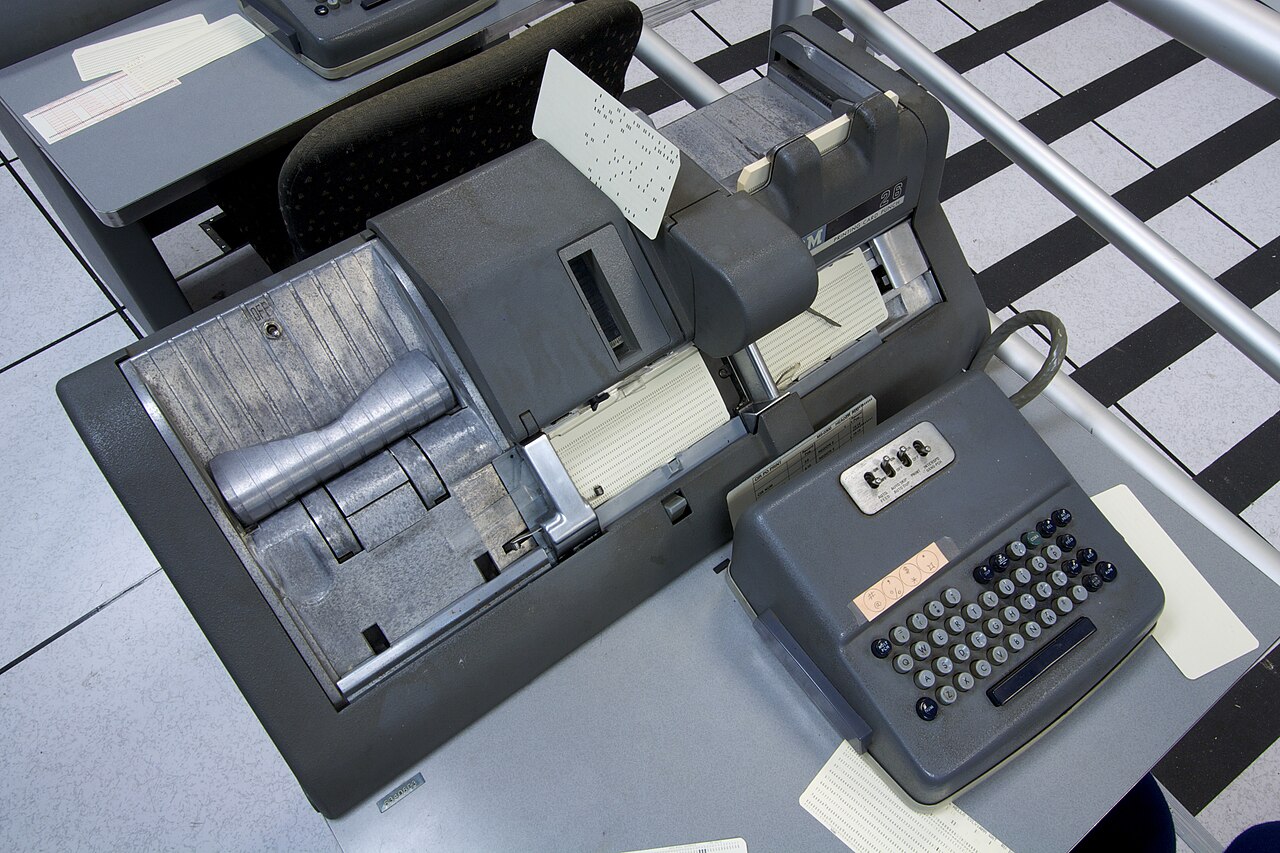
A keypunch records data by making holes at selected positions in a card. Keyboard operation turned written information into a form that tabulator...
Explore artifact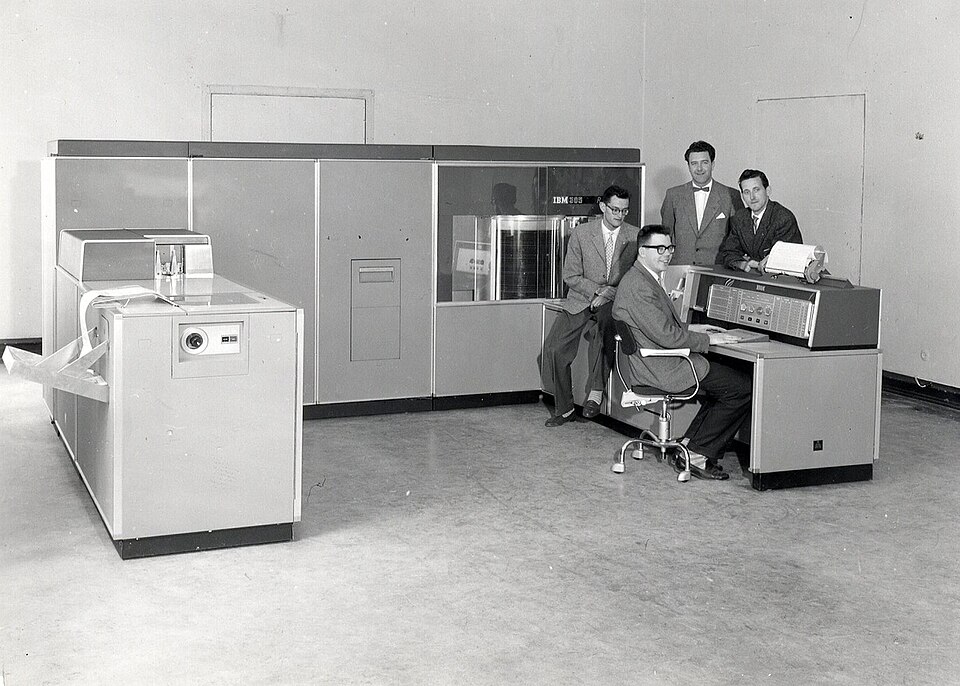
The IBM 305 RAMAC system used a rotating magnetic disk unit for direct access to stored information. Its large disk assembly marked an important...
Explore artifact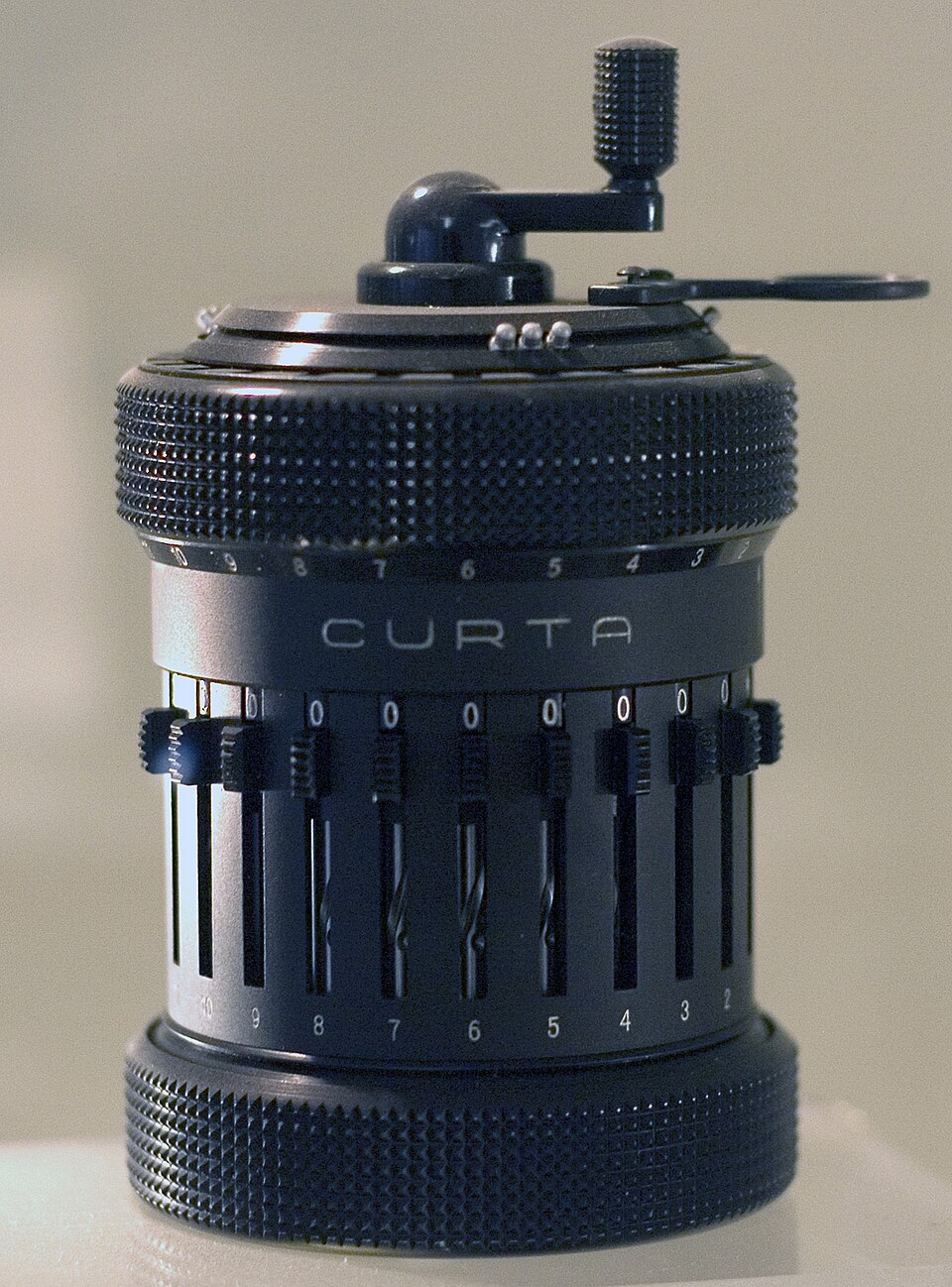
The Curta packs a mechanical calculating mechanism into a small hand-held cylinder. Sliders set numbers and a crank drives arithmetic operations...
Explore artifact