

Watt Steam Engine
The Watt steam engine was the first type of steam engine to make use of a separate condenser. It was a vacuum or "atmospheric" engine using steam...
Explore artifactDiscover artifacts, instruments and engineered systems through the same twelve fields as our History directory.
Power & Energy · 26 entries
The Watt steam engine was the first type of steam engine to make use of a separate condenser. It was a vacuum or "atmospheric" engine using steam...
Explore artifact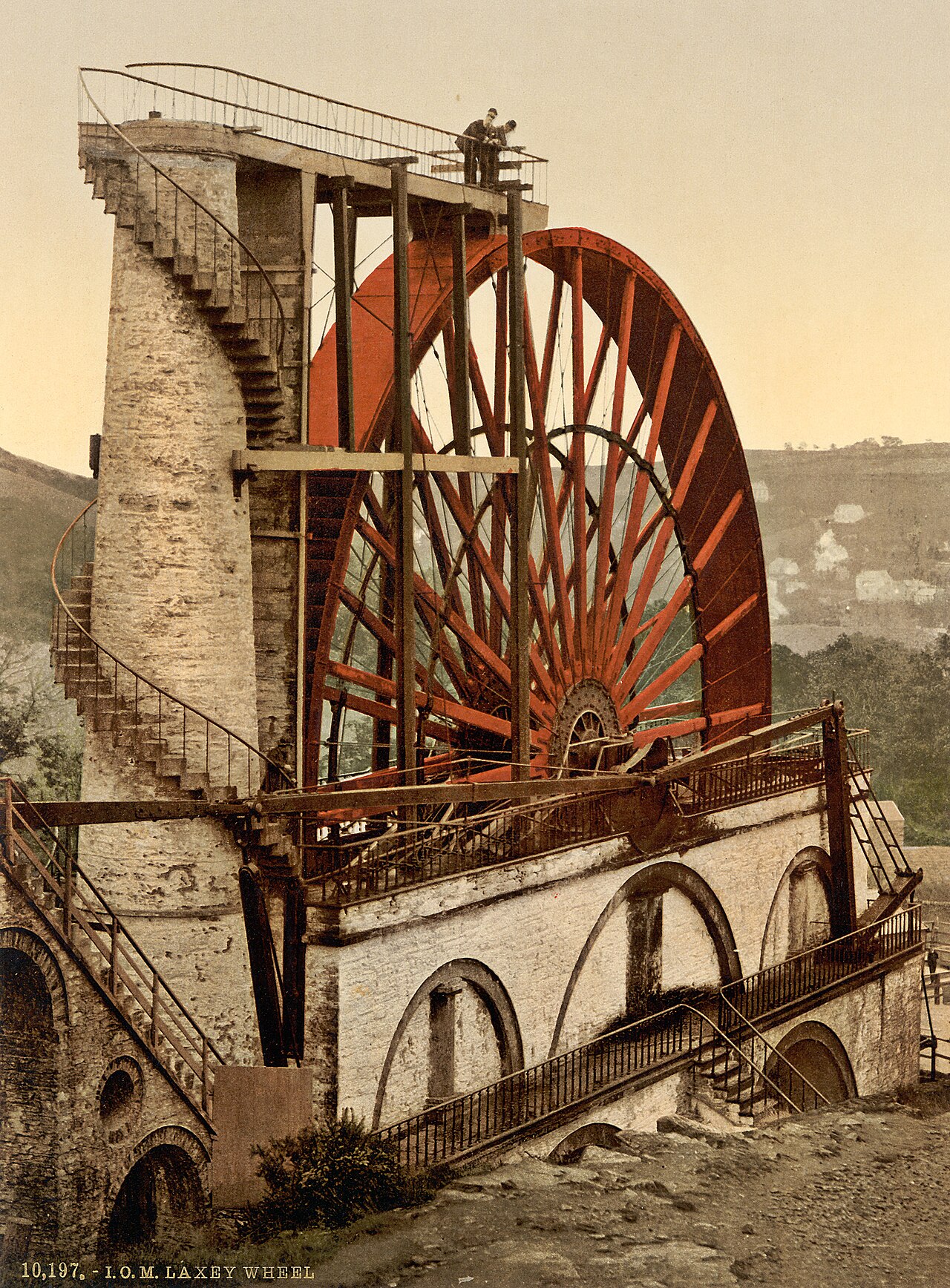
Flowing water turns a wheel fitted with paddles or buckets, providing rotary power for mills, workshops and pumps. Long before steam engines, wat...
Explore artifact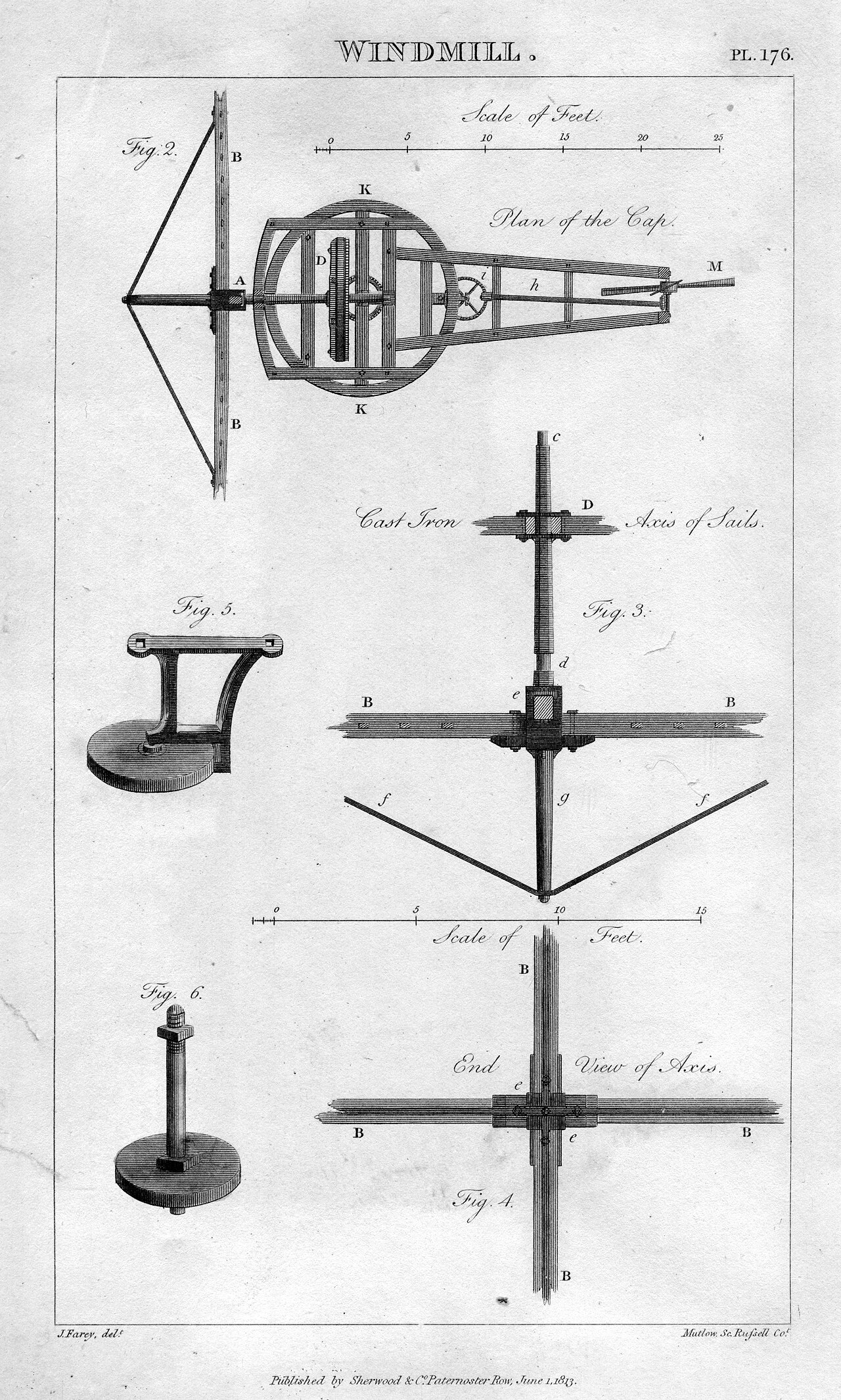
A windmill captures wind with sails and transmits their rotation to machinery inside the building. Used for grinding grain and pumping water, it...
Explore artifact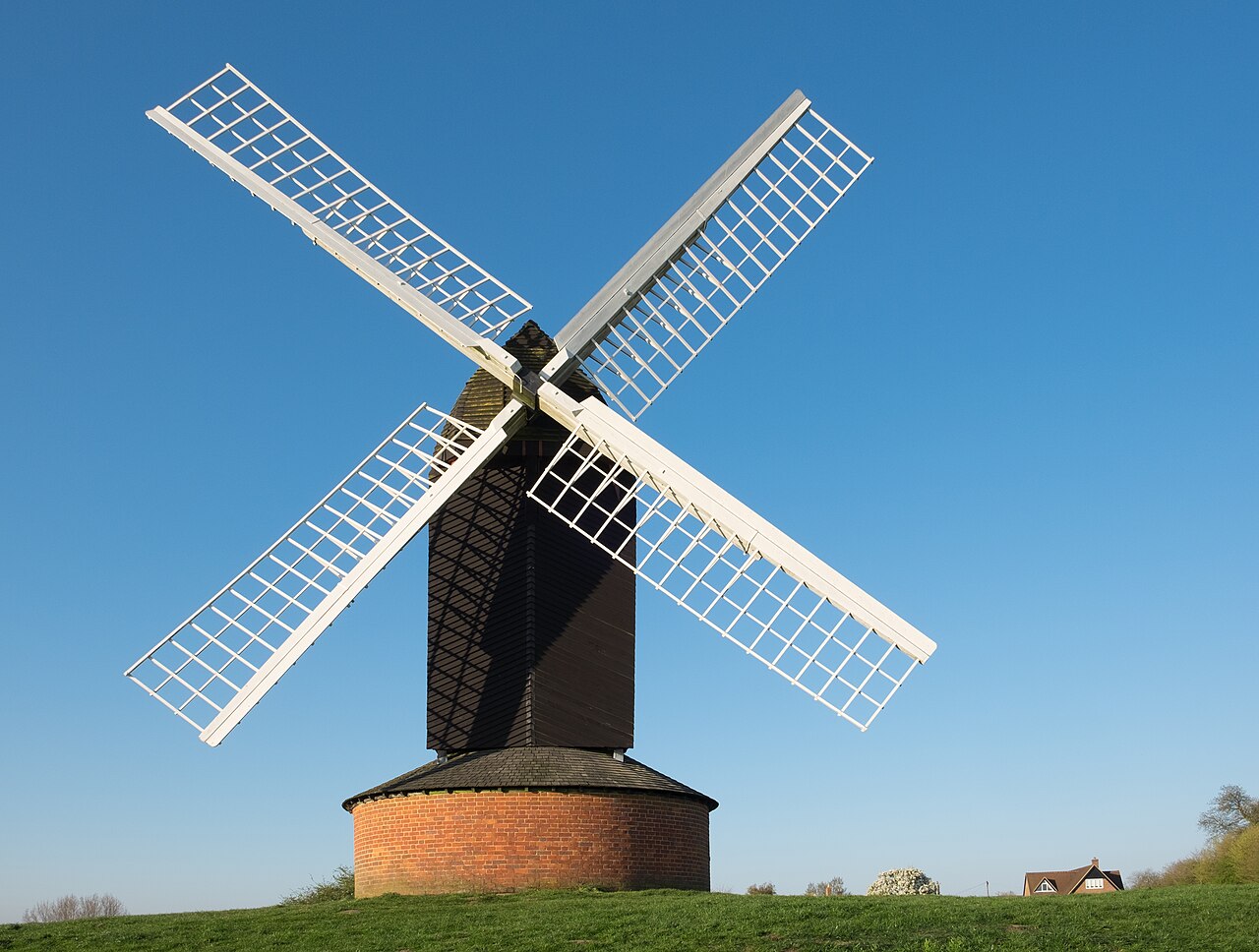
The machinery and sails of a post mill sit inside a timber body that can turn around a central post. Rotating the whole mill to face the wind mad...
Explore artifact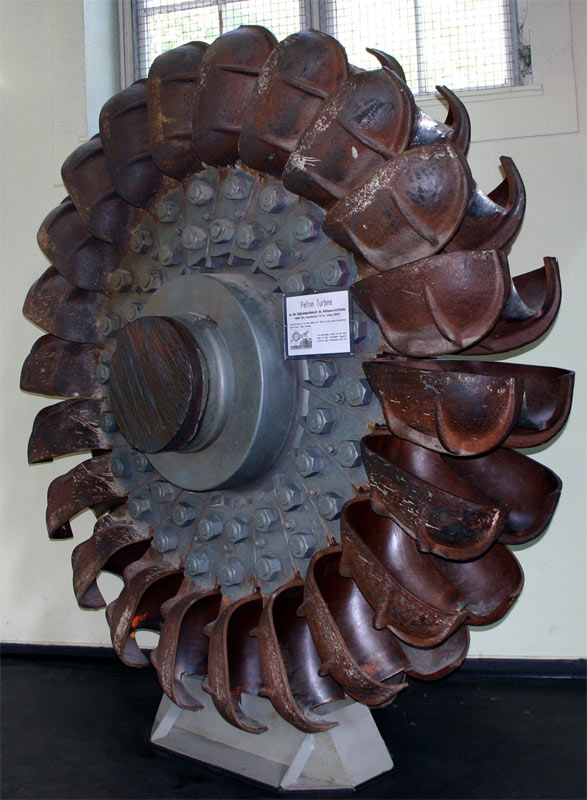
A high-speed jet strikes the split buckets around a Pelton wheel, converting water's momentum into rotation. Developed for high-head water suppli...
Explore artifact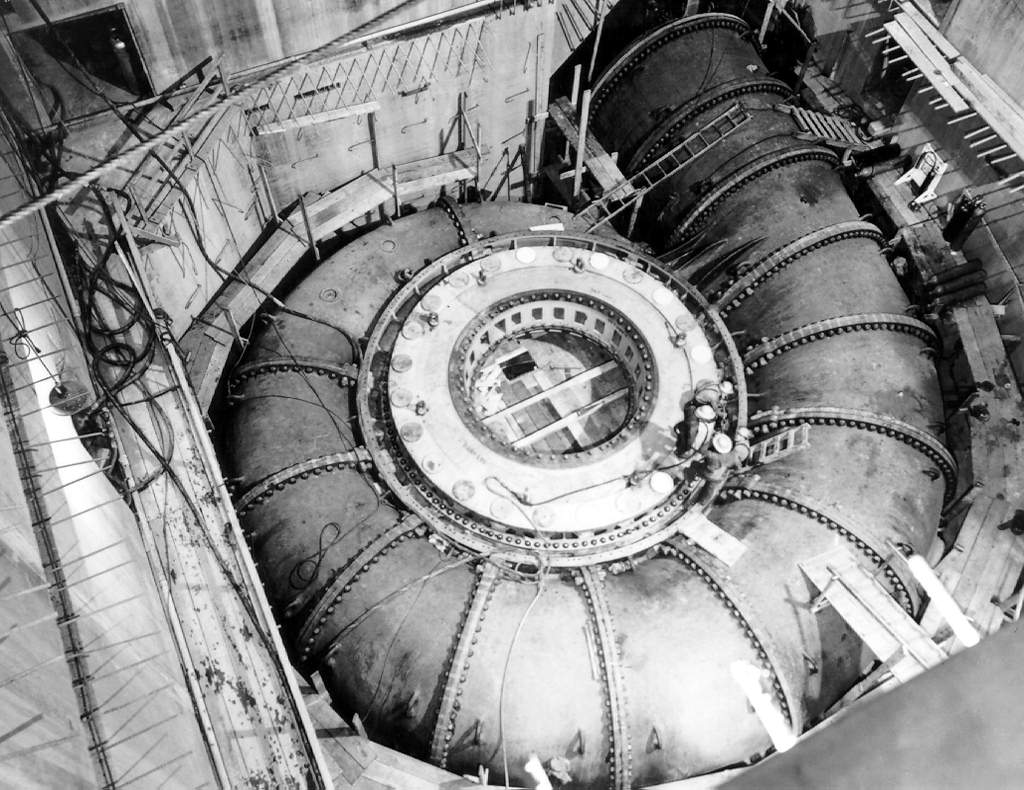
Water enters a Francis turbine through a surrounding casing and passes through a runner that combines inward and axial flow. This reaction turbin...
Explore artifact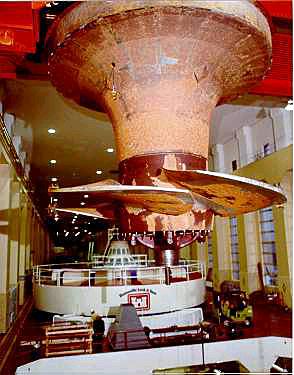
The Kaplan turbine uses propeller-like runner blades whose pitch can change with operating conditions. Together with adjustable guide vanes, this...
Explore artifact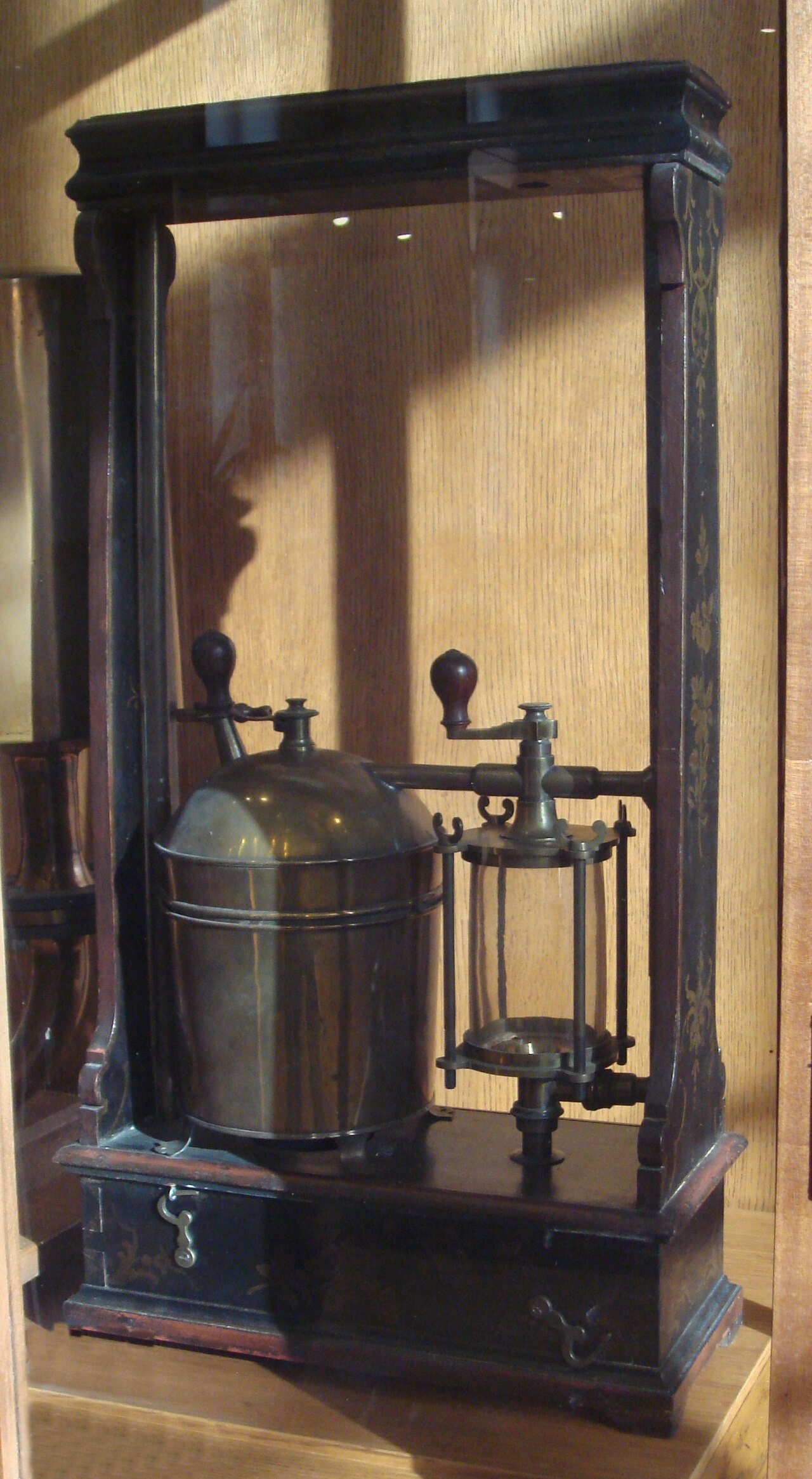
Thomas Savery's steam pump used condensation to draw water into a vessel, then steam pressure to push it upward. Patented in 1698, the pistonless...
Explore artifact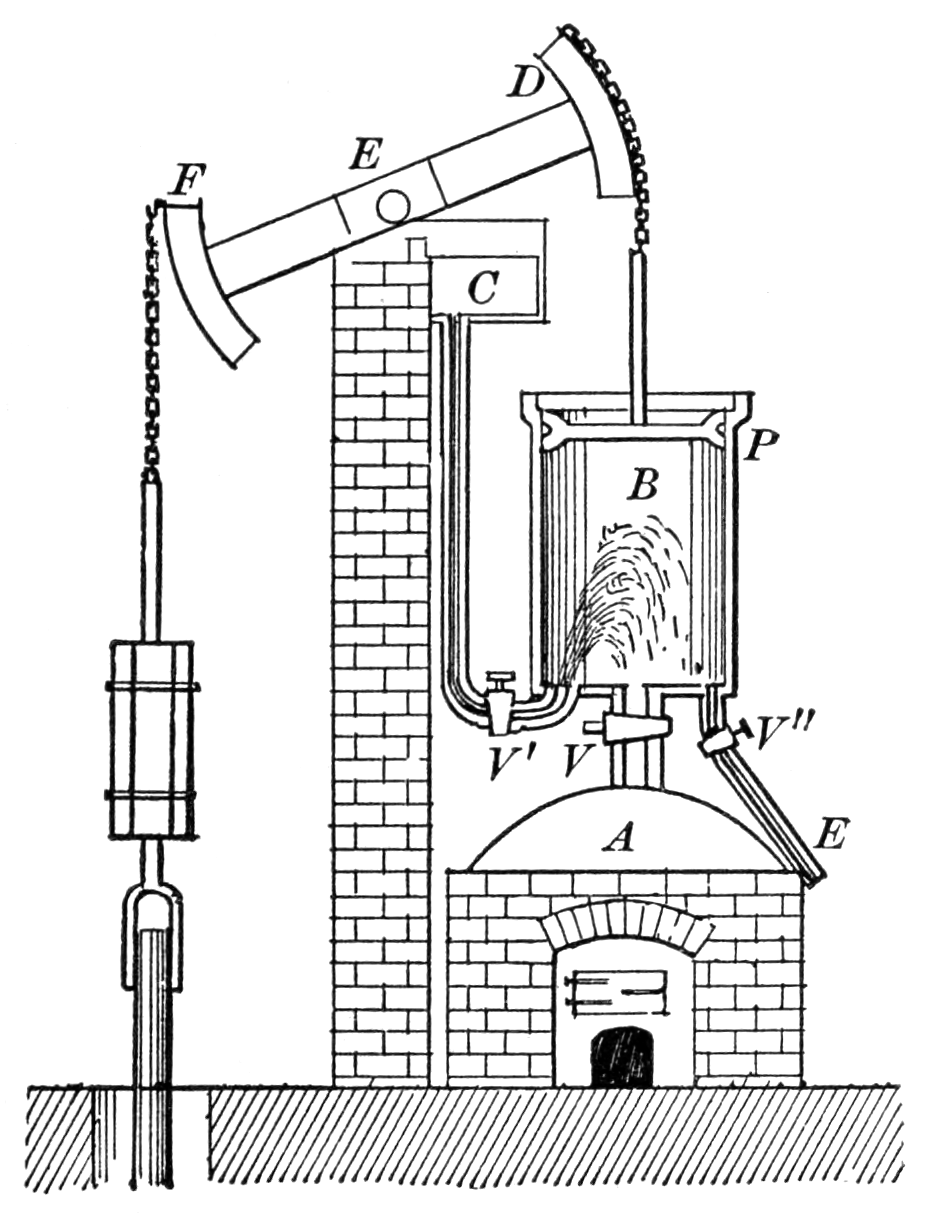
Steam condenses inside the cylinder of a Newcomen engine, creating a partial vacuum so atmospheric pressure can drive the piston down. Linked to...
Explore artifact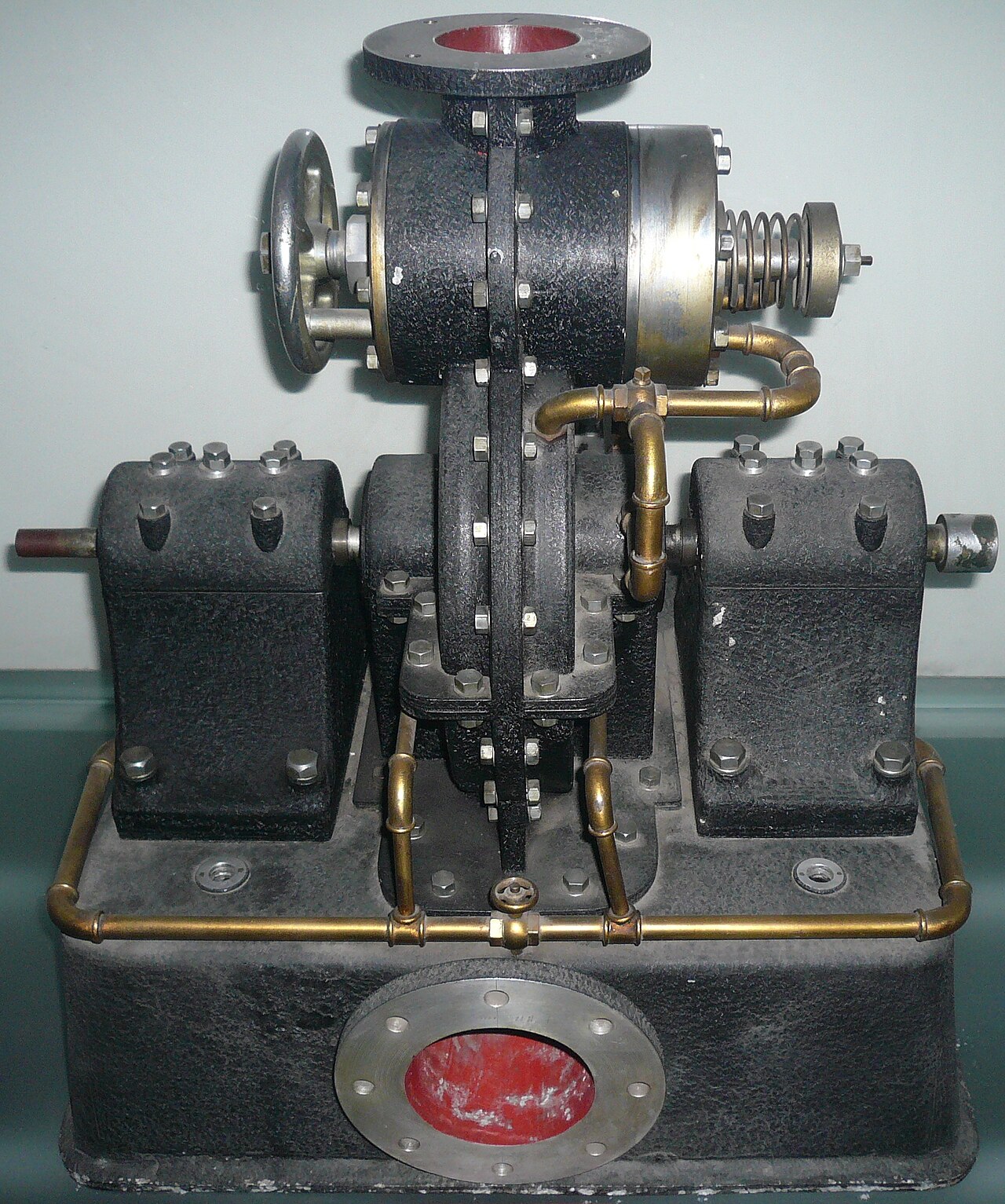
Instead of rows of blades, Tesla’s turbine uses closely spaced smooth discs. A fluid flowing through the narrow gaps transfers momentum to the di...
Explore artifact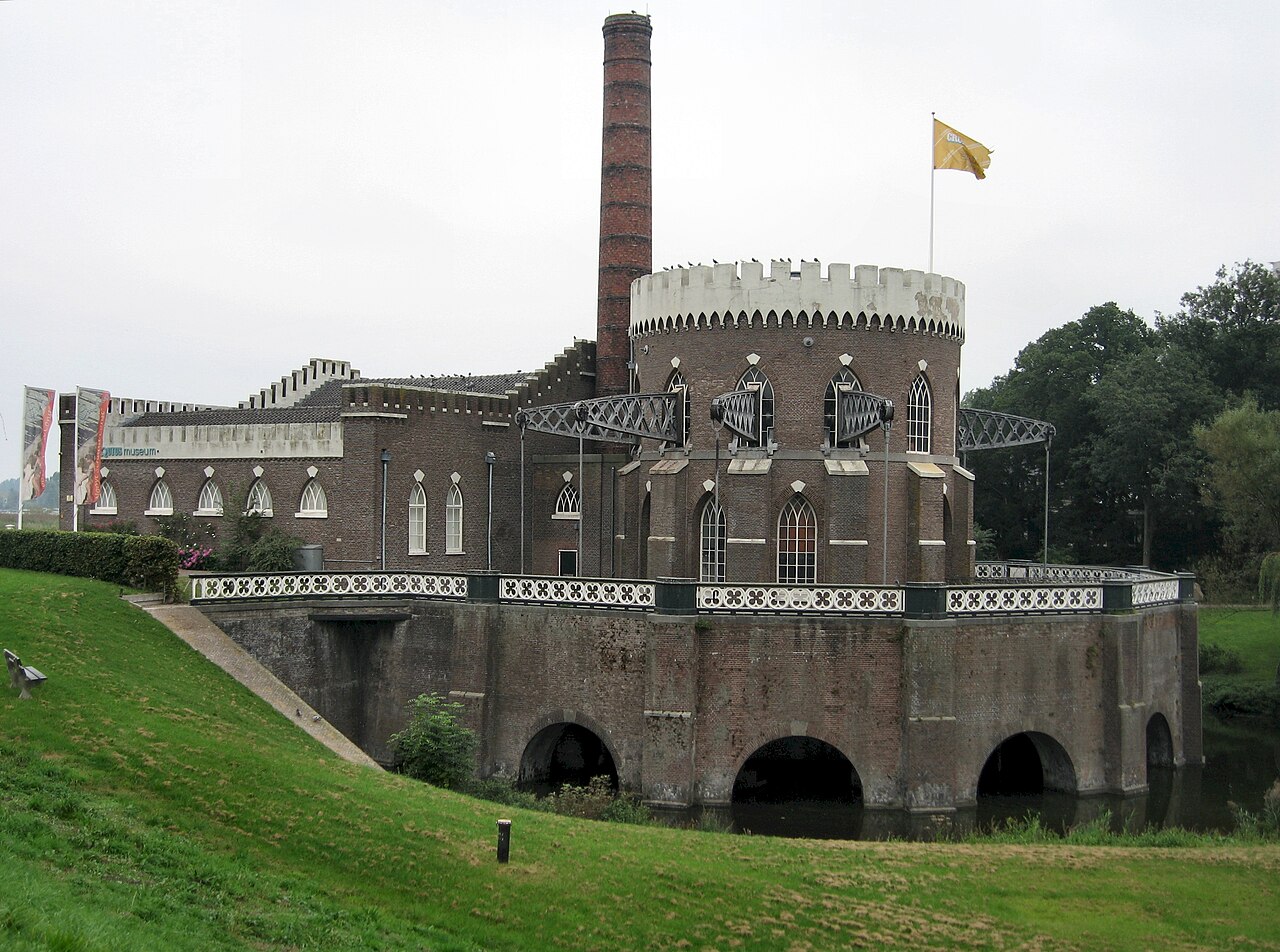
Developed for mine drainage in Cornwall, the Cornish engine combined a beam mechanism with higher-pressure steam and expansive working. Its econo...
Explore artifact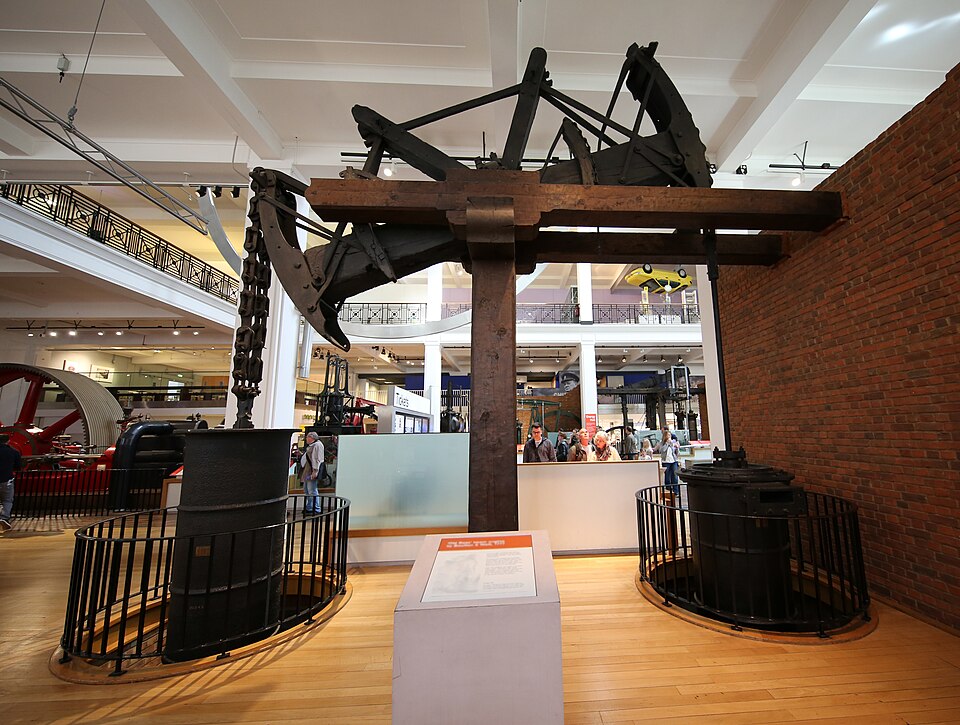
A large beam rocks on a central pivot to transmit a steam piston's motion to pump rods or a connecting rod. The arrangement became a defining fea...
Explore artifact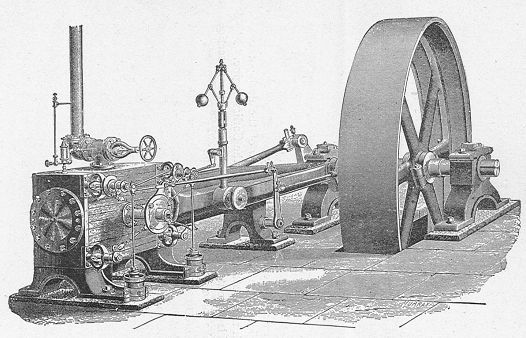
The Corliss engine used separate steam admission and exhaust valves with a mechanism that varied the admission cut-off. This improved control of...
Explore artifact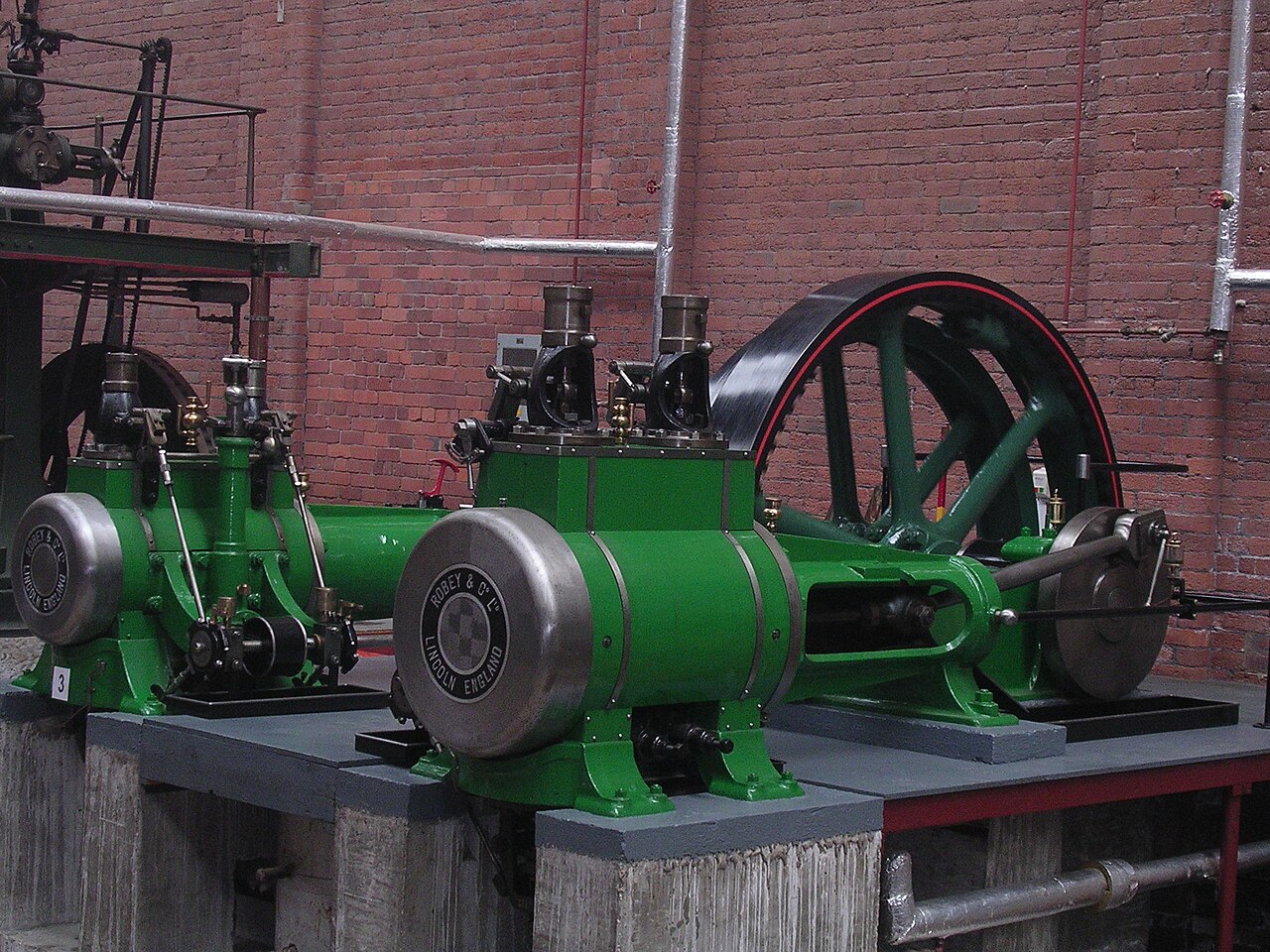
A compound engine expands steam in successive cylinders rather than completing the expansion in just one. Sharing the pressure drop between stage...
Explore artifact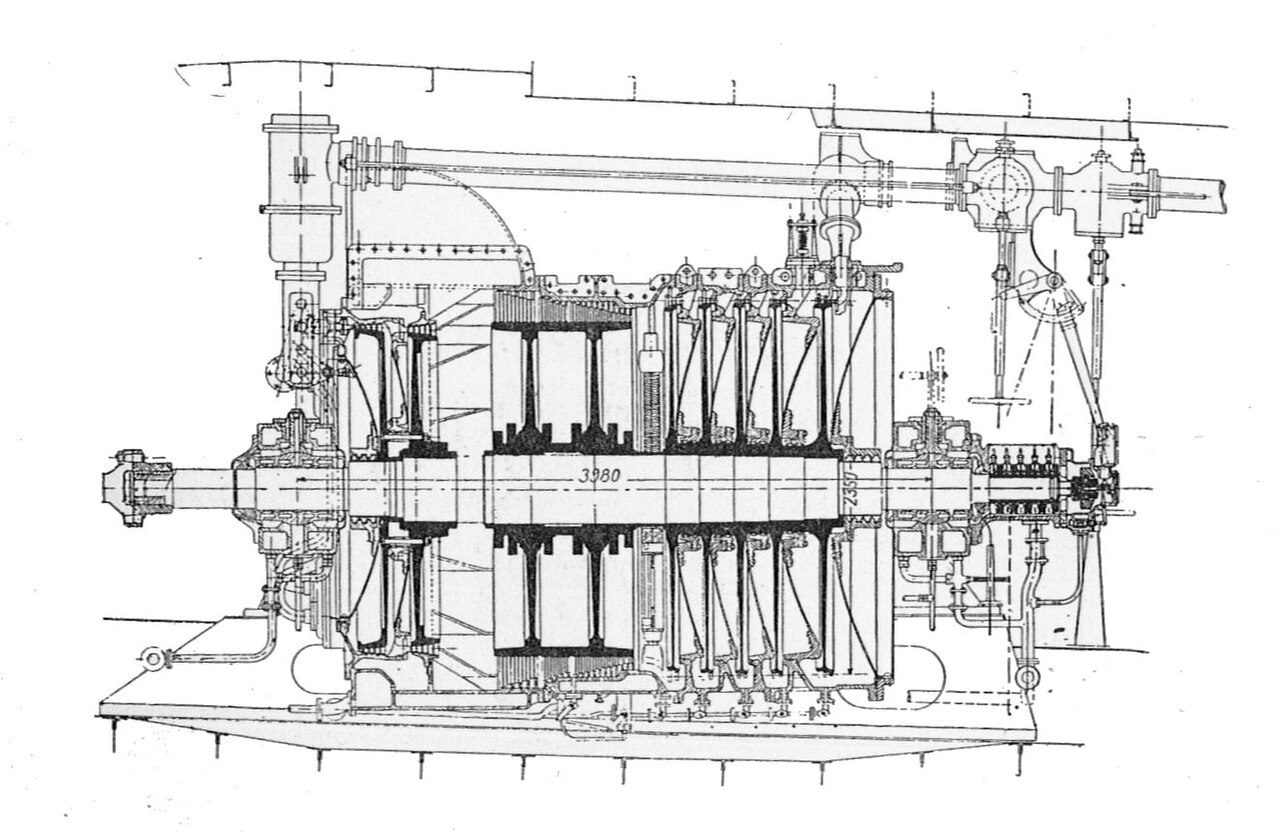
Steam flows through rows of blades to produce continuous rotation instead of the reciprocating motion of a piston engine. High rotational speeds...
Explore artifact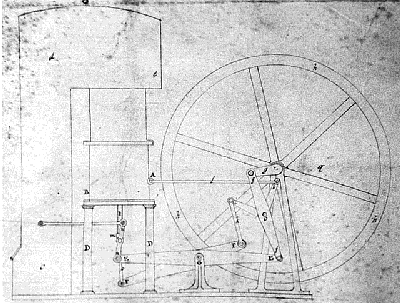
A Stirling engine repeatedly heats and cools a sealed working gas to move a piston. A regenerator stores and returns heat during the cycle, illus...
Explore artifact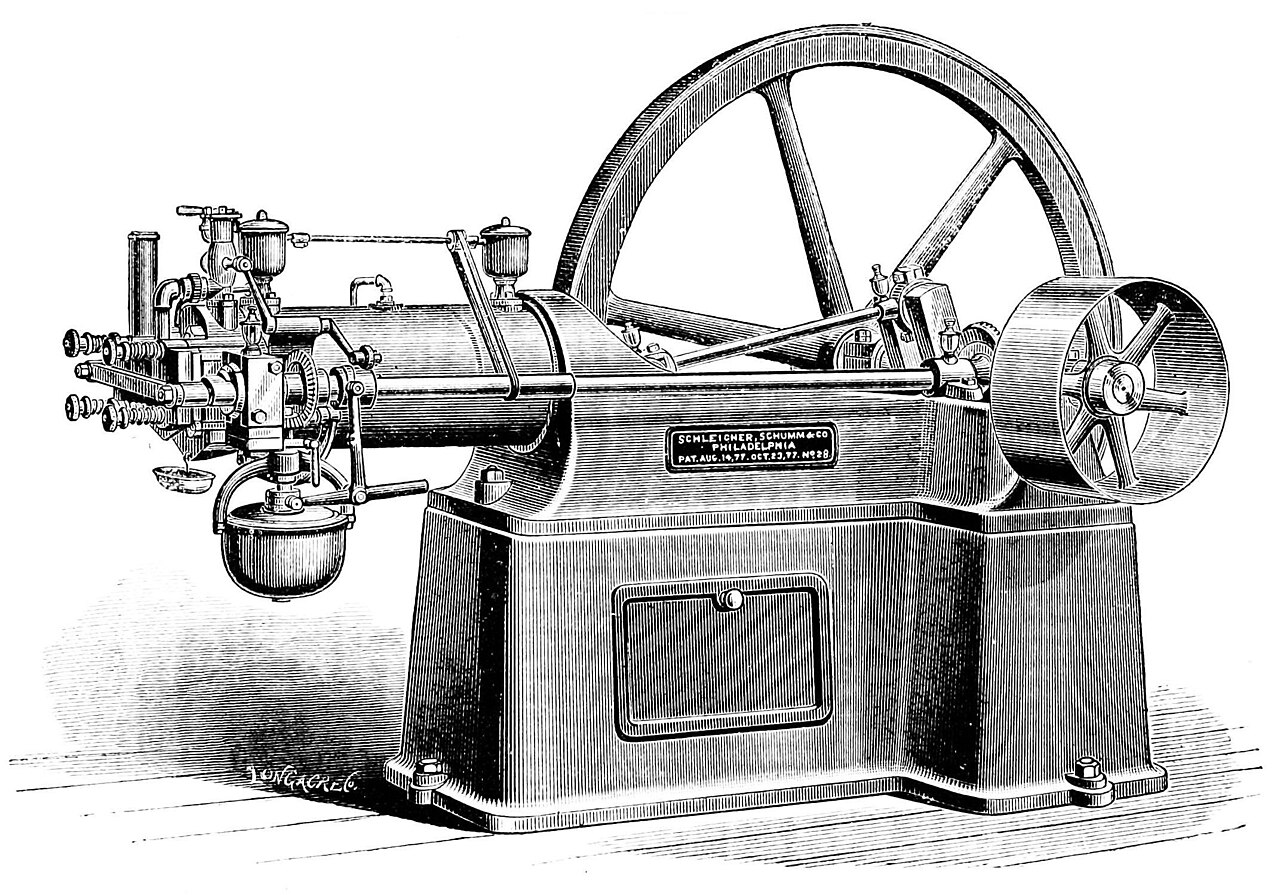
The Otto engine organised intake, compression, power and exhaust into a four-stroke cycle. Its successful use of a compressed fuel-air charge hel...
Explore artifact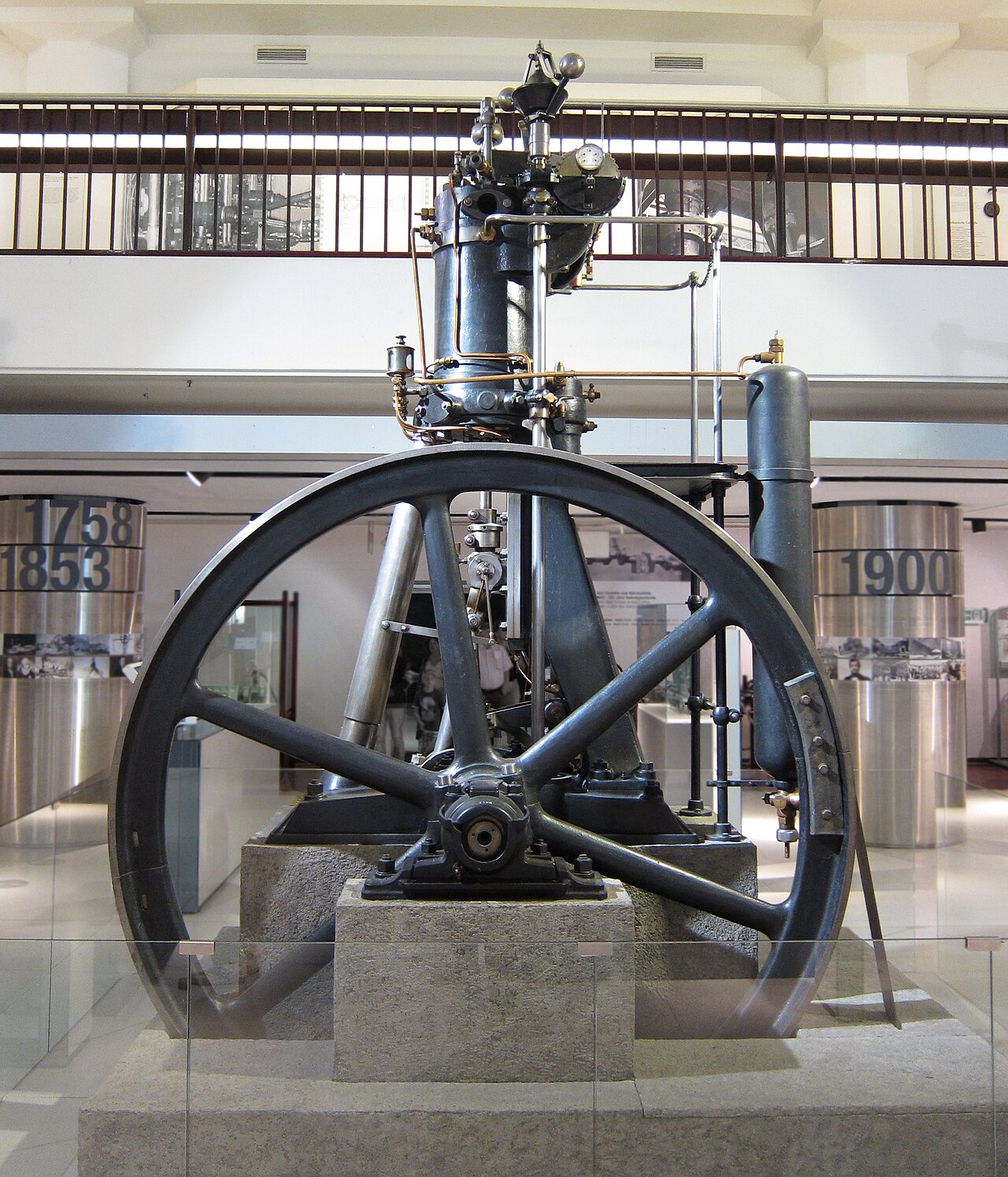
A diesel engine compresses air until it is hot enough to ignite fuel injected into the cylinder. The principle enabled efficient engines that bec...
Explore artifact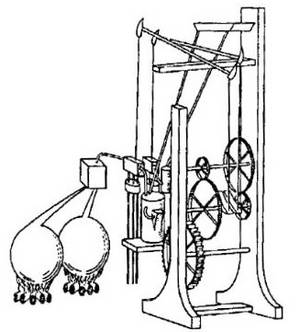
A gas turbine combines a compressor, combustion chamber and turbine in a continuous-flow engine. Hot combustion gases turn the turbine, which dri...
Explore artifact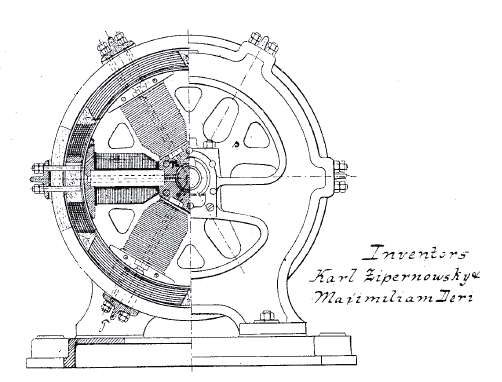
A dynamo converts mechanical rotation into direct-current electricity using magnetic fields and a commutator. It connected engines and water turb...
Explore artifact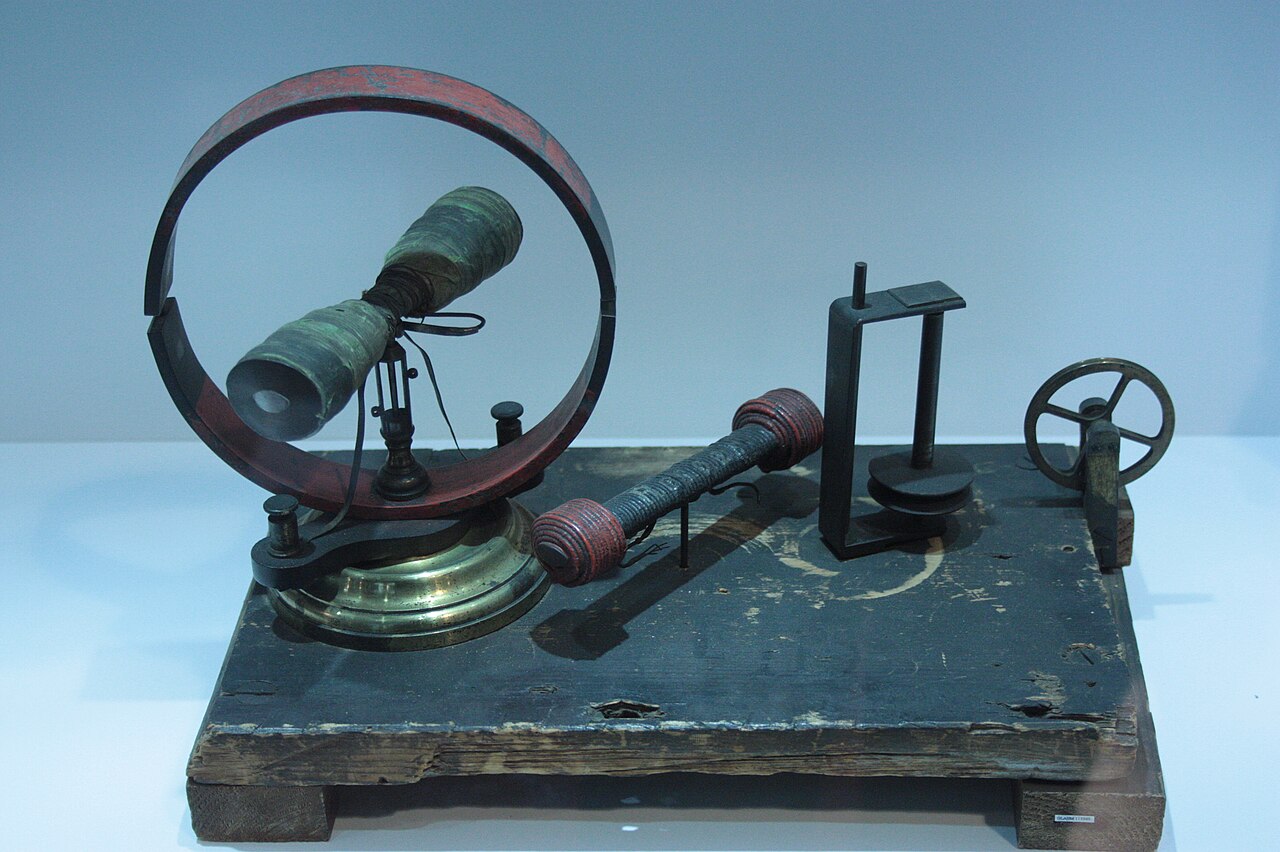
An electric motor turns electrical energy into mechanical motion through the interaction of currents and magnetic fields. As motors spread throug...
Explore artifact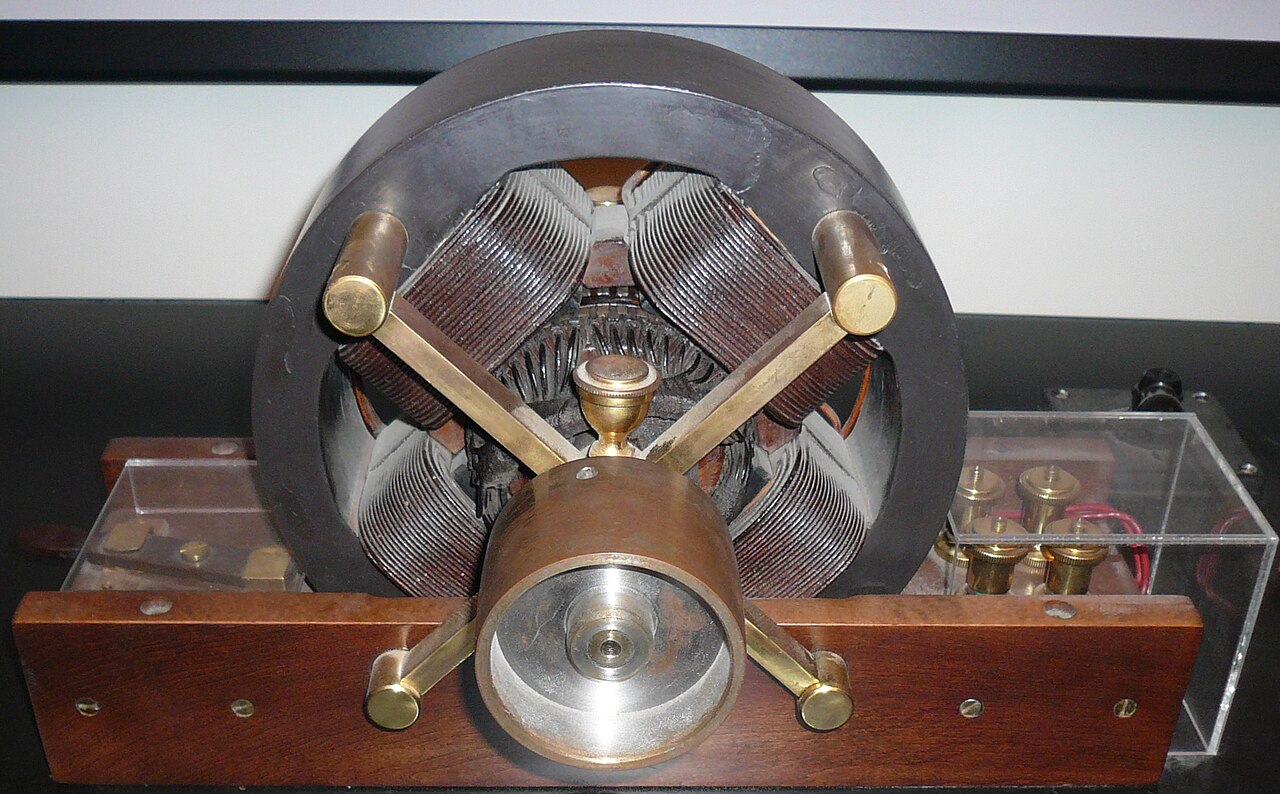
An induction motor creates rotor currents through a rotating magnetic field rather than supplying the rotor directly through electrical contacts....
Explore artifact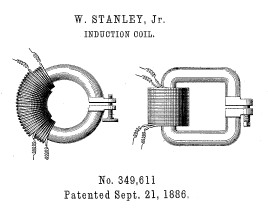
A transformer transfers energy between electrical circuits through a changing magnetic field, allowing alternating-current voltage to be raised o...
Explore artifact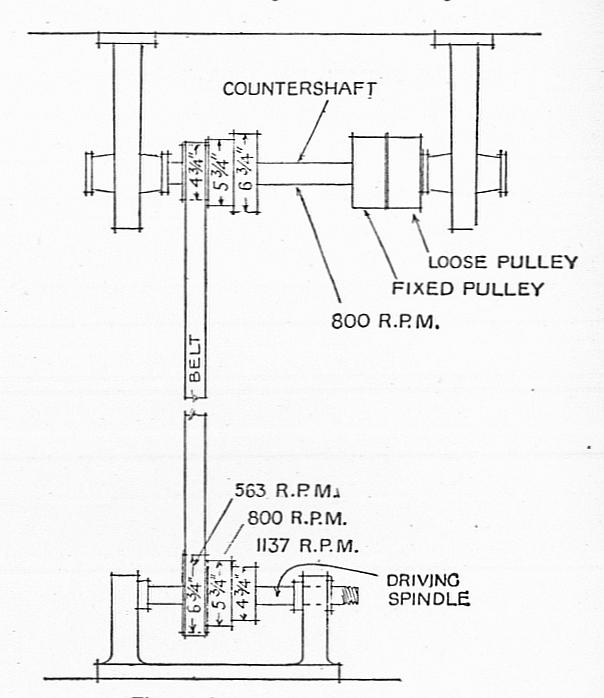
A rotating shaft distributed power from a central engine or waterwheel to machines through pulleys and belts. Line shafts shaped the layout of in...
Explore artifact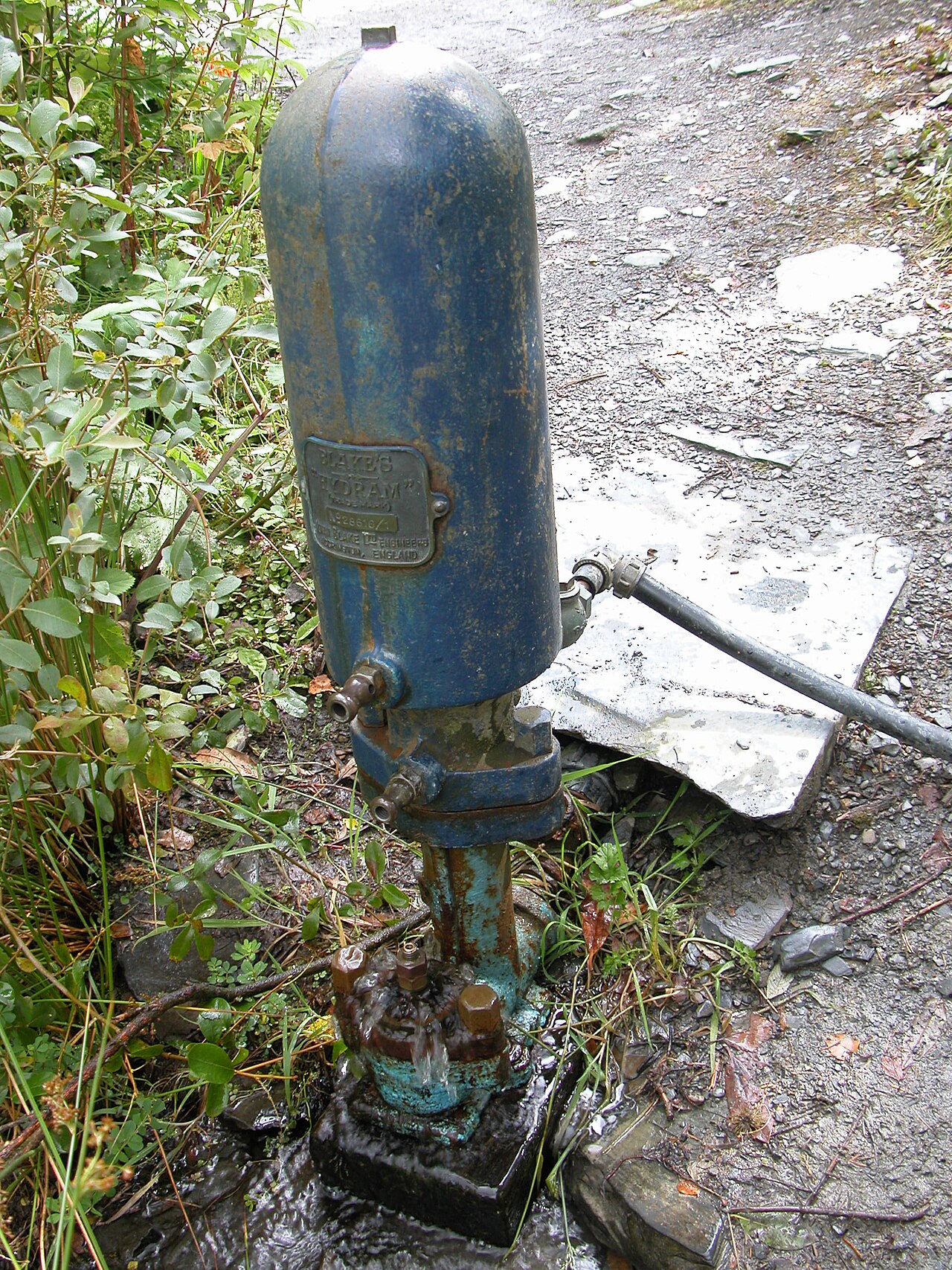
A hydraulic ram uses the pressure surge produced when moving water is suddenly checked to pump a smaller amount of water to a greater height. It...
Explore artifact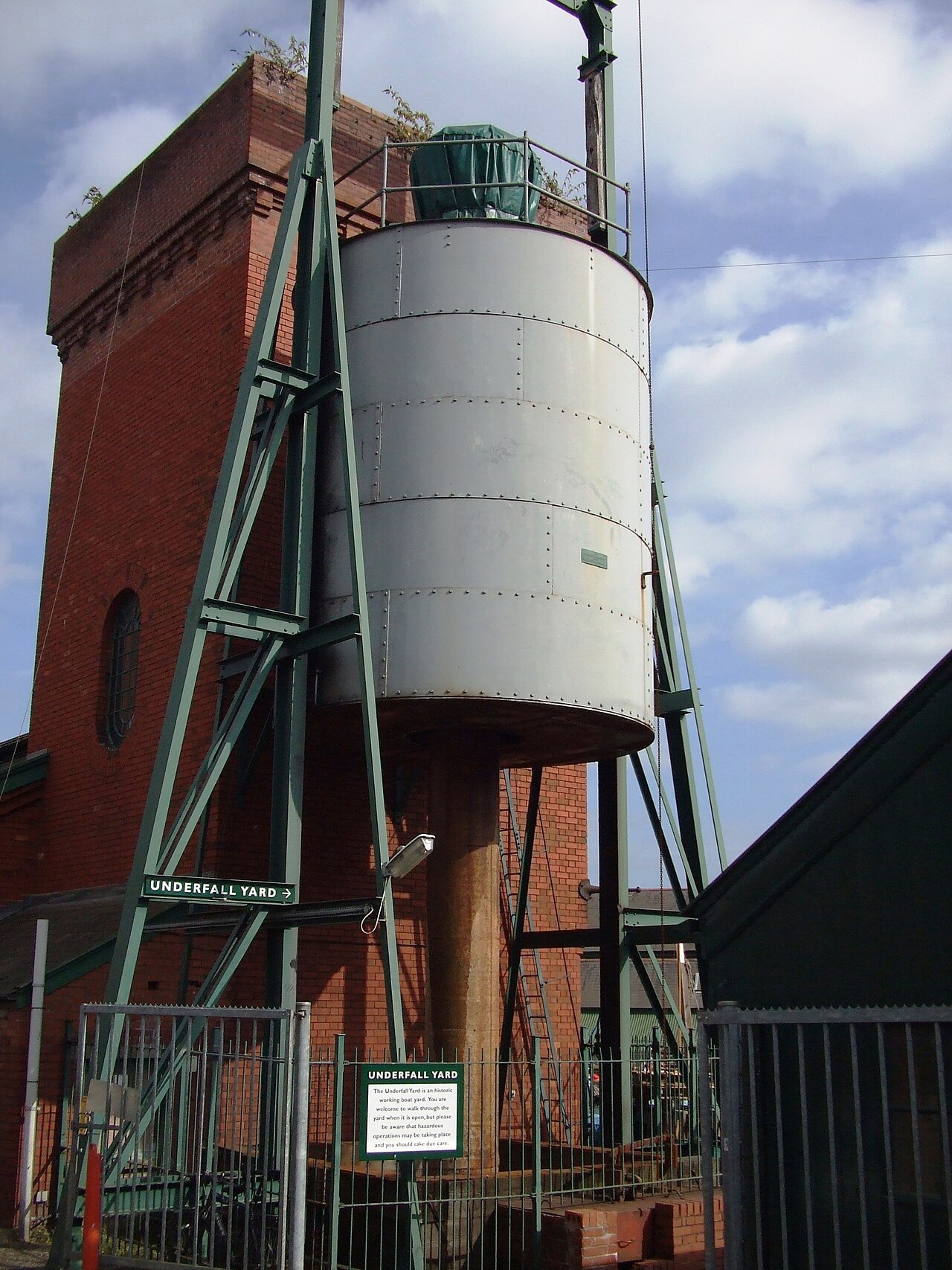
A weighted hydraulic accumulator stores energy by pumping water beneath a loaded plunger. As the weight descends it maintains pressure in a hydra...
Explore artifact