
Look at the curtain behind Joseph-Marie Jacquard. Light seems to come through the folds, and the coat below it looks as if someone shaded it with a pencil. The portrait was woven in silk in Lyon in 1839. At the scale of the loom, every patch of light and dark came down to decisions about where threads crossed.
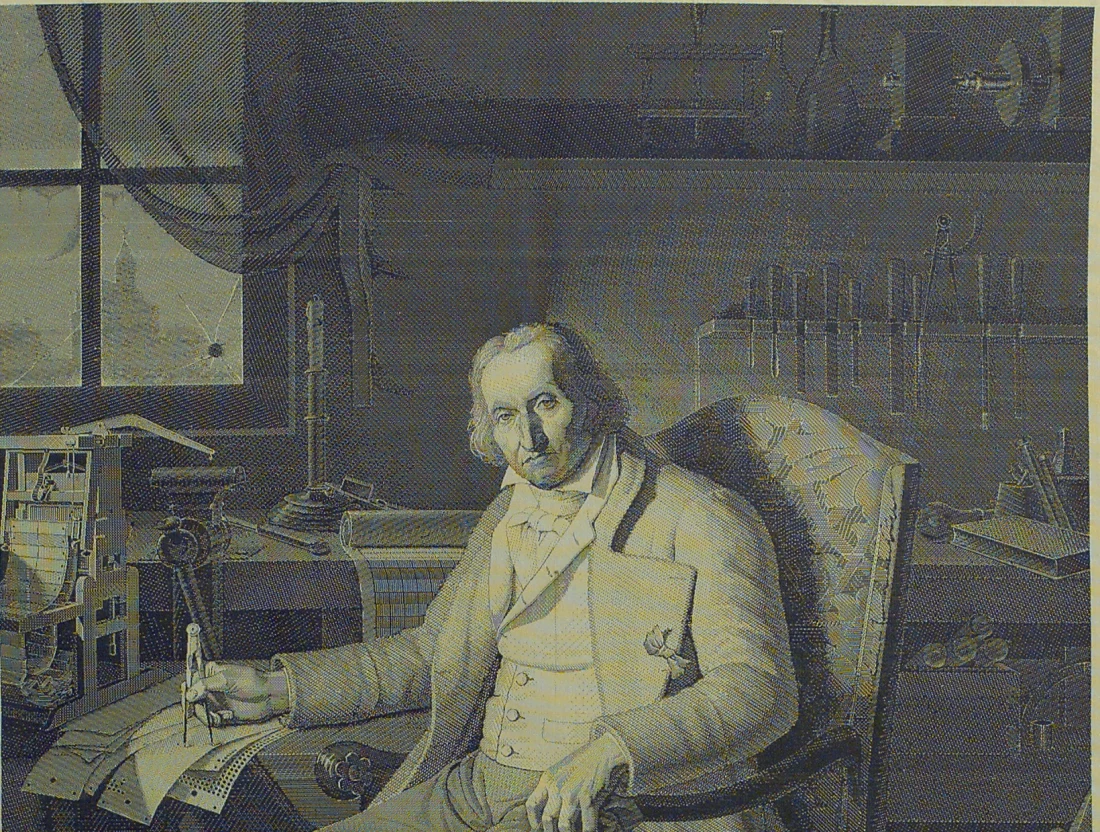
Detail of Joseph Marie Jacquard, woven in silk by Michel-Marie Carquillat after Claude Bonnefond, Lyon, 1839. The Metropolitan Museum of Art, 31.124.
Start with a single crossing
The warp is the set of threads stretched lengthwise on the loom. The weft crosses it. To put in one pass of weft, called a pick, the loom lifts some warp threads and leaves the others down. The opening between the two sets is called the shed. A shuttle carries the weft through it, and a reed presses the new pick against the cloth already woven.
In the video’s example, the warp is blue and the weft is pale. Lift a blue thread and the pale weft passes beneath it, so blue shows at that crossing. Leave it down and the weft passes above it, so pale shows. The loom makes the outline of a diamond by changing that choice across the width of the next five picks.
What happens when a needle finds a hole?
The Jacquard mechanism sits above the loom. Follow one path upward from the cloth. A warp thread runs through the eye of a heddle. A harness cord connects the heddle to a hook in the head. A horizontal needle can push that hook sideways, out of reach of the lifting blade.
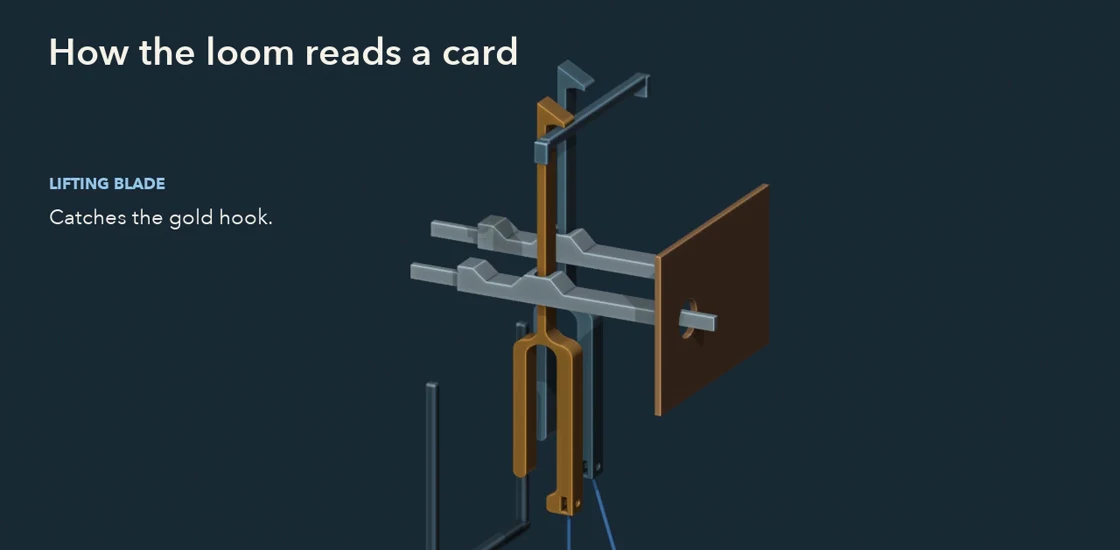
The episode’s two-channel model isolates the choice made at each card position. On the actual head, an array of needles makes those choices together.
- The card meets the needles. A perforated prism, traditionally called the card cylinder, presents the card squarely to the needle array.
- The hole leaves the hook in line. The needle passes through a hole into a matching recess in the prism. The corresponding hook stays in the path of the blade. Where the card is solid, it pushes the needle back and moves the hook aside.
- The blade lifts the selected warp. It catches the hooks that stayed in line. Their cords pull the heddles up, opening the shed for the shuttle.
- The head presents the next card. As the mechanism resets, the prism indexes to its next face and the next card takes its place. The new card selects the warp for the next pick.
The operator or the loom’s drive supplies the force that lifts the threads. The card only determines which hooks receive that lift. On the handloom, the weaver still works the shuttle and beats in the weft.
Five cards, one diamond
Watch the center of the swatch. The first card selects one warp thread, the next selects three, and the third selects five. The last two narrow the selection back to three and then one. Here is the selection across the seven warp positions in the demonstration, from the first pick to the fifth. A filled circle marks a lifted thread.
· · · ● · · ·
· · ● ● ● · ·
· ● ● ● ● ● ·
· · ● ● ● · ·
· · · ● · · ·
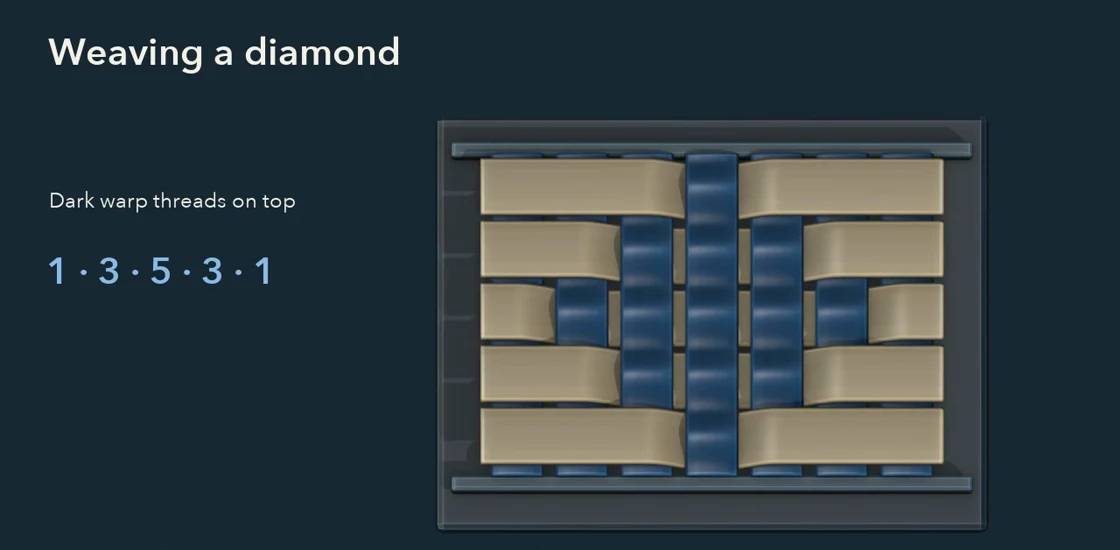
Each line above represents one card’s selection. When the last card in a laced loop gives way to the first, the loom starts the repeat again. Across the width, several heddles can share a hook through the harness, so a given choice can appear at multiple points in the cloth. The card sequence orders the picks. The way the loom is threaded determines where those choices take effect.
A workshop had to do the design work up front. It put the design on squared paper, worked out the thread crossings, punched the cards, and laced them in order. The diamond needs five cards in the demonstration. The Computer History Museum documents a version of the Jacquard portrait design woven with 24,000. That count gives a sense of the work involved in preparing a sequence that could produce the folds and light we see in the portrait.
Who made the choice before the card did?
On a European drawloom, a helper pulled the appropriate harness cords before the weaver sent the shuttle across. In 1728, Falcon’s loom put those selections on a chain of perforated cards. A helper still presented the cards, but the pattern of holes determined which cords the mechanism could lift. Jacquard’s early nineteenth-century attachment brought card presentation into the loom’s cycle, making it practical for a single weaver to work many figured designs.
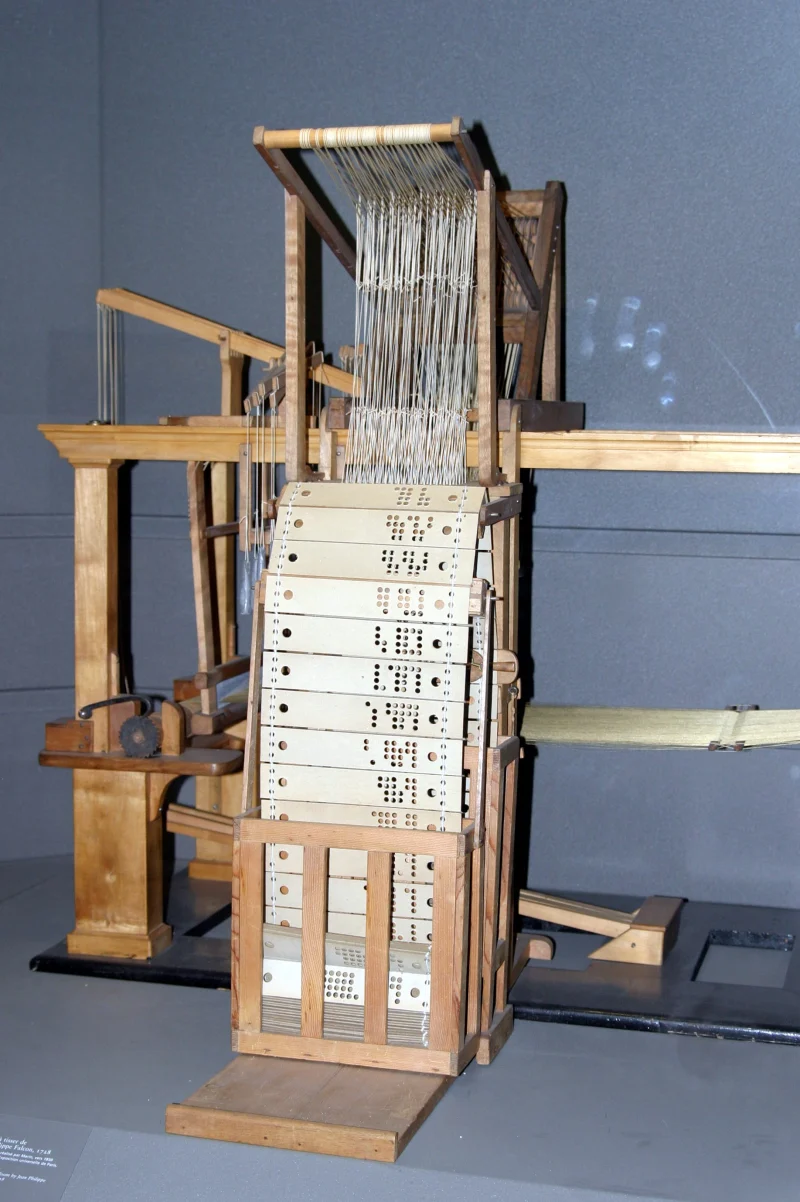
A model of Falcon’s 1728 loom design at the Musée des Arts et Métiers. Look for the linked cards descending from the reader.
What Babbage took from the loom
In the 1830s, Charles Babbage began designing the Analytical Engine. He borrowed the idea of feeding a machine ordered instructions on cards. His proposed engine would use some cards to choose arithmetic operations and others to direct which stored values to fetch or where to put a result. The machine remained unfinished. Its surviving trial mechanisms and cards show how far Babbage took the design.
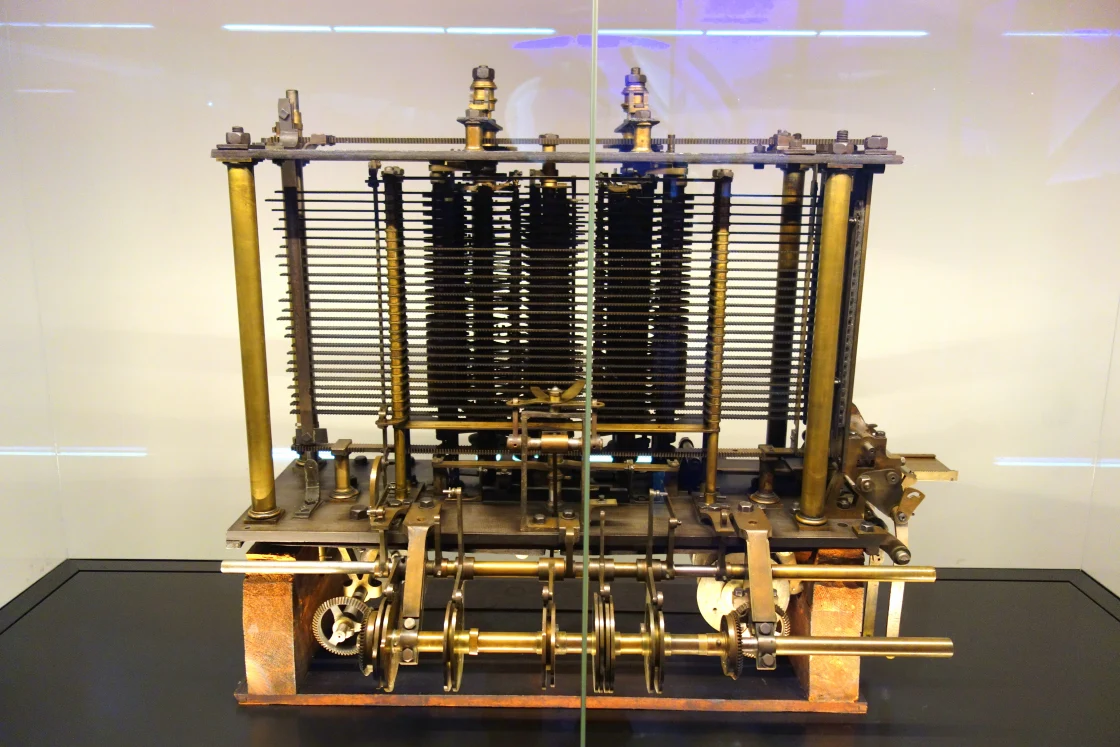
A surviving Analytical Engine trial model at the Science Museum in London.
The episode closes with a FORTRAN card from the electronic computing era. In that workflow a reader could turn a stack of cards into text for a compiler. Back at the loom, each card changes what you can see in the next pick. The blade catches a set of hooks, the shuttle crosses, and another line of the picture appears in silk.
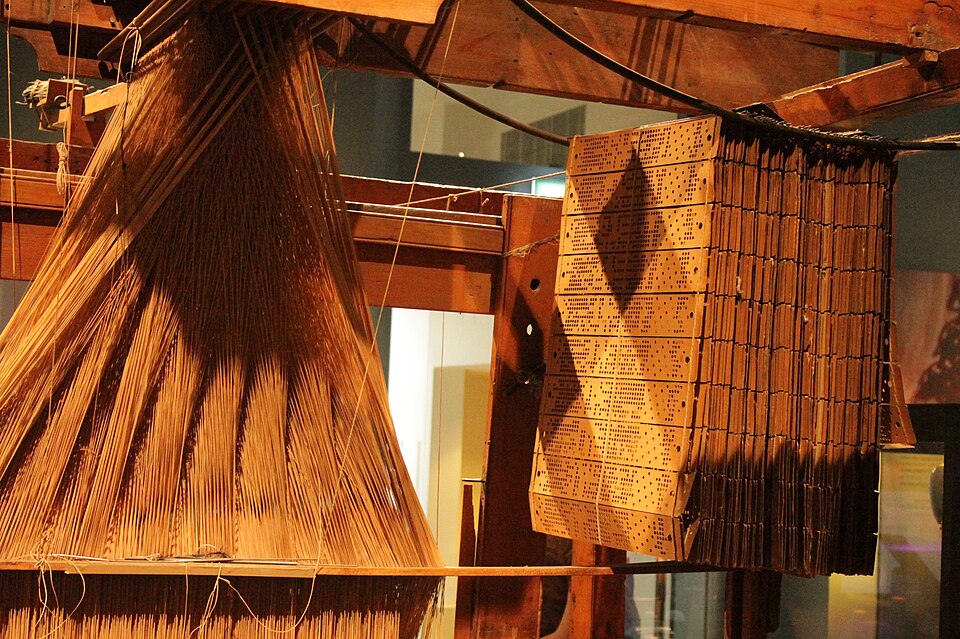 Jacquard Mechanism
COMMENTS (0)
Please Login to join the discussion.