
Watch the locksmith’s hands in the opening shot. Two keys travel side by side. The finished key comes up against a narrow metal point. A spinning wheel cuts into the blank beside it. Each time the point drops into a notch on the original, the wheel cuts deeper on the other side.
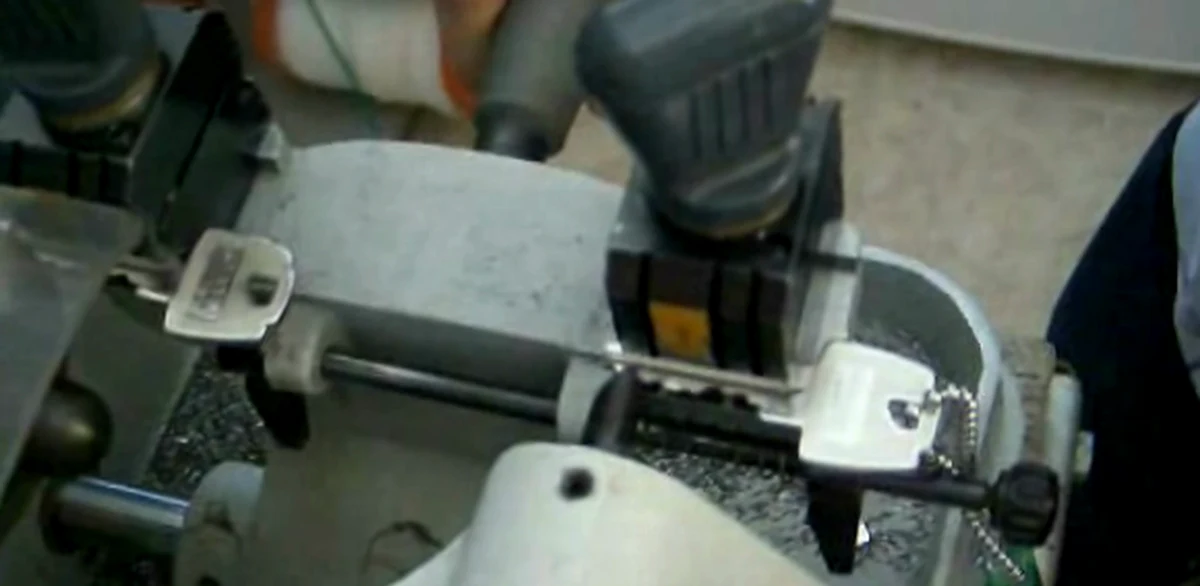
A bench key duplicator in use. The two clamps keep the original and the blank in step. Workshop footage by Schumi4ever. Key Cutting Machines in Modern Machines.
Draw the outline, or let the edge guide the tool
Imagine copying that outline by hand. A scribed line records where the edge should end up. The person holding the file has to read that line, work toward it and judge when enough metal has come away. The original, the mark and the movement of the tool are three separate things.
A mechanical key cutting machine closes that gap. It reads the original at the point where the cutting happens. The finished edge guides a tracer, and the tracer sets the room the blank has to move toward the cutter. As the tools travel along the edge, each rise and dip limits the cut at the corresponding place.
Two clamps, one carriage
Look below the two keys. Their clamps are fixed to the same carriage. When the carriage moves along the edge, both keys travel the same distance. When it moves toward the tools, both advance together. The tracer and the wheel stay in their respective places on the machine.
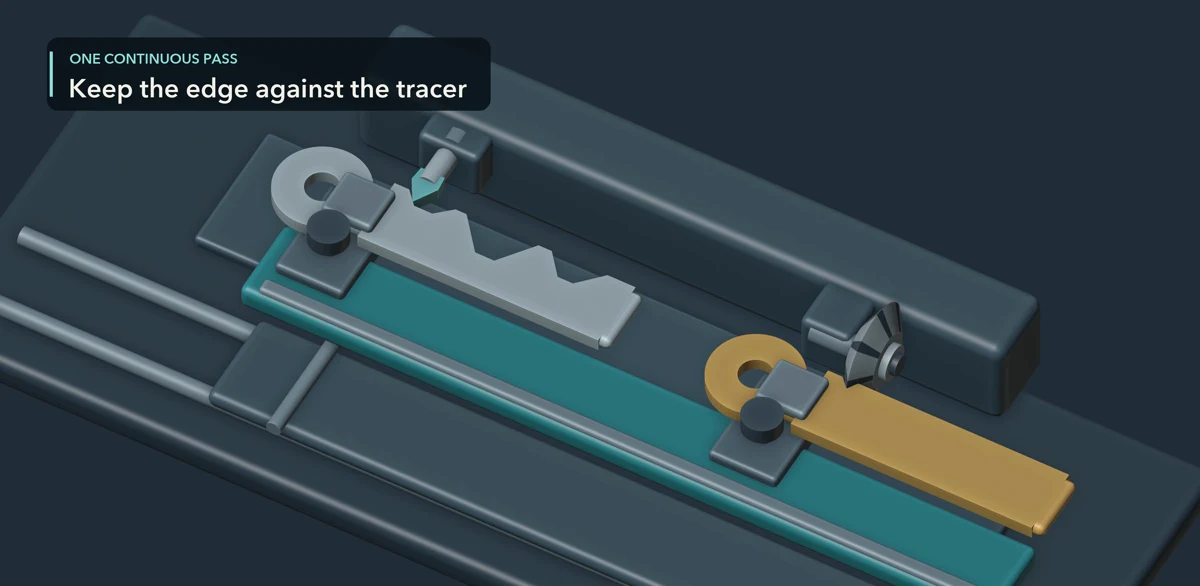
The teal carriage carries both clamps. The tracer on the original side limits how far the blank can approach the cutting wheel.
At a high part of the edge, the original meets the tracer early. That holds the carriage farther away, so the wheel takes off less material. At a low part, the original can approach farther before contact. The blank moves in by the same amount, and the wheel takes a deeper cut. The tracer senses the edge through contact. The motor supplies the energy to cut.
Two things have to agree for the copy to work. The shapes must line up along the key, and each point needs the right depth across it. If the clamps start at different reference positions, a faithful-looking pattern can sit too far forward or back. The machine copies a relationship between positions as well as the shape of the edge.
Why the depth matters inside the lock
The video ends its mechanical demonstration with a three-stack teaching model of a pin-tumbler cylinder. Each stack has a lower key pin and an upper driver pin, held toward the key by a spring. When the correct key is in place, the boundary between each pair lines up with the edge of the rotating plug. That common boundary is the shear line.
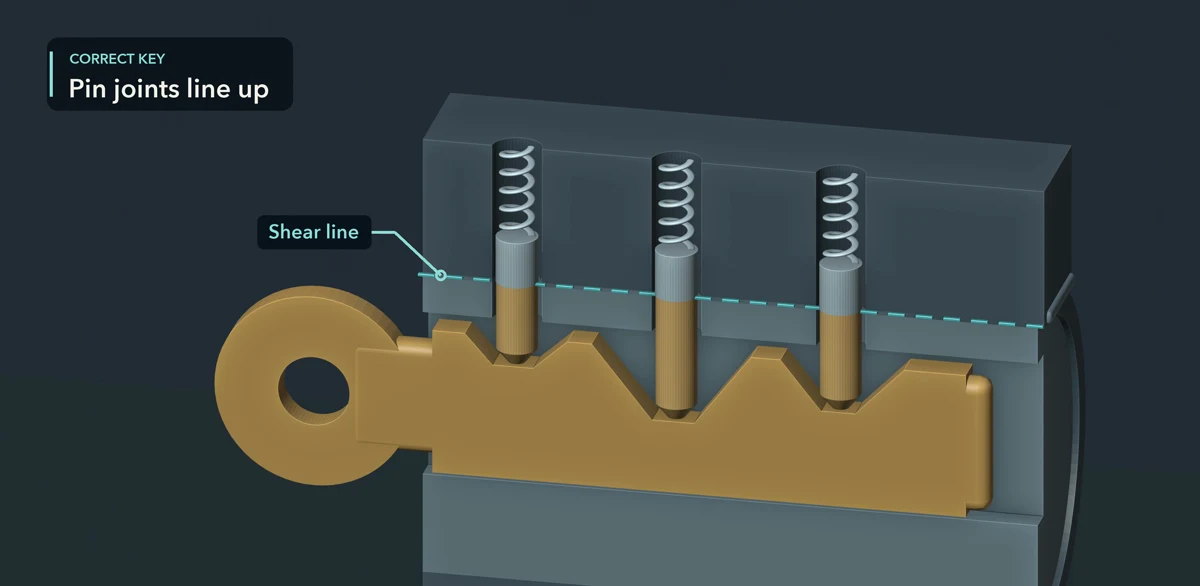
With the matching key in place, the joints between the lower and upper pins line up at the shear line. The plug can turn.
A cut that sits too deep can leave the lower pin too low, so a driver pin still crosses the boundary and blocks rotation. A misplaced cut can bring the wrong part of the profile under a pin. The lock makes differences in the copied edge visible in a simple way. Either all the joints clear the plug together, or one of the stacks holds it in place.
Where the machine keeps its instructions
On the Jacquard loom from page one, the order of the cards tells the loom which warp threads to lift on each pass. Each position on a card gives the reader a choice between a hole and solid card. A key duplicator reads a different kind of instruction. Here, the edge itself varies in depth as the tracer travels, and its motion is transmitted directly to the cutting side.
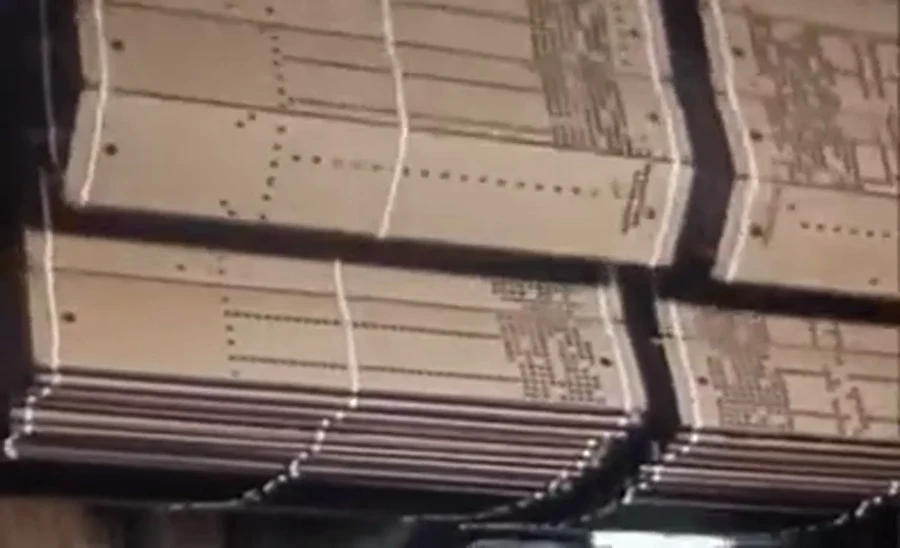
A Jacquard loom reads a sequence of perforations. The duplicator reads a contour. In both machines a physical object governs what the mechanism does next.
The original key can go back in someone’s pocket afterward. For the duration of the cut it has also been a template, carrying the information that makes the second key work.
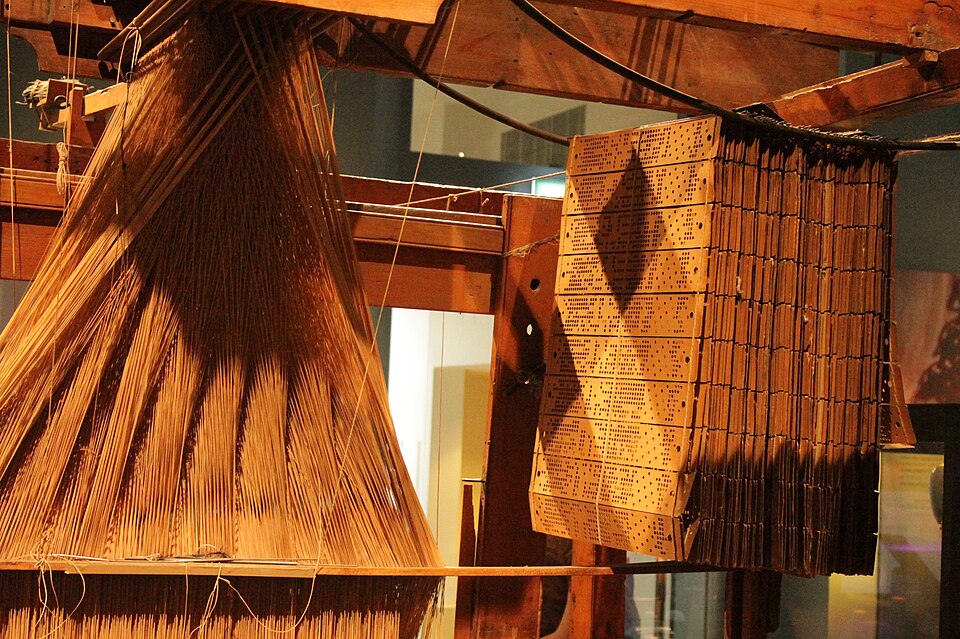 Jacquard Mechanism
COMMENTS (0)
Please Login to join the discussion.