The drop spindle is the first true rotary tool in the history of spinning. It externalized continuous rotation from the human body into an object, marking a decisive technological leap in textile history. In principle, nearly all later spinning machines—from the spinning wheel to industrial frames—can be traced back to it.
What is it?
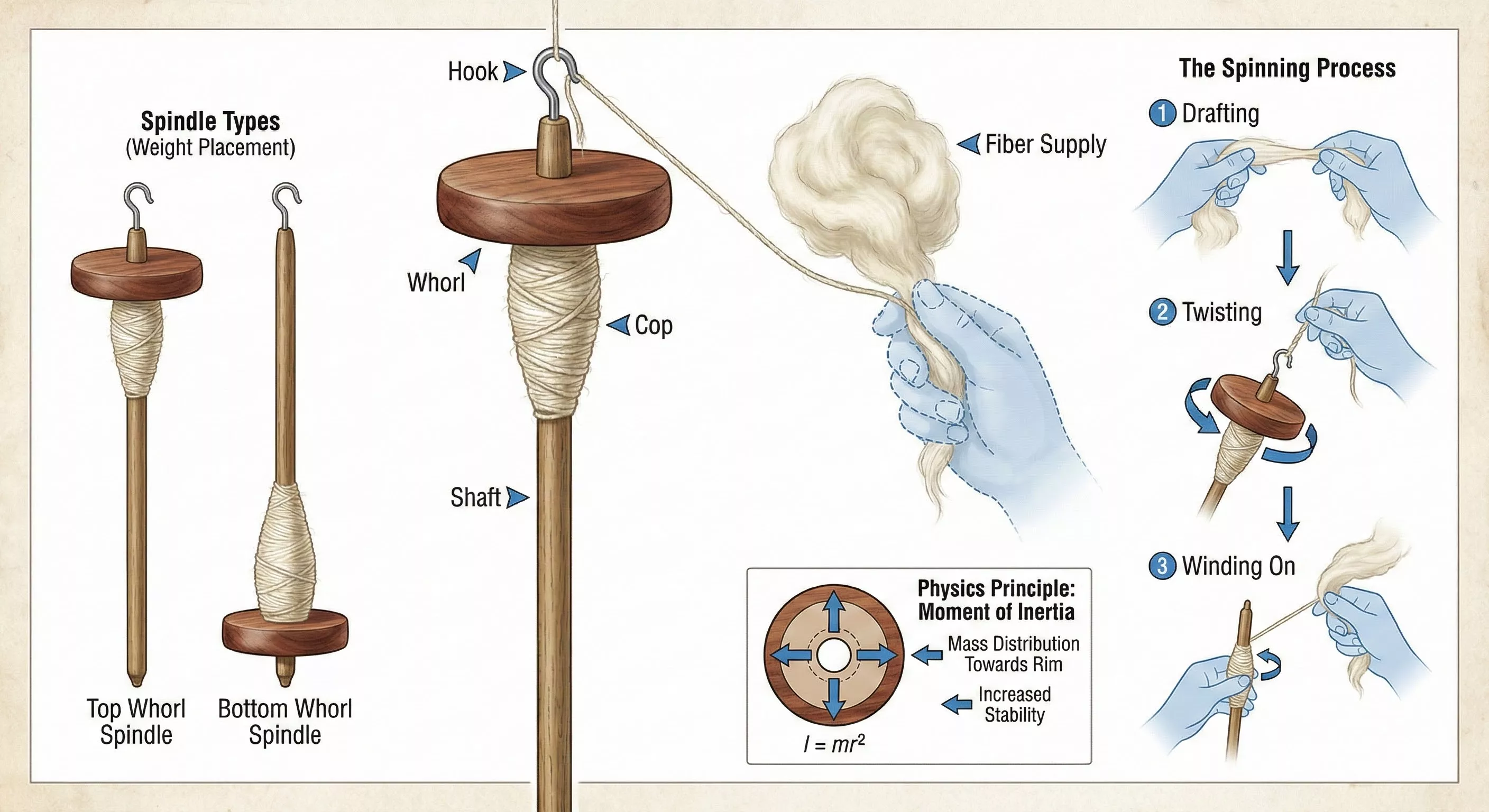
A drop spindle has a very simple structure:
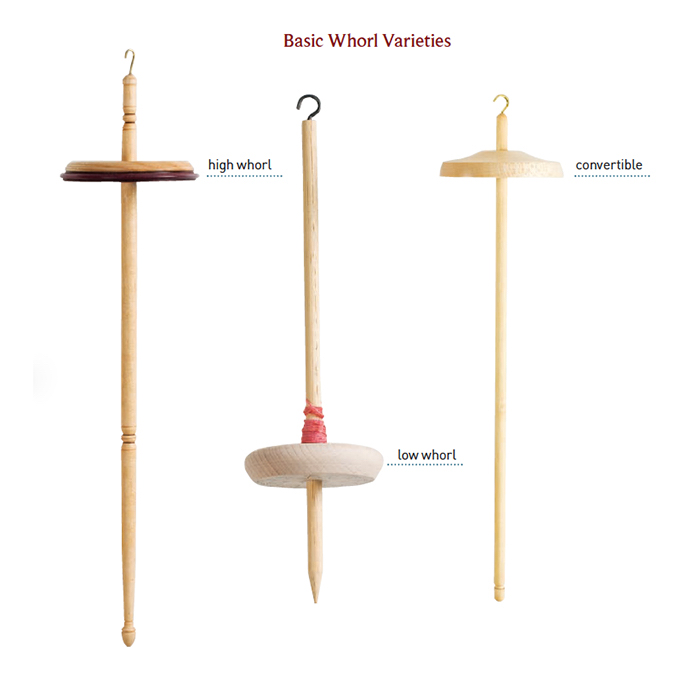
Spindle shaft – a slender rod
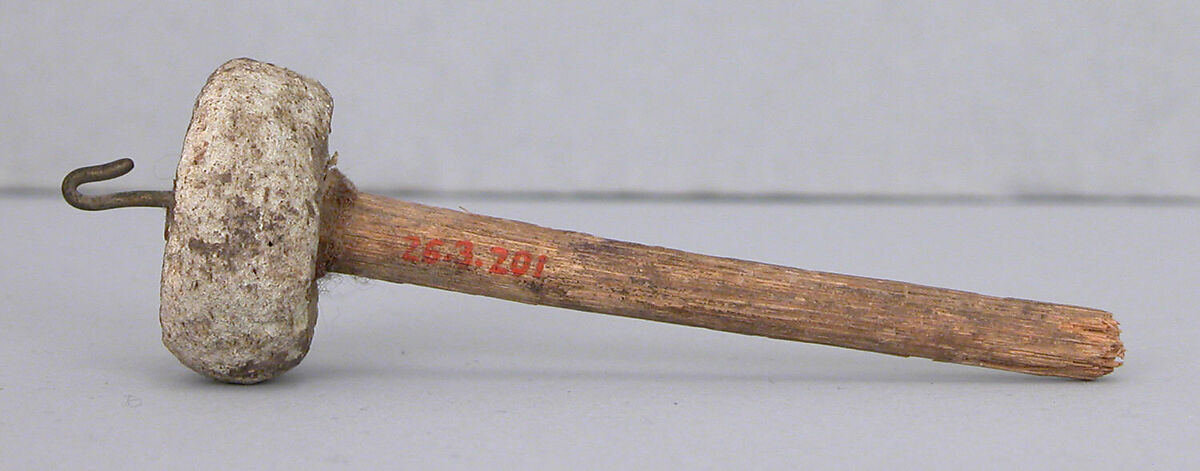
Whorl – a weighted disk fixed to the shaft to add rotational inertia
Hook or notch (optional) – used to secure the yarn
During use, the spindle hangs freely and spins under gravity, maintaining twist through inertia.
In essence, it was the first invention that could spin by itself and continue spinning once set in motion.
How does it work?
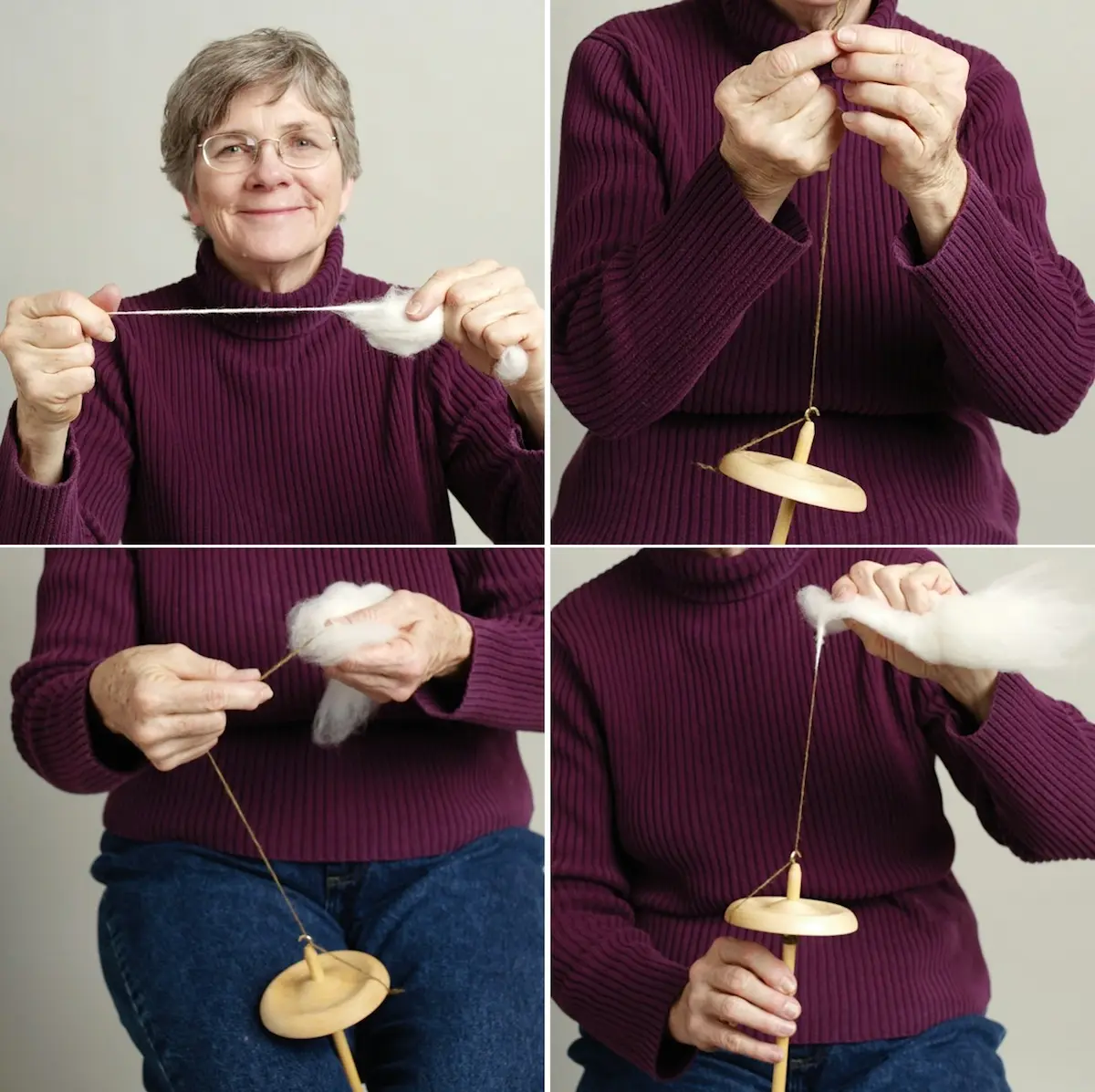
A typical drop-spindle spinning process:
One hand holds the fiber supply (wool, flax, cotton, etc.)
The other hand gives the spindle a gentle flick, setting it spinning as it drops
As the spindle descends:
rotation continuously adds twist
gravity helps draft the fibers
Once the yarn reaches a workable length:
it is wound onto the spindle shaft
the spindle is flicked again to resume spinning
This cycle repeats, producing a long, continuous single yarn
The process can be described as rotation → energy storage → controlled release.
Basic Drop Spindle TutorialBasic
Basic Drop Spindle Tutorial 2 - Finishing Your Yarn
What can it spin?
Suitable for a wide range of fibers:
wool
flax
cotton
early silk
Capable of producing:
fine yarns (previous methods struggled with this)
uniform, consistent thread
controlled twist levels
Supports:
single yarns
plying (twisting multiple strands together)
At this stage, spinning entered a scalable craft phase rather than remaining purely bodily labor.
Historical and archaeological significance
Emergence:
roughly 6000–3000 BCE (dates vary by region)
Found across:
China
the Middle East
Europe
India
the Americas
Key archaeological evidence:
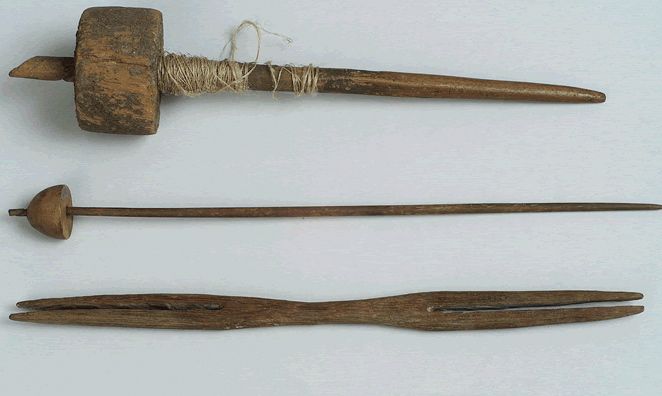
stone, ceramic, or bone whorls
From the weight and diameter of whorls, archaeologists can infer:
yarn thickness
fiber type
level of technical sophistication
Spindle whorls are among the most important indicators of textile-producing societies in archaeology.

COMMENTS (0)
Please Login to join the discussion.