Thigh spinning is an early spinning technique that is more efficient than finger-twisting, yet still requires no tools. It uses the thigh as a rolling surface, allowing the spinner to add twist quickly by rubbing the fibers against the leg with the palm of the hand. Before the widespread use of spindles, this method represented a major improvement in the ability to produce continuous yarn.
What is it?
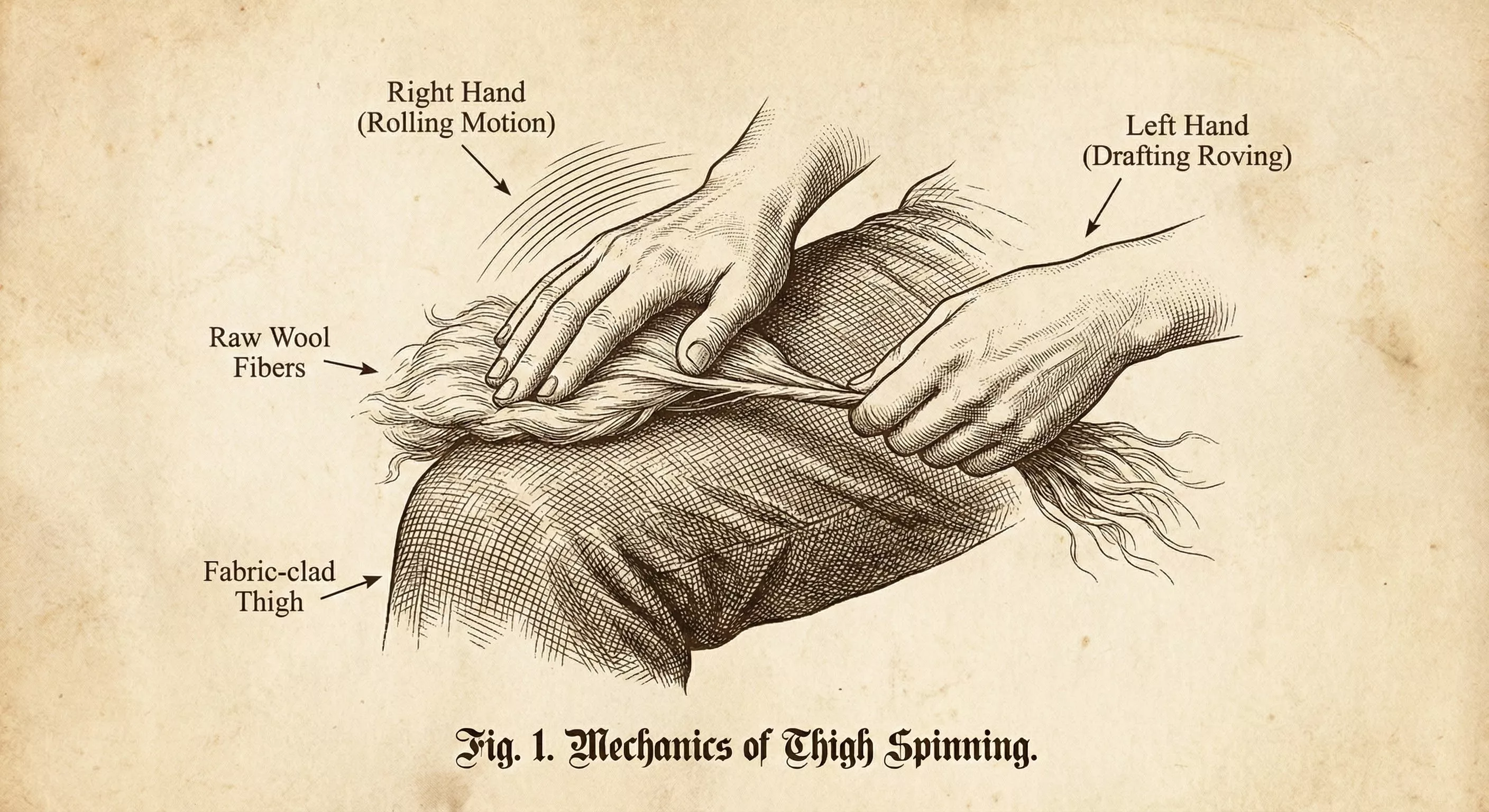
The core idea of thigh spinning is to shift twisting from finger rotation to palm-and-thigh rolling:
Fingers control drafting (drawing fibers out)
The thigh acts as a stable, low-friction rotating surface
The palm rolls rapidly back and forth on the thigh to generate twist
In essence, part of the human body is used as a rotational axis.
How does it work?
A typical thigh-spinning process:
The spinner sits or squats, with the thigh exposed or lightly clothed
One hand holds the fiber supply (wool, flax, or plant fibers)
The other hand:
draws out a short length of fiber (drafting)
lays it against the thigh
rolls it rapidly forward or backward with the palm
The fibers twist quickly into a firm strand
The finished length is wound onto the hand or set aside
For extra strength, two single strands can be twisted together (plying)
The motion is fast and rhythmic, allowing much higher output than finger-twisting.
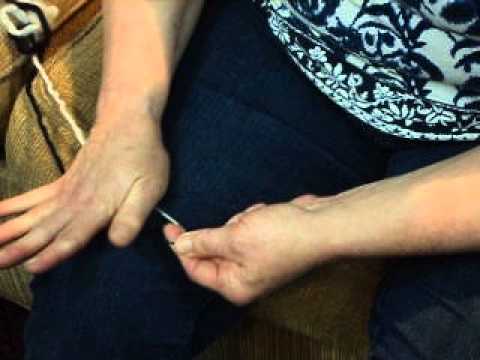
Thigh Spinning Demo
Laine Rinehart (Tlingit) At Work - Teaches How to Thigh Spin
What kind of yarn can it produce?
Particularly well suited for thick yarns and cordage
More even than finger-twisted strands
Strong and durable, ideal for:
nets
bindings
weaving
nalbinding
Not well suited for very fine yarn (still inferior to spindle spinning)
Historically, it became the standard method for producing functional cordage.
Historical and cultural context
Practiced widely in:
prehistoric Europe
Africa
Northern Europe (including Sámi cultures)
Indigenous societies of the Americas
In some cultures, spinning could be done while walking
Predates or coexisted with the spindle
One of the most efficient spinning methods before true rotary tools
Ethnographic records consistently show that thigh spinning was a primary production technique before the spindle.

COMMENTS (0)
Please Login to join the discussion.