Finger-twisting is one of the earliest and most fundamental spinning techniques in human history. It requires no tools at all—no spindle, no wheel—only hands and fingers. Before the invention of spinning tools, this was the primary method by which loose fibers were transformed into continuous yarn or cord.
What is it?
Finger-twisting consists of two core actions:
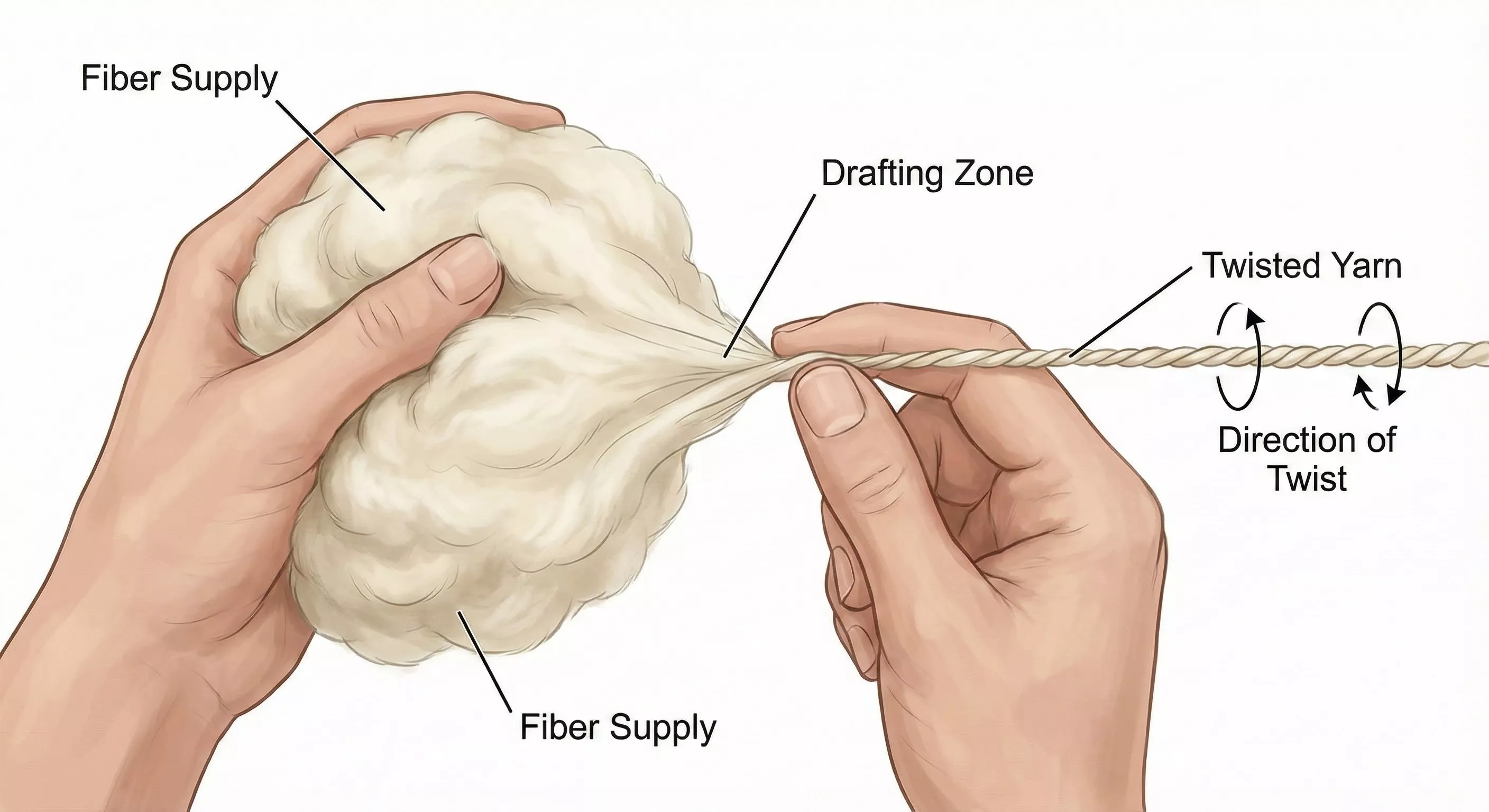
Drafting – gently pulling fibers apart to thin them
Twisting – rotating the fibers with the fingers to bind them together
In essence, it is the process of stretching fibers while adding twist, allowing friction to hold the fibers into a stable strand.
How does it work?
A typical finger-twisting process looks like this:
One hand holds the fiber supply (wool, flax, plant fibers, etc.)
The thumb and index finger of the other hand:
pinch a small section of fibers
draw it out to the desired thickness
twist it by rolling or rotating the fingers
Once a short length of yarn is formed, the spinner repeats the process forward
For greater strength:
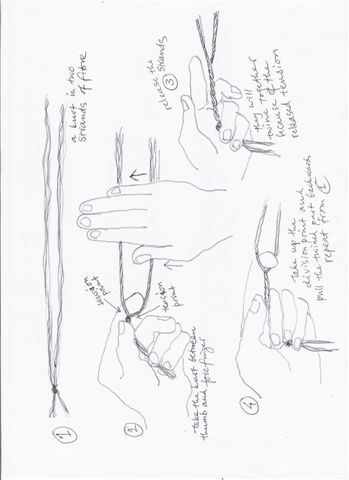
the strand can be twisted more tightly, or
two single strands can be twisted together to form a plied cord
This technique relies heavily on tactile feedback and experience, rather than measurement or mechanical control.
Hand Spin Wool - NO TOOLS
Sri Lankan lady demonstrates how to make rope by twisting coir fibers from coconut husks
How thick or strong can it be?
Finger-twisting is especially suited for thick yarns and cordage
It can produce surprisingly strong cords, suitable for:
binding
nets
sewing
early textile structures
While fine yarns are possible, they are:
slow to produce
difficult to keep even
physically demanding on the hands
Historically, finger-twisting was used more for functional cords than for fine, uniform textile yarn.
Historical and anthropological context
Prehistoric origins:
Before clay whorls or stone spindles existed, finger-twisting was the dominant spinning method.
Widely practiced across cultures, including:
prehistoric Europe
Africa
the Americas
Pacific Island societies
Common uses:
rope and cordage
nets
warp and weft threads
nalbinding (knotless looping)
In many archaeological contexts, spinning activity is inferred without finding spindles, based on wear patterns and fiber remains consistent with finger-twisting.

COMMENTS (0)
Please Login to join the discussion.