
A shaft repeats a movement. A punched card selects a pattern. A sensor reports a broken yarn. Together, these functions show how automation spread through textile production: first through repeated motion, then through stored instructions and increasingly through responses to changing conditions.
1801: Jacquard stores a pattern in punched cards
A loom selects which warp threads rise to form each shed. Elaborate fabrics require long, intricate sequences of those selections. The Jacquard mechanism stored them in linked punched cards, developing ideas previously explored by Bouchon, Falcon and Vaucanson.
Jacquard demonstrated his mechanism in 1801. A chain of cards advanced through the attachment, directing the warp selection for successive picks. The weaver could repeat an elaborate pattern by running the sequence again, while continuing to operate the loom.
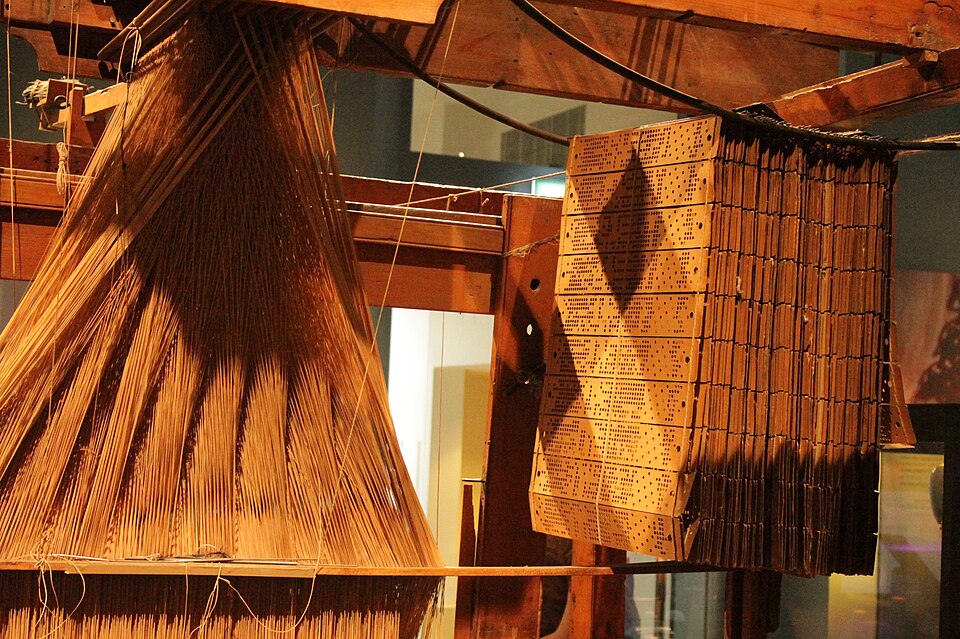
Jacquard cards and lifting cords on a loom at the National Museum of Scotland. The card chain carries the sequence of warp selections. Explore this exhibit →
By the 1820s, Jacquard looms were recorded in the Scottish textile industry. The museum loom and its cards let us follow the attachment as an operating mechanism, beyond the demonstration of 1801.
A chosen pattern could now be stored separately from the immediate movements of the weaver. Designers and card makers prepared the sequence, and the mechanism read it as weaving proceeded. Setting up the warp, providing the drive and maintaining the loom remained part of the work required to turn those instructions into fabric.
A small example: separating a pattern from its execution
In this simplified plain-weave sequence, alternate warp positions rise for each pick. A and B specify two selections; repeating them specifies the repeating weave. Actual Jacquard cards encode selections through the hole arrangement required by their mechanism.
| Pick | Warp 1 | Warp 2 | Warp 3 | Warp 4 |
|---|---|---|---|---|
| A | Up | Down | Up | Down |
| B | Down | Up | Down | Up |
Changing the sequence changes the pattern selected by the loom. Punched cards made those choices durable and repeatable, allowing a design to be stored, reused and transferred as a physical set of instructions.
1825 and the 1800s: automating the spinning cycle
Pattern selection was only one route towards automation. In 1825 Richard Roberts patented a self-acting spinning mule, bringing more of its outward-and-return movements under mechanical control. Ring spinning followed a different working cycle, forming and collecting yarn continuously.
The ring spinning frame brought twisting and winding into a continuous process. Developed in nineteenth-century North America, ring spinning spread unevenly between textile districts, while mule spinning remained important in parts of the British industry.
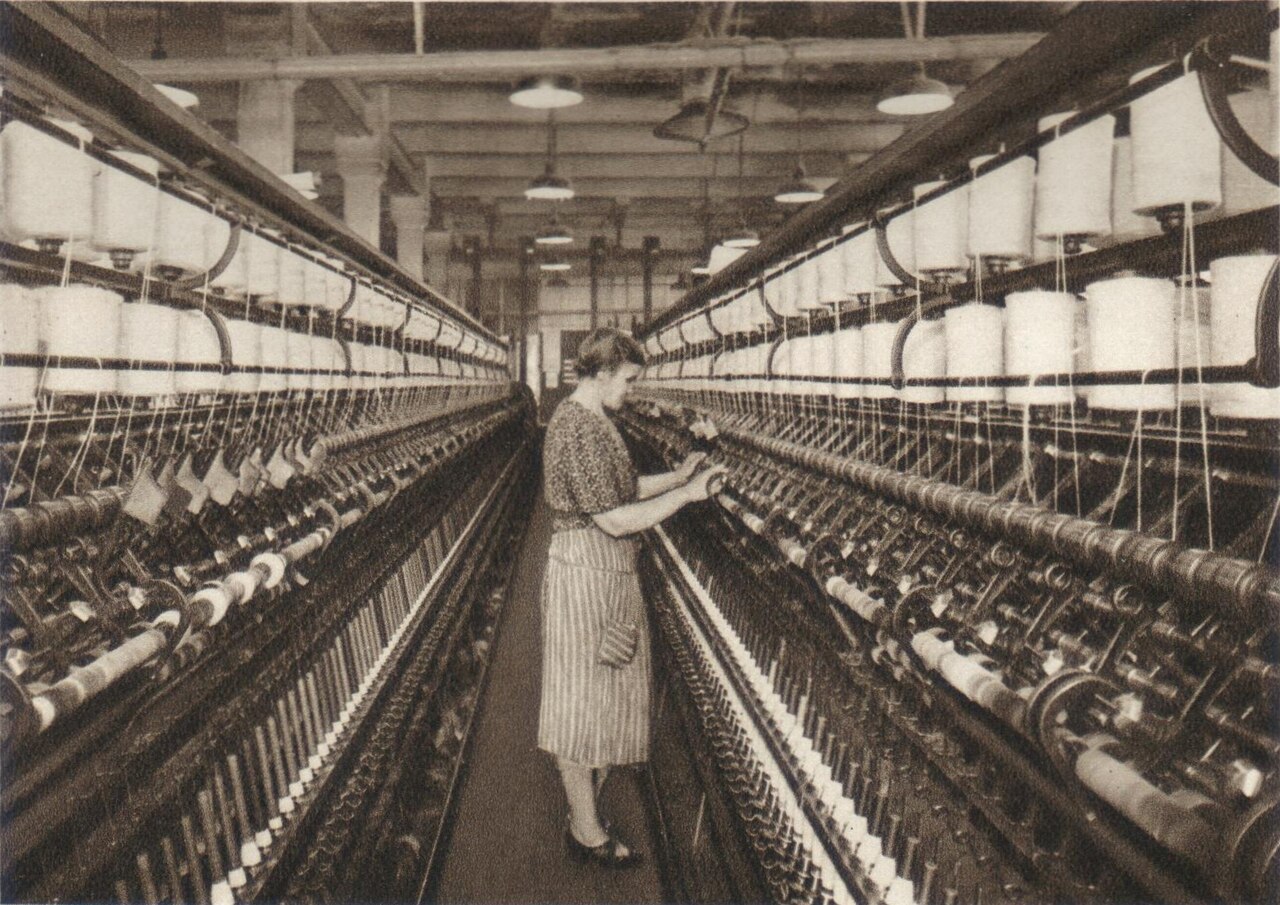
Ring spinning at Drags wool factory in Norrköping, Sweden, photographed in the 1920s. Repeated spinning positions still needed an operator to attend to the yarn. Explore this exhibit →
Fibres, yarn specifications, existing equipment and operating knowledge all influenced a mill’s choice. Replacing machinery required investment and changes elsewhere in production. Spinning systems could coexist for long periods because they served different combinations of products and costs.
Today, manufacturers offer ring, compact, rotor and air-jet spinning systems for different yarn requirements. Air-jet spinning forms yarn; air-jet weaving uses an air stream to carry finished weft across a loom. Each acts at a different point in the production chain.
Around 1900: electrical power changes the drive
Olympia Mills opened in 1899 as an all-electric cotton mill. The electric motor offered another way to deliver rotation to machinery. Some installations still drove a shared shaft; distributing motors to individual machines enabled a further change in layout and control.
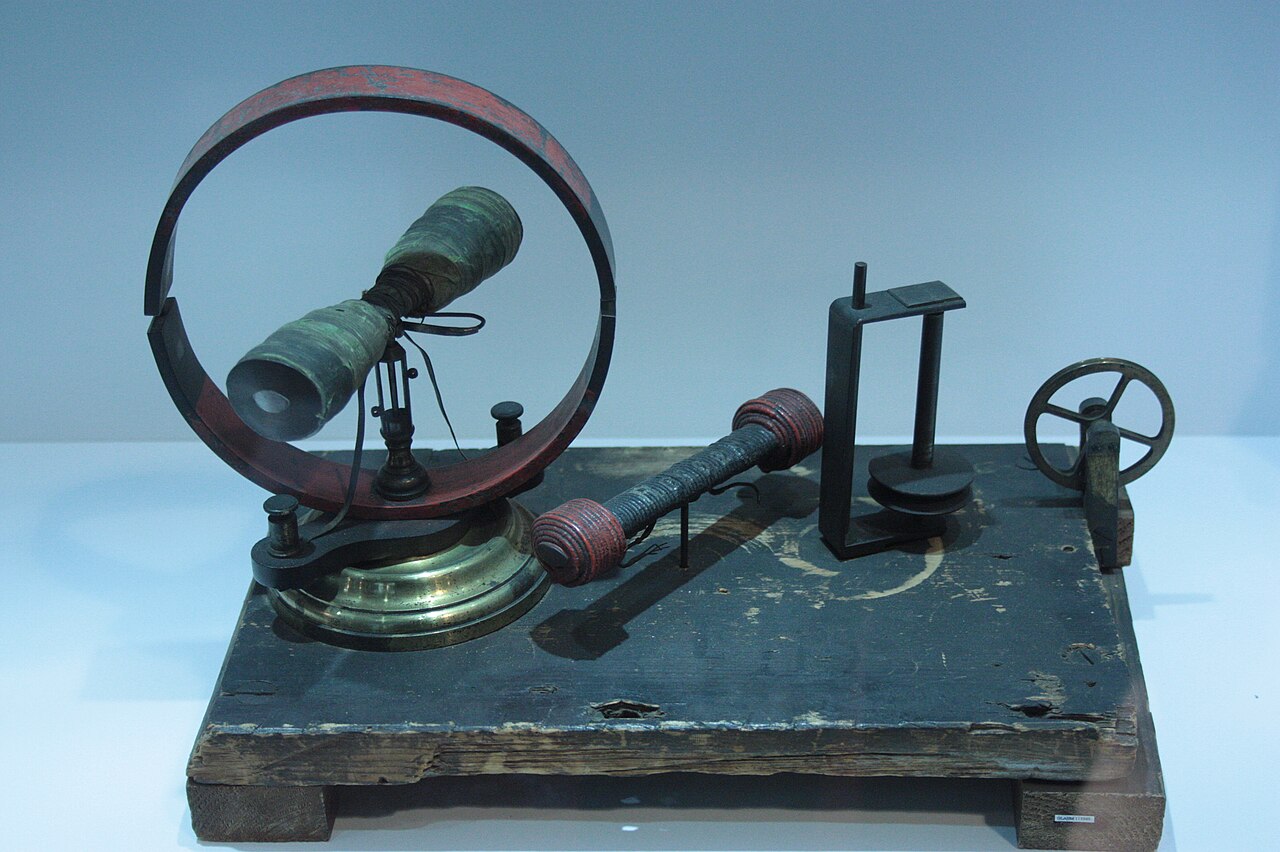
An early electric motor in the existing collection. Its exposed field arrangement, rotor and output shaft show how electrical input becomes rotation. Explore this exhibit →
Individual electric drives gave mills more freedom to arrange and control machinery. A particular machine could be stopped or adjusted without mechanically tying every movement to the same line shaft. Power distribution became less dependent on long runs of belts and shafts across the factory.
1953: changing what crosses the shed
A boat shuttle carries its own bobbin through the shed. In a projectile system, a much smaller carrier takes yarn from a package that stays outside it. Sulzer began supplying projectile weaving machines in 1953, adding a new insertion method to the history of the power loom.
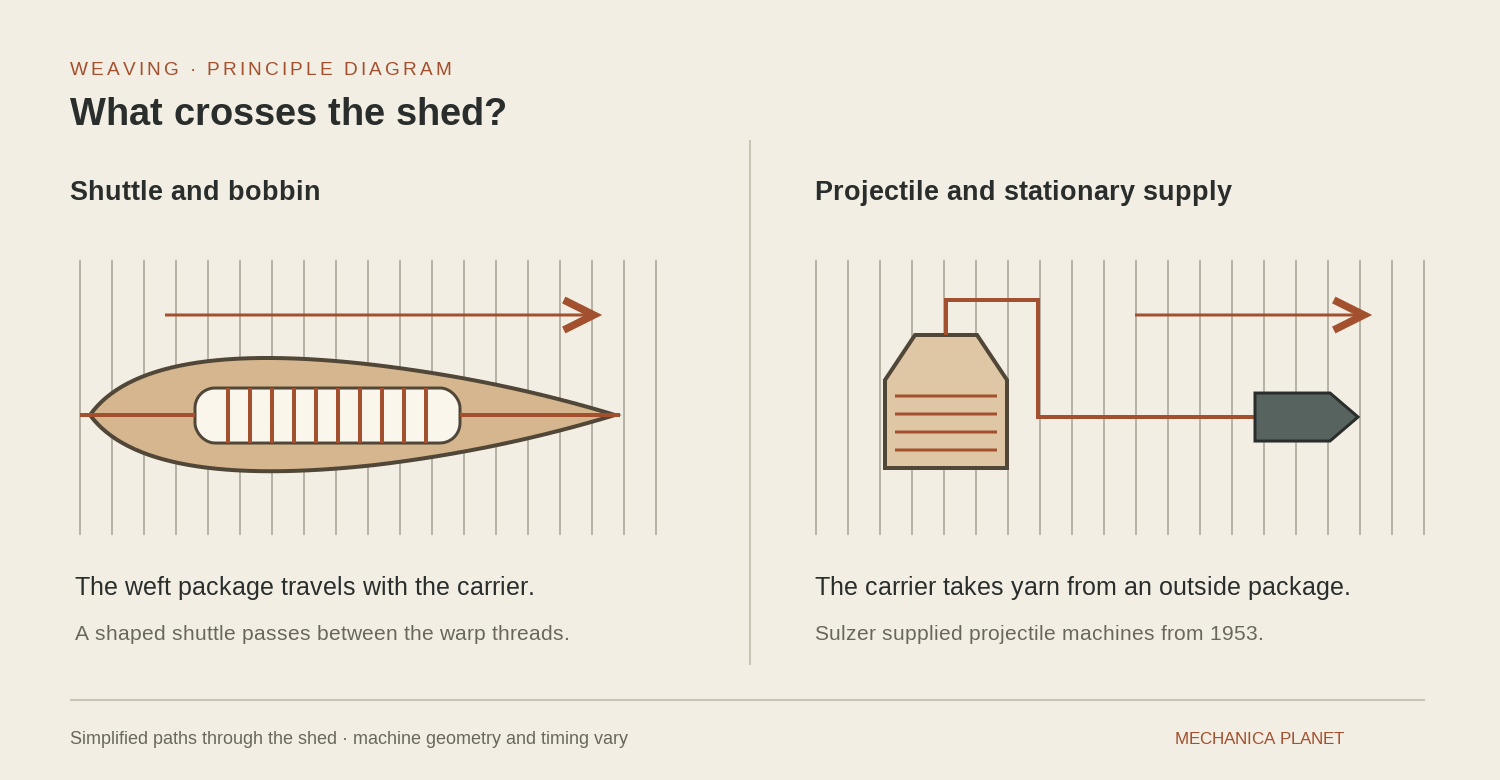
Principle diagram: a shuttle carries its weft package; a projectile takes yarn from a stationary supply. Explore this exhibit →
Shuttleless weaving developed several ways to carry weft across the shed: a rapier, a projectile, or a stream of air or water. Each system places different demands on the yarn and suits particular working conditions. Selecting an insertion method became another decision linking the loom’s mechanism to the fabric being made.
2019–2024: detecting a fault and carrying out a response
When yarn breaks at a spinning position, production there stops. A monitoring system can identify the affected position; a piecing operation must then restore the yarn path before useful work resumes. Connecting detection with a physical response allows more of the interruption to be handled automatically.
Rieter launched ROBOspin in 2019. Its 2024 report describes a combination in which spindle monitoring works alongside the piecing robot. The company also identifies material transport and machine feeding among the remaining areas of manual work in advanced mills. Automation reaches across the production chain, but its coverage still varies from one operation to another.
Trace the material, then trace the information
- Preparation: fibres are opened, cleaned and arranged for further processing.
- Spinning: the chosen process makes yarn with specified characteristics.
- Handling: material and packages move between working stages.
- Monitoring: observations identify conditions requiring attention.
- Response: a person or mechanism changes the process, replaces a supply or attends to a fault.
A mill can automate yarn formation while depending on people to move supplies, replace packages or attend to faults. Its degree of automation rests on how these stages connect, as well as on the performance of the individual machines.
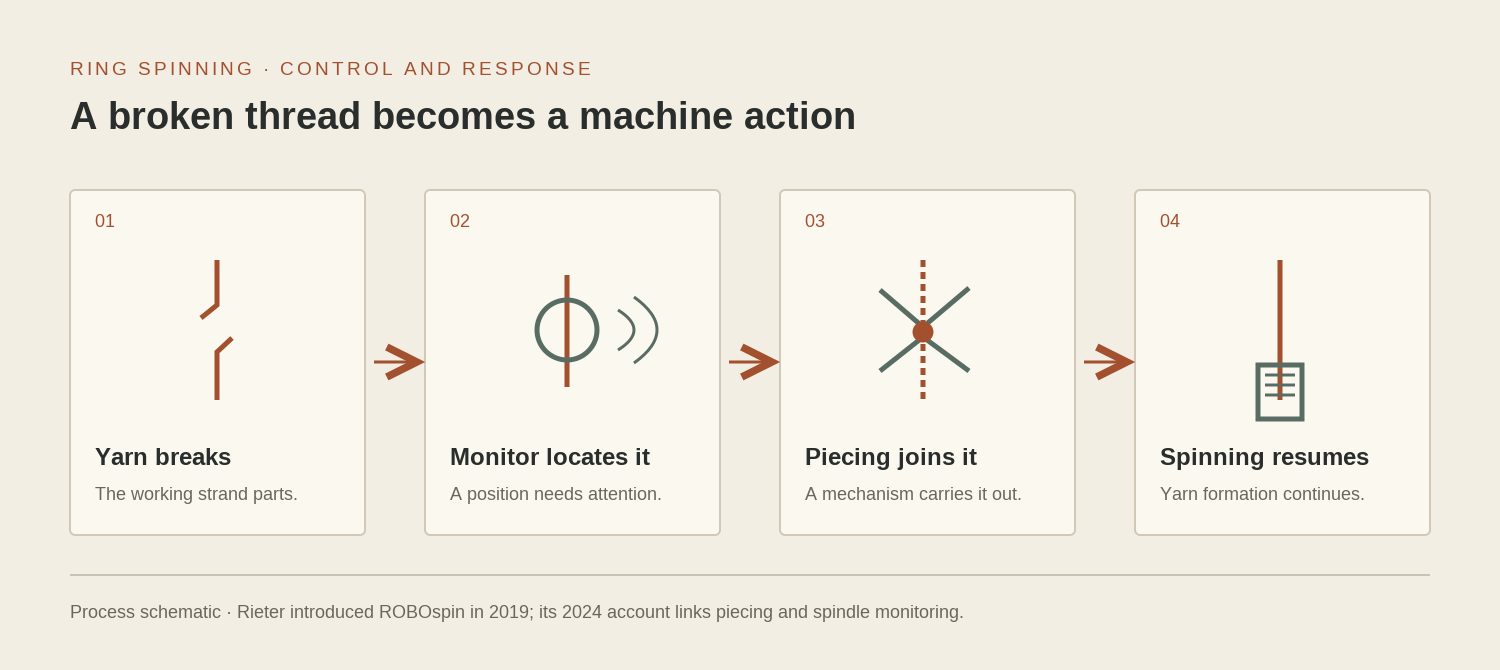
Process schematic: spindle monitoring identifies a broken yarn and a piecing mechanism carries out the joining operation. Explore this exhibit →
What changed across the whole story?
The spindle gave rotation a useful tool. The wheel reorganised its supply. Multi-spindle and roller machines changed the scale and control of yarn formation. Mills connected those machines to power, supplies and organised labour. Pattern mechanisms and later electronic systems placed more instructions and responses into equipment. Each step changed the division of work; none removed the need to manage material.
Across these changes, textile machinery made linked operations more repeatable and extended the scale on which they could be carried out. It also reorganised the labour and supply networks around them. The small task of guiding fibres into yarn became part of a production system reaching from farms to factories and markets around the world.
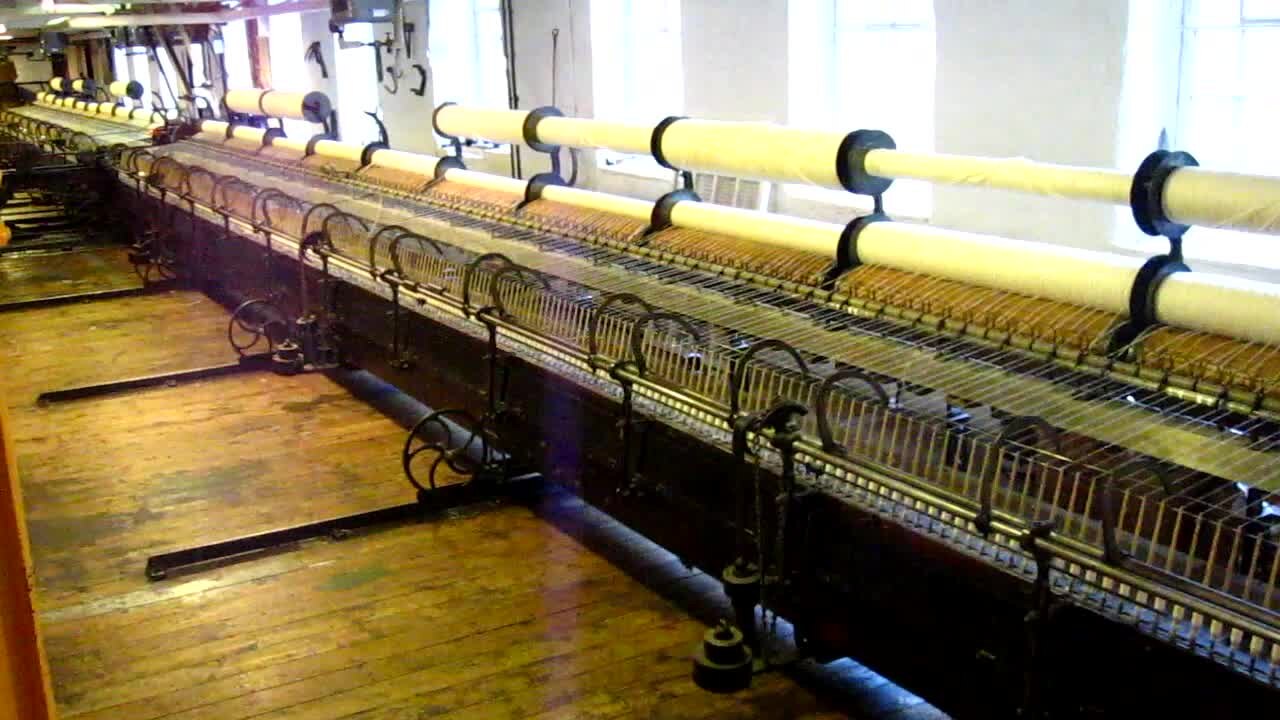 Spinning mule
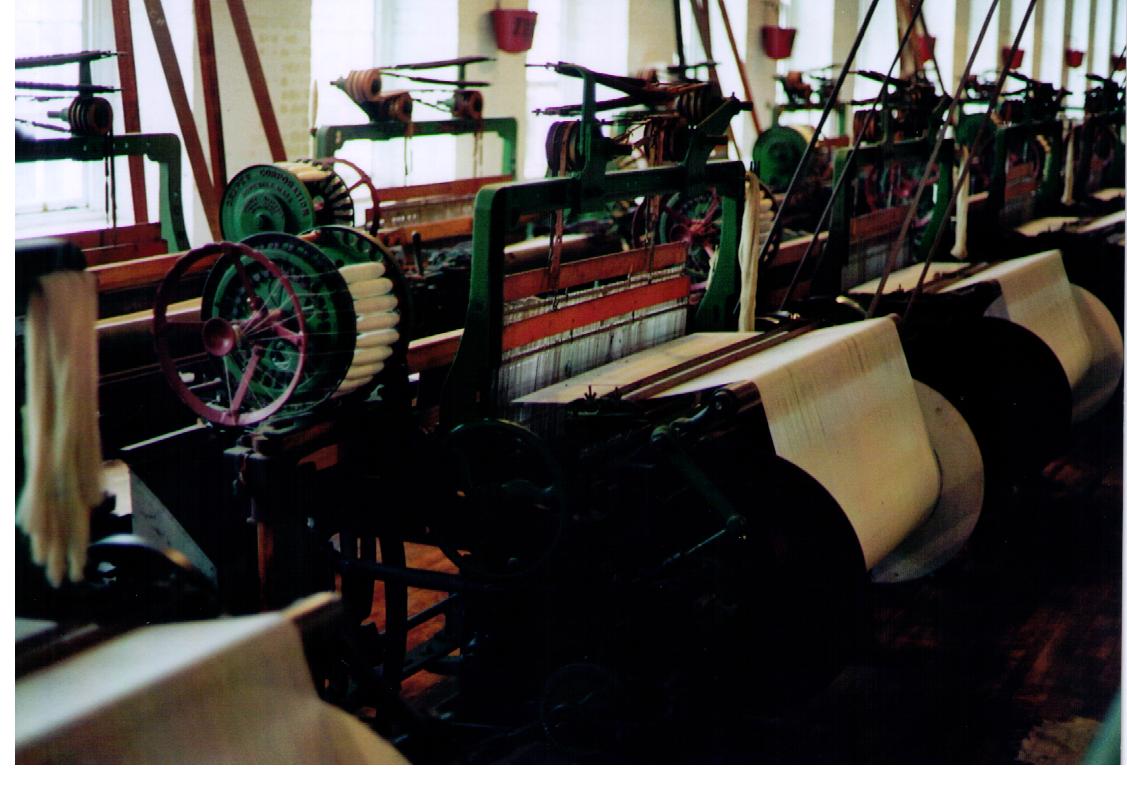 Power loom
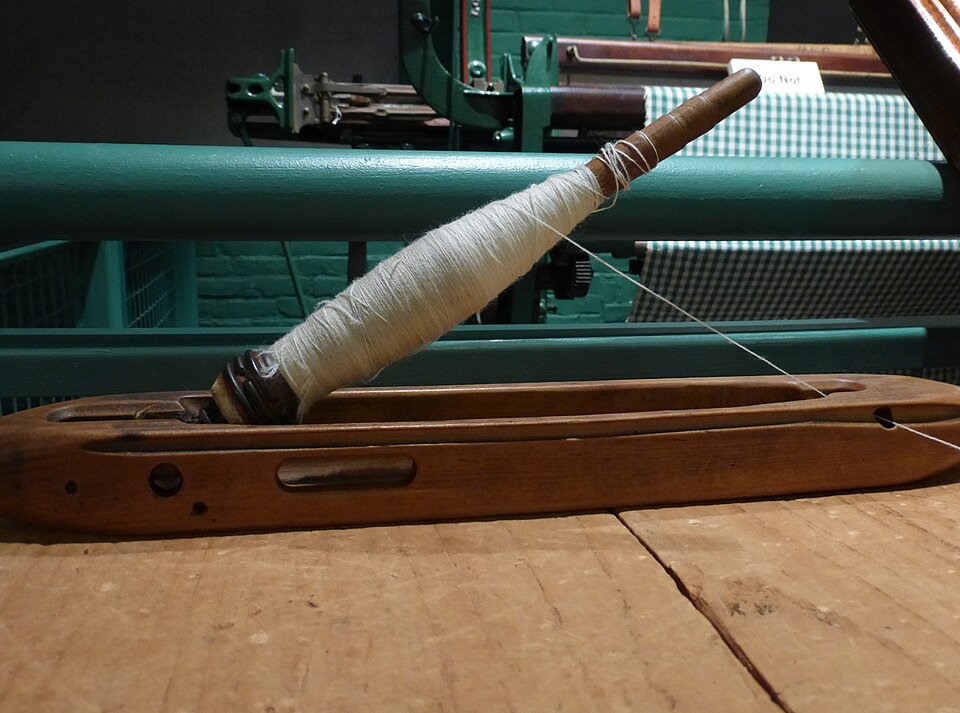 Weaving shuttle
COMMENTS (0)
Please Login to join the discussion.