
As new spinning machines took shape in the 1770s, the next problem was to keep them working together. A mill needed prepared fibre, dependable power, room for its machinery and people able to keep it running. Yarn had to move from spinning to the next process, and supplies had to arrive before machines ran out. Factory production brought these movements into a shared rhythm.
The Cromford venture began in 1771, but construction and recruitment took time: the mill was operating by 1774. Arkwright then developed preparation processes during 1772–1775 and built a second mill in 1776–1777. The water frame thus belongs to a larger story of buildings, labour and machinery being made to work together.
1770s–1800s: following power into a mill
A waterwheel produces rotation at a particular location. That motion has to reach the working machinery through shafts, gears, belts or other transmission arrangements. Floor layout and the position of the drive therefore affect how production can be organised. The mill building is part of the engineering system: it accommodates weight, motion, access and the route by which materials move.
A factory line shaft makes this distribution visible. Trace a pulley and belt from the common drive to an individual working machine. At Lowell’s Appleton Mills, Paul Moody used belting in 1828; by mid-century, belt transmission had become characteristic of American mill drives.
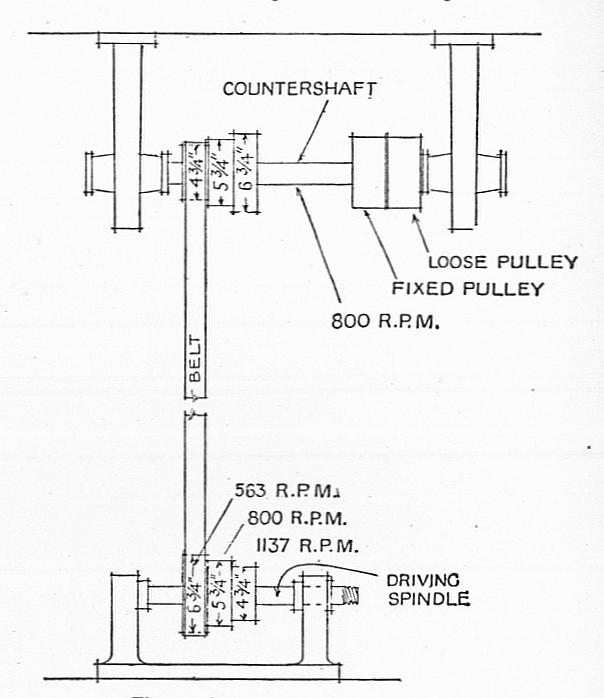
A 1925 transmission diagram shows a countershaft, belt and stepped pulleys. It illustrates the speed relationships used in workshop drives. Explore this exhibit →
A water-powered mill depended on the flow available at its site. Local watercourses, seasonal conditions and competing users could all shape the supply. Securing power meant managing the landscape as well as maintaining the machines.
Prepared material had to reach spinning positions as it was needed, and finished yarn had to be collected and transferred. Buffers, storage and transport kept interruptions in one operation from immediately stopping another. The space between machines became part of the production system.
c. 1775 onward: preparing fibre for the spindles
More spinning positions consumed more prepared material. The carding machine moved part of that preparation into powered equipment. An Arkwright machine dated to about 1775 survives in the Science Museum Group collection; the later carding machine shown here exposes the toothed working surfaces that separate and organise fibre before spinning.
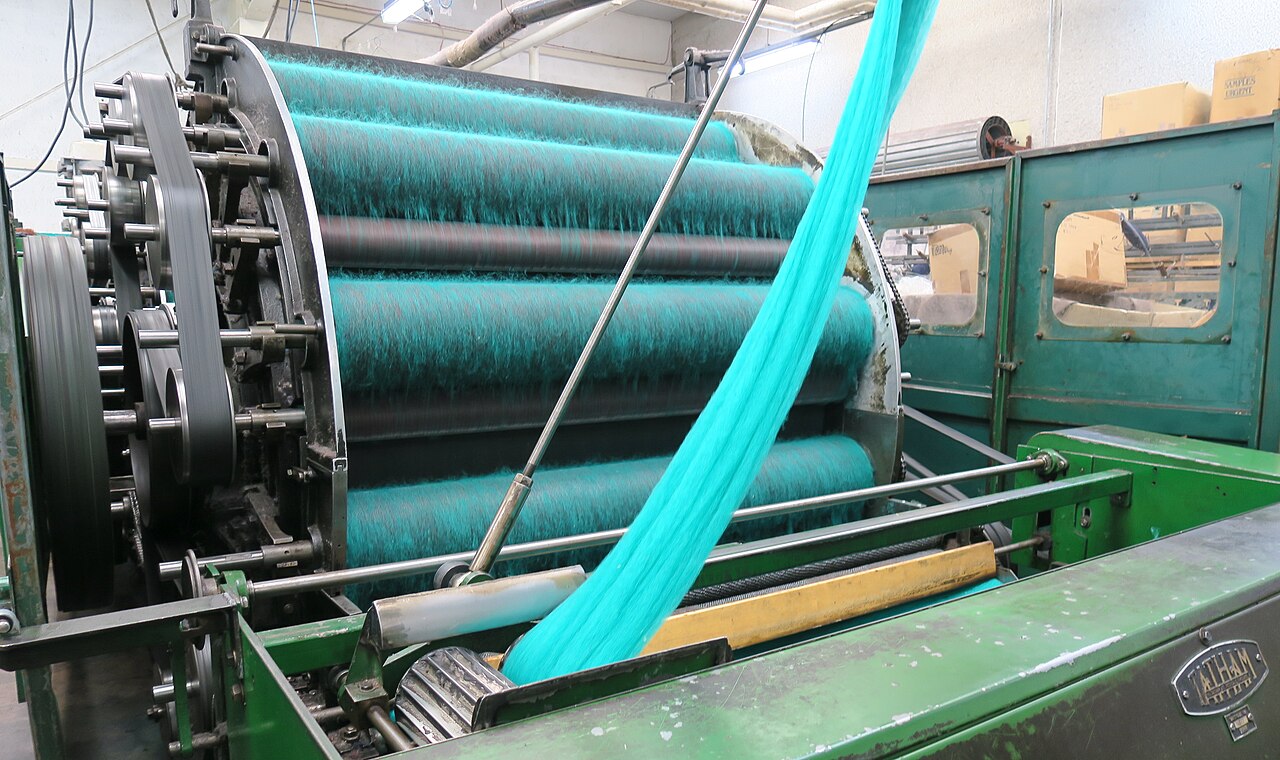
A later carding machine: the fibre passes through toothed working surfaces before moving on to drawing and spinning. Explore this exhibit →
1785–1800s: making powered weaving practical
A power loom coordinates shedding, weft insertion and beating-up, together with warp delivery and cloth take-up. Its drive repeats the weaving cycle, keeping each movement in time with the others as the cloth advances.
Cartwright patented a power loom in 1785. Powered weaving developed through subsequent generations of machinery as engineers worked on the reliability and coordination of its motions. Later Lancashire looms combined those developments into machines suited to regular mill production.
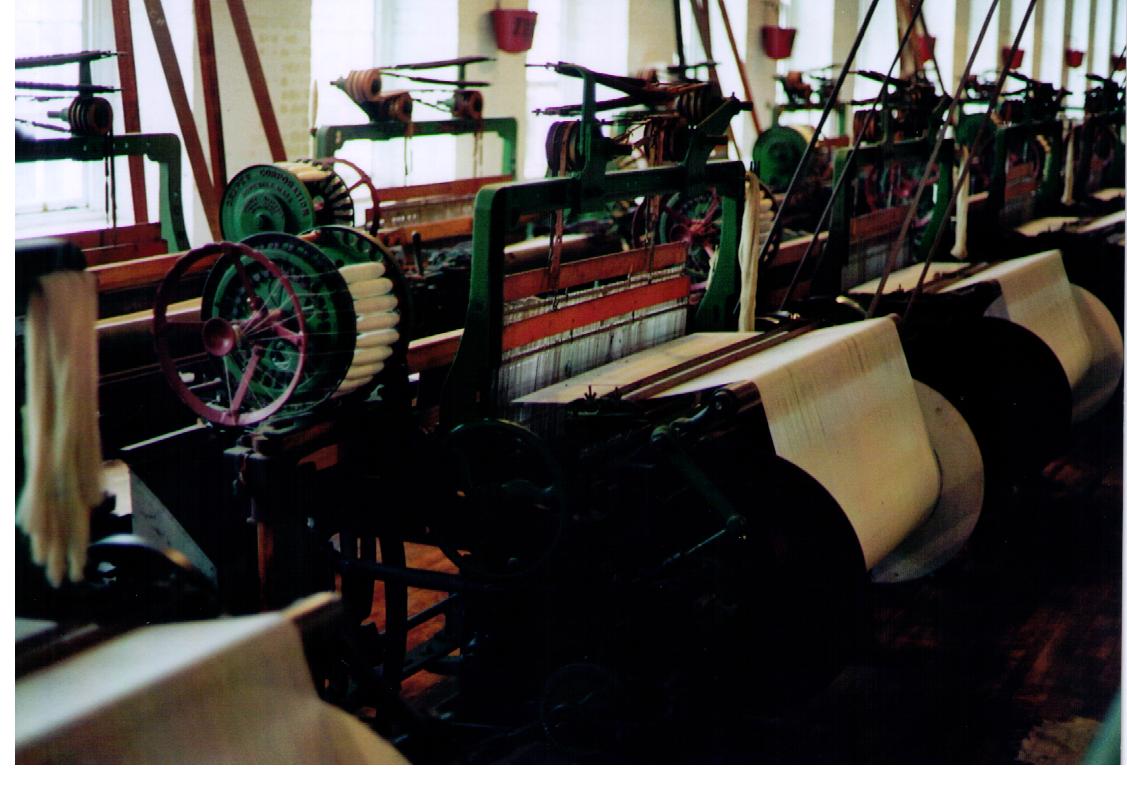
Draper power looms photographed at the American Textile Museum in Lowell. These later machines show the developed weaving cycle, well after Cartwright’s 1785 patent. Explore this exhibit →
- The shedding arrangement opens a path between selected warp threads.
- The picking arrangement inserts the weft through that path.
- The reed brings the new pick into the fabric.
- Warp delivery and cloth take-up support the next cycle.
These movements can overlap during weaving. Each mechanism has to reach its working position at the right moment, leaving time for the next action as the cycle repeats.
If a shuttle arrives before the shed is sufficiently open, warp threads can obstruct its passage. If weaving continues after a yarn breaks, the machine can produce defective cloth. Higher speed makes timing, yarn quality and rapid fault detection increasingly important.
Powered weaving also changed the demands placed on spinning. Yarn had to withstand the chosen loom’s conditions; preparation and winding had to supply usable packages. The bottleneck had not disappeared. It had moved into a more interconnected system.
From the 1780s: steam expands the choice of power
The Watt steam engine widened the options for powering a mill. Its separate condenser allowed steam to be cooled away from the working cylinder, reducing repeated cooling and reheating there. Rotative engines carried the resulting motion onward to a flywheel and the mill’s drive.
The surviving Boulton and Watt Lap engine dates to 1788 and drove metal-polishing machinery at Soho. Its rotary drive shows how an engine could power a set of working machines—a principle applied across industrial production, including textile mills.
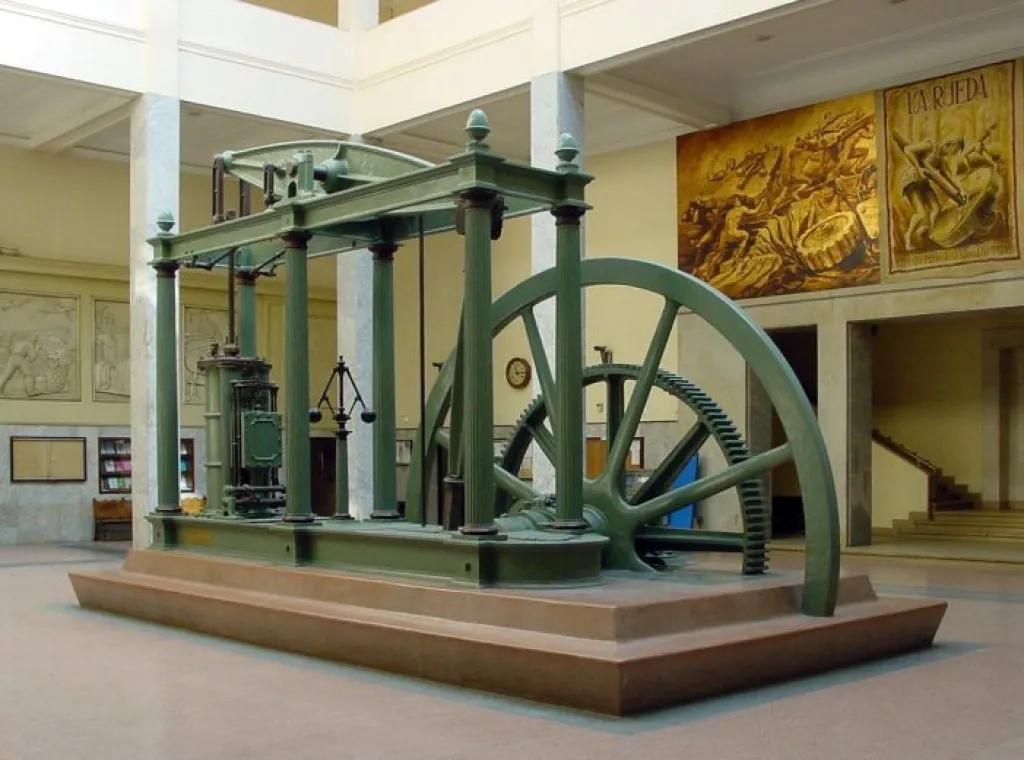
The Watt-engine exhibit follows the separate condenser, rotary output and transmission to working machinery. Explore this exhibit →
Steam reduced dependence on a river’s mechanical power and opened different choices of site and capacity. Coal and water still had to reach the engine, while raw cotton, workers and finished products needed their own routes. Transport links helped determine where an expanded factory could prosper.
Central power created shared dependencies. Trouble in the drive or transmission could affect several operations, and maintenance had to be coordinated around production. Shafts and belts also placed moving equipment near working people. Later individual electric drives changed both the layout of machinery and the way it could be stopped and controlled.
1794: the cotton gin changes an upstream operation
The cotton gin worked farther upstream, separating cotton fibre from seed before spinning. Whitney’s design, developed in the 1790s and patented in 1794, increased the productivity of this operation. Growing and picking the cotton remained separate, labour-intensive tasks.
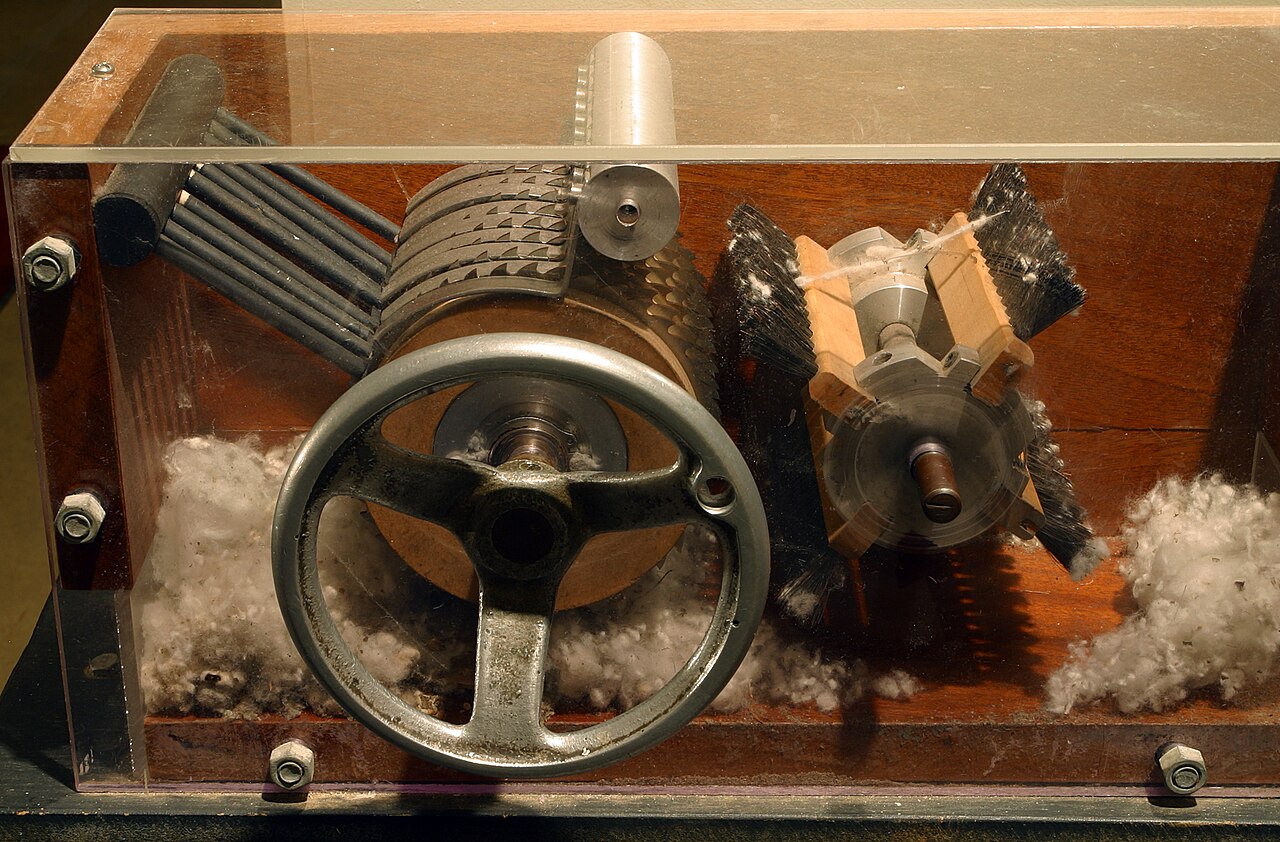
A cotton gin displayed at the Eli Whitney Museum. The toothed cylinder and clearing brush make seed separation visible. Explore this exhibit →
More productive ginning helped make expanded cotton cultivation profitable in the American South. Plantation owners increased production through enslaved labour, tying the supply of raw cotton to violence and coercion. The growth of textile manufacture connected the machinery in British mills to those plantations across the Atlantic.
The mill’s productive capacity therefore depended on much more than its own machines. Raw-material supplies, trade networks and the conditions of agricultural labour all helped sustain the flow of fibre into the factory. Gains in output and lower cloth prices were accompanied by deeply unequal distributions of wealth and power.
People were essential to coordinated production
Even well-adjusted machinery encountered variable material. Workers attended to broken yarn, replaced supplies and corrected faults, learning from sound, resistance and the behaviour of the strand. Keeping historic textile machinery operating today still depends on passing that practical knowledge from one operator to another.
Within the factory, supervision and pressure for output shaped how that knowledge was used. A machine’s pace could govern the worker’s day, while experience with materials and faults remained essential to keeping production moving. Mechanisation changed the organisation of skill and authority as well as the amount of cloth produced.
By linking power, materials and labour, the mill made production possible on a new scale. Control then became a further field of invention: how could a machine repeat a chosen pattern, recognise a fault or carry out the next action without waiting for an operator’s decision?
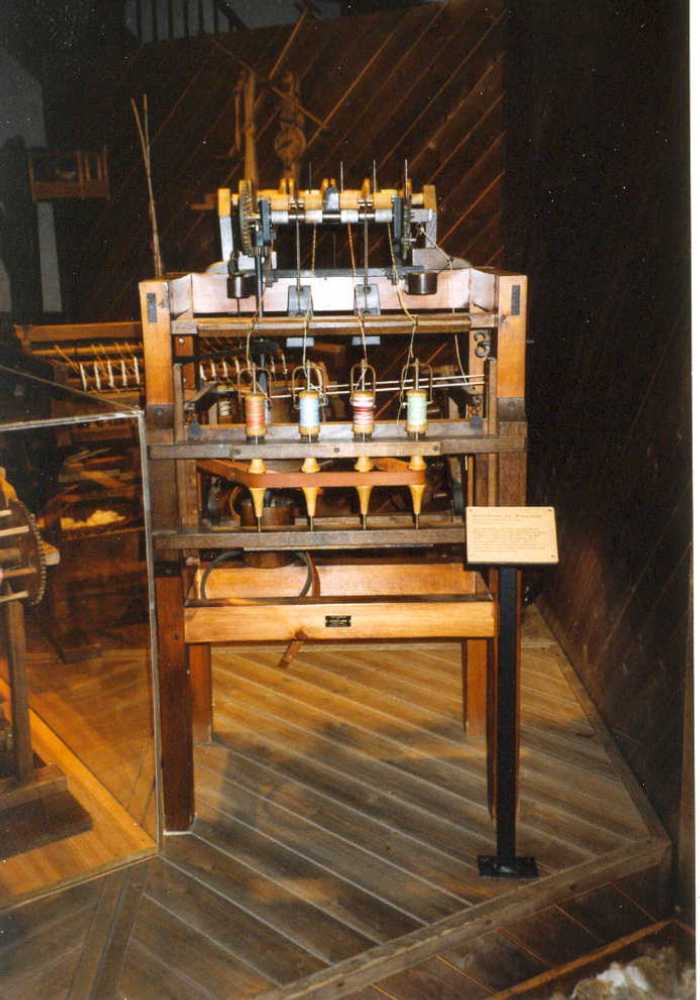 Water frame
COMMENTS (0)
Please Login to join the discussion.