
How Electrical Generators Work
Rotation becomes an electrical supply
An electrical generator converts mechanical work into electrical energy through electromagnetic induction. A turbine, engine, waterwheel, or another prime mover supplies the mechanical input. The generator does not create energy independently: its electromagnetic forces oppose the motion that produces electrical output, so the driving machine must provide torque. Increasing the electrical load generally increases the mechanical work required, together with losses that leave as heat.
The central physical relationship concerns changing magnetic flux linked with a conductor. A machine can produce that change by moving conductors through a magnetic field or moving a magnetic field relative to stationary windings. Both descriptions appear in practical generator families. What matters is the organised relative motion and the electrical circuit that receives the induced voltage. The rotating shaft and the electrical terminals are connected by a field rather than by direct mechanical contact.
Rotor and stator divide the functions
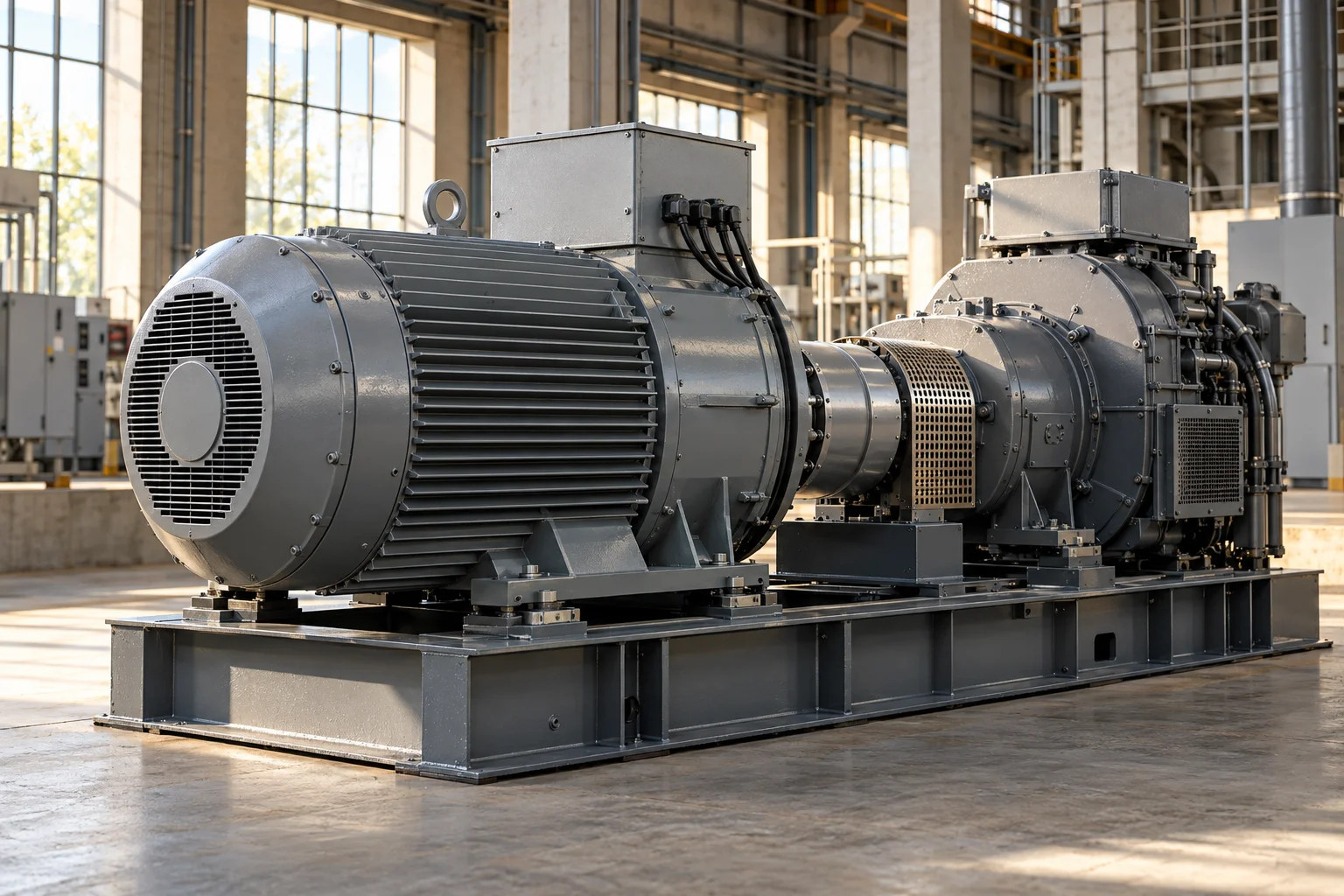
The rotor is the rotating assembly, while the stator remains fixed to the machine's frame. In many large alternating current generators, the rotor carries a magnetic field and the stator contains the output windings. Keeping the main electrical output stationary simplifies the connections carrying substantial power. The exact geometry varies with speed, capacity, cooling arrangement, and the prime mover attached to the shaft.
A slow rotating hydraulic installation and a fast steam turbine generator have different mechanical needs. Rotor proportions, magnetic poles, bearing arrangements, and structural stresses reflect those needs. The general electromagnetic principle remains recognisable even though the machines look very different. Generator design is therefore inseparable from the speed and torque characteristics of the energy converter that drives it.
Creating and directing magnetic flux
A generator's magnetic field can come from permanent magnets or from electric current flowing through a field winding. An electromagnet allows the field strength to be adjusted, but needs an excitation supply and introduces additional electrical and thermal considerations. Excitation may use brushes and slip rings or a brushless arrangement involving additional rotating electrical components and rectification.
Iron or steel magnetic structures guide flux through the desired paths. Laminated cores help reduce circulating eddy currents in regions subject to changing fields. Insulation separates conductors from one another and from the core. These materials perform different tasks: copper or another conductor carries current, magnetic material shapes flux, and insulation preserves the intended circuit. Weakness in any of them can limit the usable output of the complete generator.
Alternating current follows the geometry
As magnetic poles move past the windings, the induced voltage changes direction, producing alternating current. Mechanical speed and the number of magnetic poles establish a relationship with electrical frequency in a synchronous generator. Multiple winding groups can produce a multiphase supply, with their voltages displaced in time. This arrangement supports efficient power transmission and the operation of many electrical machines.
The output waveform also depends on winding distribution, magnetic geometry, and saturation effects. A generator is consequently more than a magnet passing an arbitrary coil. Designers shape the field and winding system to obtain useful electrical behaviour while managing losses, vibration, cost, and manufacturing constraints. Modern analysis tools help predict those interactions, but physical insulation quality and accurate assembly remain essential.
Electrical load becomes mechanical resistance
When a load draws current, the interaction between that current and the magnetic field produces torque opposing the shaft's rotation. This is the physical link between an electrical demand and the fuel, water, steam, or wind supplying the prime mover. If the mechanical input does not respond appropriately, speed or other electrical conditions can change. A generator set therefore combines electrical regulation with a governor or other prime mover controls.
Voltage regulation acts through excitation in many synchronous machines. The relationship among voltage, current, power factor, and field strength also matters when supplying alternating current loads. A large network can establish frequency while individual machines share real and reactive power through their controls. An isolated generator supplying a local load faces a different control task, because that small system must establish and maintain its own electrical conditions.
Heat and mechanical alignment set limits
Electrical resistance produces heat in windings, magnetic changes create core losses, and bearings and ventilation consume mechanical power. Cooling systems remove that heat through air, liquid, or specialised arrangements appropriate to the machine. A nameplate output is meaningful only with its specified thermal and operating conditions. The generator must sustain an acceptable internal temperature rather than merely produce a brief electrical response.
The shaft, bearings, coupling, and frame also maintain alignment across the magnetic air gap. Unbalanced forces, vibration, thermal expansion, and rotor bending can affect the mechanical system. Large machines require careful coordination between electromagnetic design and rotor dynamics. A narrow gap can support magnetic performance, yet maintaining that gap consistently becomes a demanding structural problem as size and loading increase.
Different electrical architectures
Synchronous generators are one important family, but induction generators and electronically converted machines also have significant roles. Some installations allow variable mechanical speed and use power electronics to deliver the required electrical output. Wind turbines are a familiar example where the generator and converter architecture must accommodate changing rotor conditions. Rectifiers and inverters can separate some aspects of mechanical speed from the frequency delivered to a network.
A small portable generator, an automotive alternator, and a utility scale machine therefore share an underlying principle while differing substantially in regulation, waveform quality, cooling, and construction. Battery charging requires an appropriate electrical conversion and control path, while direct supply to alternating current equipment imposes other requirements. The intended load determines which electrical features are essential rather than optional accessories.
The generator within a larger energy chain
Generators made it possible to move mechanical energy into a form that can be transmitted, distributed, and used far from its origin. Their development connected precision machinery, magnetic materials, insulation, and electrical networks. Improvements in each area allowed greater scale and more dependable service. Yet a generator remains only one conversion stage in a chain that begins with an energy resource and ends at useful equipment.
Understanding that chain prevents a common misconception: increasing generator size alone does not increase the energy available from its prime mover. Shaft power, cooling, electrical demand, and control capability must match. The most useful mental picture is a mechanical shaft exchanging energy with a magnetic field, supported by bearings, windings, insulation, and regulation. That combination makes an invisible electrical flow possible through a very tangible rotating machine.
Efficiency measurements also require clear boundaries. The generator's own conversion efficiency differs from the efficiency of an engine driven generating set or a complete thermal power station. Fuel conversion, mechanical transmission, auxiliary equipment, and electrical conversion each contribute their own losses. A highly efficient generator cannot recover heat already discarded by its prime mover. Conversely, improving the generator can reduce losses without changing the basic energy resource. Separating these boundaries makes comparisons more useful and shows where an engineering improvement actually occurs within the complete chain of production and delivery.