
Working the land
- Ploughs
- Tractors
- Seed drills
How did machines feed growing populations?
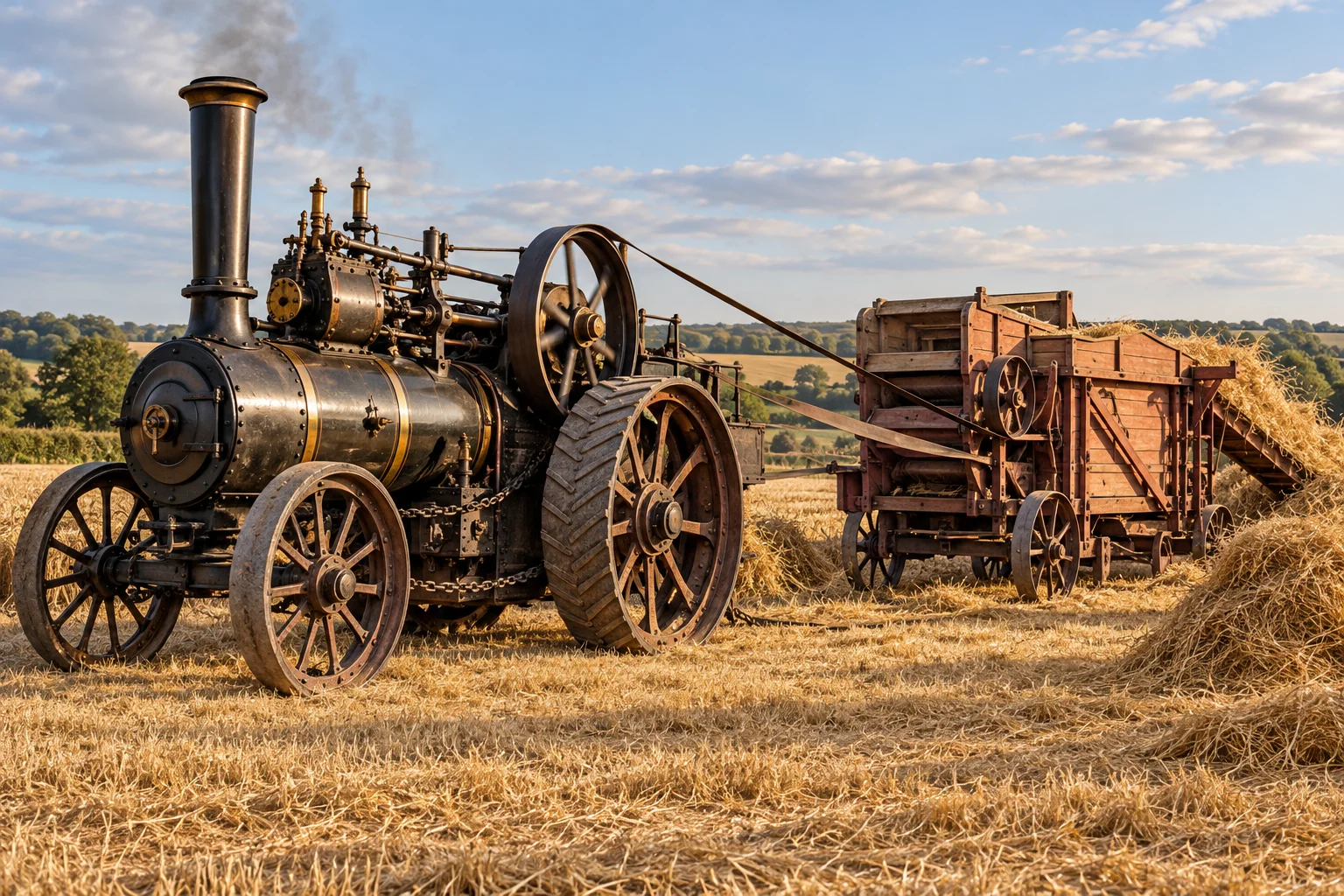
Agricultural machinery works with soil, plants, animals, and weather rather than with uniform material arriving on a factory conveyor. That difference gives the field its character. The moisture of a field can change its resistance to a plough; uneven ground can alter the depth of a seed; a brief harvest window can determine whether a machine is economically useful. The history of agriculture and food is therefore not simply a story of replacing hands with engines. It is the history of adapting mechanical systems to biological variation, seasonal urgency, and the need to feed people.
A useful starting point is the sequence linking the field to the meal. Land is prepared, crops are established, growing conditions are managed, mature plants are collected, and useful material is separated, processed, stored, and distributed. Each stage creates a potential bottleneck. A faster harvesting machine offers limited benefit if grain cannot be dried or transported quickly enough. Conversely, an improved mill or cold store can create demand for a different crop or harvesting schedule. The machines belong to a chain of activities, and changes at one point reshape the rest.
A plough illustrates how much engineering can be contained in an apparently simple implement. Its surfaces must enter the ground, cut or disturb soil, and withstand forces that vary as conditions change. The form of the working part, the material used, the pull available, and the means of controlling depth all matter. Plough histories differ between soils and farming systems; an implement successful in one region might perform poorly elsewhere. Mechanisation grew through changes in tools and farming practice together, including the ways fields were laid out and animals were harnessed.
Seed drills addressed a different form of control: placing many small objects with useful spacing and depth. Metering mechanisms had to deliver seed without excessive damage, while ground wheels or later drive systems related delivery to movement. A drill could make planting more repeatable, but its results still depended on preparation, seed quality, and subsequent conditions. Modern precision equipment adds sensors and individual row control to this older concern with placement. The continuity is more revealing than a simple contrast between manual and automated farming: both begin with the physical problem of putting viable seed where it can grow.
Animal power imposed obligations beyond the hours spent pulling an implement. Animals needed food, water, care, and land, and their performance varied. Steam engines could supply substantial power, especially for stationary tasks such as threshing, but bringing a boiler, fuel, and water into farming also created practical burdens. Early motor tractors did not instantly solve every problem. Their weight, purchase price, maintenance demands, and suitability for particular operations influenced adoption. Farmers had to judge a complete working arrangement, not an engine specification in isolation.
Smithsonian accounts of American tractors emphasise that commercial success involved manufacturing and affordability as well as invention. Fuel distribution and the ability to obtain usable equipment helped turn mechanical possibility into widespread practice. This is an important historical lesson, but it should not become a universal timetable applied to every country. Farm size, tenancy, wages, terrain, and repair networks produced different patterns of adoption. A tractor's versatility also mattered. Through drawbars, belt drives, and power take-off systems, one mobile power source could serve a range of implements and change the organisation of work throughout the year.
Harvesting combines several separate mechanical tasks. A machine may cut stems, guide crop into a mechanism, detach grain, separate unwanted material, and collect or discharge the product. A combine brings multiple stages together, but combining functions does not remove their individual requirements. Feed must remain manageable, moving parts must avoid damaging the crop unnecessarily, and the machine must cope with changing quantities and conditions. Looking at the path of material through the machine is often more informative than concentrating on its exterior or engine power.
This integration changed the timing and scale of work. When a short period of suitable weather arrived, a farm could cover more ground with fewer people directly performing each operation. The consequences included changes in labour demand, contracting services, and the amount of capital committed to machinery used intensively for a limited season. Machine capacity can encourage larger operating units, but cooperation and shared ownership can create other arrangements. Mechanisation does not dictate one social outcome. Its effects depend on who owns equipment, who can hire it, and which relationships support its use.
Food machinery extends far beyond the tractor. Mills convert motion into controlled grinding or separation; presses extract liquids; conveyors move produce; pumps carry water or process fluids. Processing machines must manage cleanliness, wear, and the properties of material that may be soft, sticky, fibrous, or fragile. Sugar production, flour milling, and other industries linked agricultural output to substantial mechanical installations. These connections helped create markets for crops and equipment, while also concentrating certain kinds of work away from the farm and into specialised processing centres.
Preservation adds time to the system. Refrigeration moves heat out of a controlled space, allowing some products to remain useful beyond the period they would otherwise tolerate. Drying, ventilation, and controlled storage perform related roles through different mechanisms. Pumps and irrigation systems similarly reshape the timing and availability of water, though water supply remains constrained by local conditions. The Illinois State Museum's agricultural history places machinery alongside transport, drainage, and marketing changes. That broader perspective makes clear why increasing field productivity alone is not an adequate measure of a successful food system.
Agricultural machines can make strenuous work less demanding, improve the repeatability of operations, and increase the amount handled within a critical period. They can also compact soil, consume fuel, increase dependence on purchased inputs, or make a farm vulnerable to breakdowns. A device designed to improve one measure of performance may create difficulties elsewhere. The useful historical question is not whether machinery was simply good or bad, but how particular tools changed relationships among labour, land, materials, and markets, and which people had the ability to adapt.
This directory follows those relationships from ancient implements to contemporary equipment without treating every farm as a smaller version of an industrial factory. Comparisons should consider the whole season and the complete material path. How is force applied to the ground? How is a crop sensed, guided, cut, or separated? How is the machine powered, adjusted, and maintained? What happens after harvesting? These questions connect agriculture to manufacturing, energy, logistics, and domestic food preparation. They also keep the story grounded in the living conditions that have always made farming a distinctive engineering challenge.