LOGIN / REGISTER
Warp-Weighted Looms
CAT: TEXTILE | YEAR: prehistoric

Warp-Weighted Looms

Warp-weighted looms are one of the earliest and most influential weaving technologies in human history. Used widely in prehistoric and early historic Europe, they enabled the production of large, durable textiles long before the invention of horizontal or mechanized looms. Rather than using frames or rollers to maintain tension, this loom relies on gravity itself.

What is a warp-weighted loom?


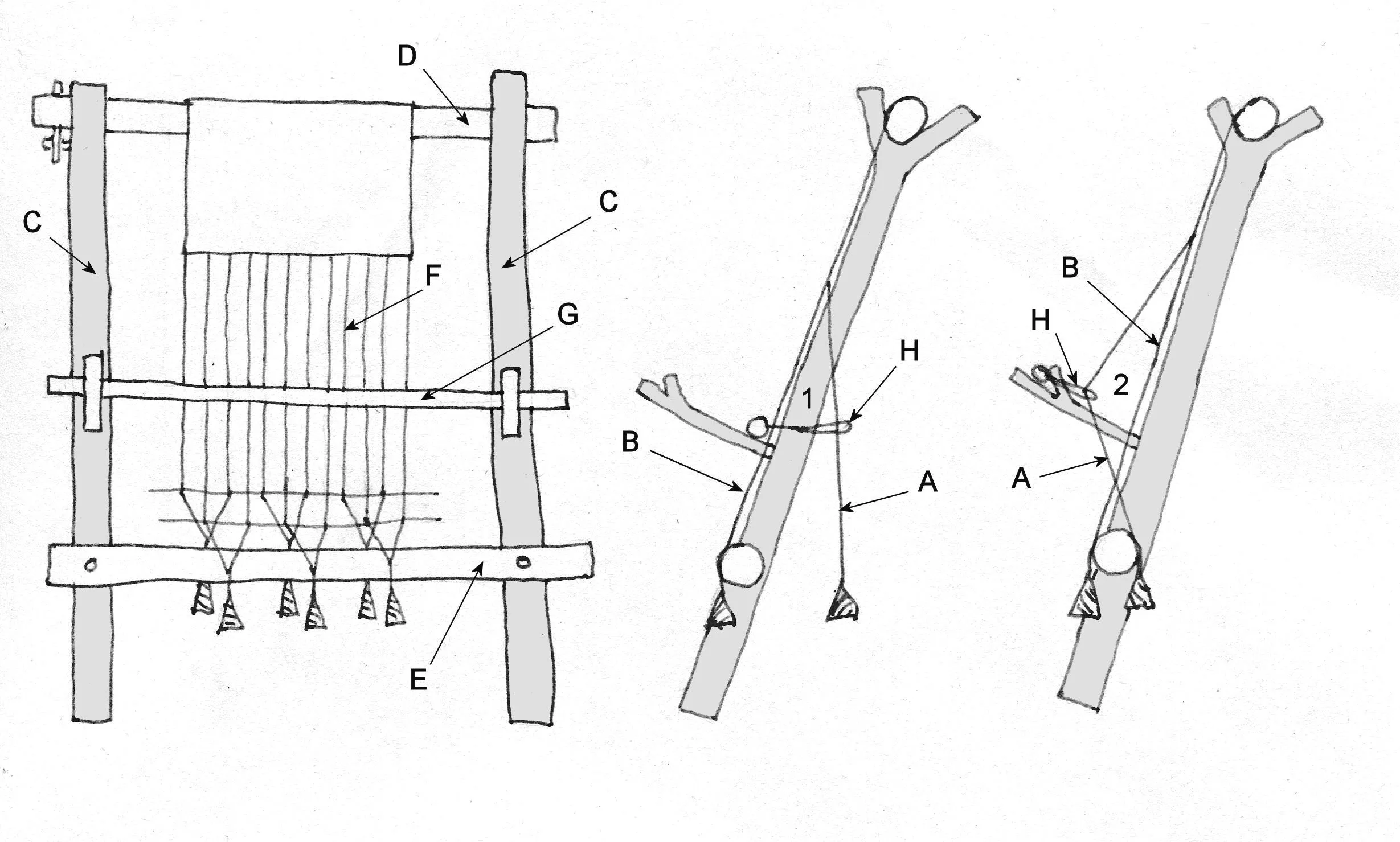
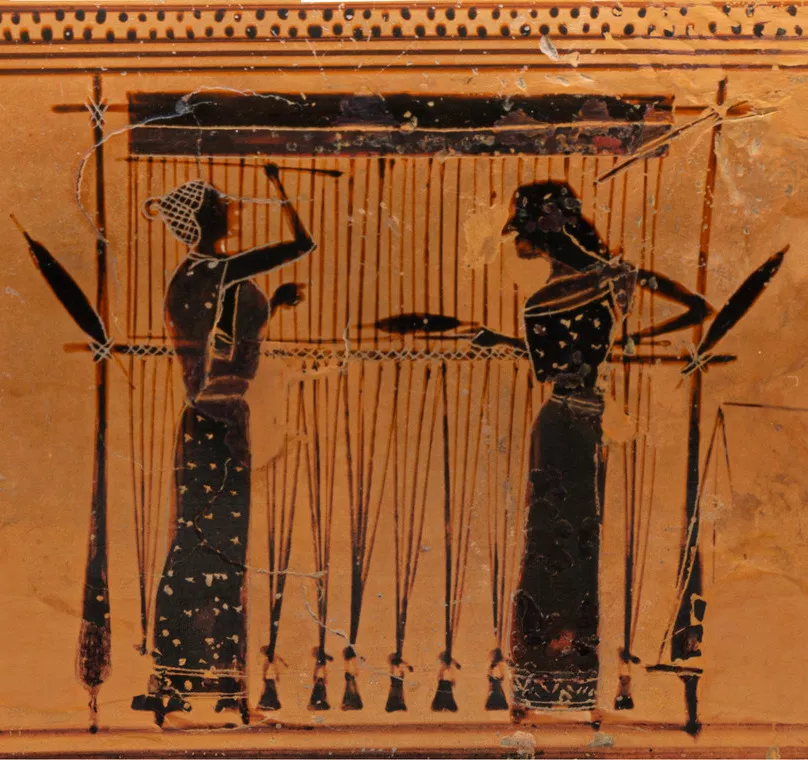
A warp-weighted loom is a vertical loom in which the warp threads hang freely from an upper beam. The lower ends of the warp are tied to weights made of stone, clay, or metal, which keep the threads taut during weaving.


Key components include:


  • Upper beam – supports the warp threads
  • Warp threads – suspended vertically
  • Loom weights – provide constant tension via gravity
  • Heddle rod – lifts alternating warp threads to form a shed
  • Weft yarn – passed horizontally through the shed


Instead of tightening the warp by mechanical means, the loom maintains tension automatically and continuously through weight.


How does it work?


  1. Warp threads are looped over the top beam and hang downward
  2. Groups of warp threads are tied to individual weights
  3. A heddle rod lifts one set of warp threads, forming a shed
  4. The weft is passed through the shed
  5. The shed is changed, and the weft is beaten upward into place
  6. As weaving progresses, the woven cloth grows upward, while the weights gradually rise


Gravity ensures consistent tension throughout the process.


Weaving on the Warp weighted loom

Weaving in Ancient Israel


What kind of textiles does it produce?


Warp-weighted looms are especially well suited for:


  • Woolen fabrics
  • Thick, durable textiles
  • Cloaks, blankets, sails, and household cloth


They can produce wide and long pieces of fabric, often exceeding the size limitations of early horizontal looms.


Historical and cultural context


  • Widely used from the Neolithic period through the early Middle Ages
  • Common across:
  • Northern and Western Europe
  • Scandinavia
  • the Mediterranean
  • Associated with:
  • Bronze Age and Iron Age societies
  • Viking-age textile production


Thousands of loom weights found in archaeological sites serve as direct evidence of their widespread use.


Technological significance


Warp-weighted looms represent a major conceptual step in weaving technology:


  • Gravity replaces active tension control
  • Continuous weaving is possible without complex machinery
  • Textile width and length become scalable


In technological terms, this loom marks the moment when natural forces were deliberately incorporated into production systems.

BACK TO CATALOG

COMMENTS (0)

Please Login to join the discussion.