 MECHANICA PLANET
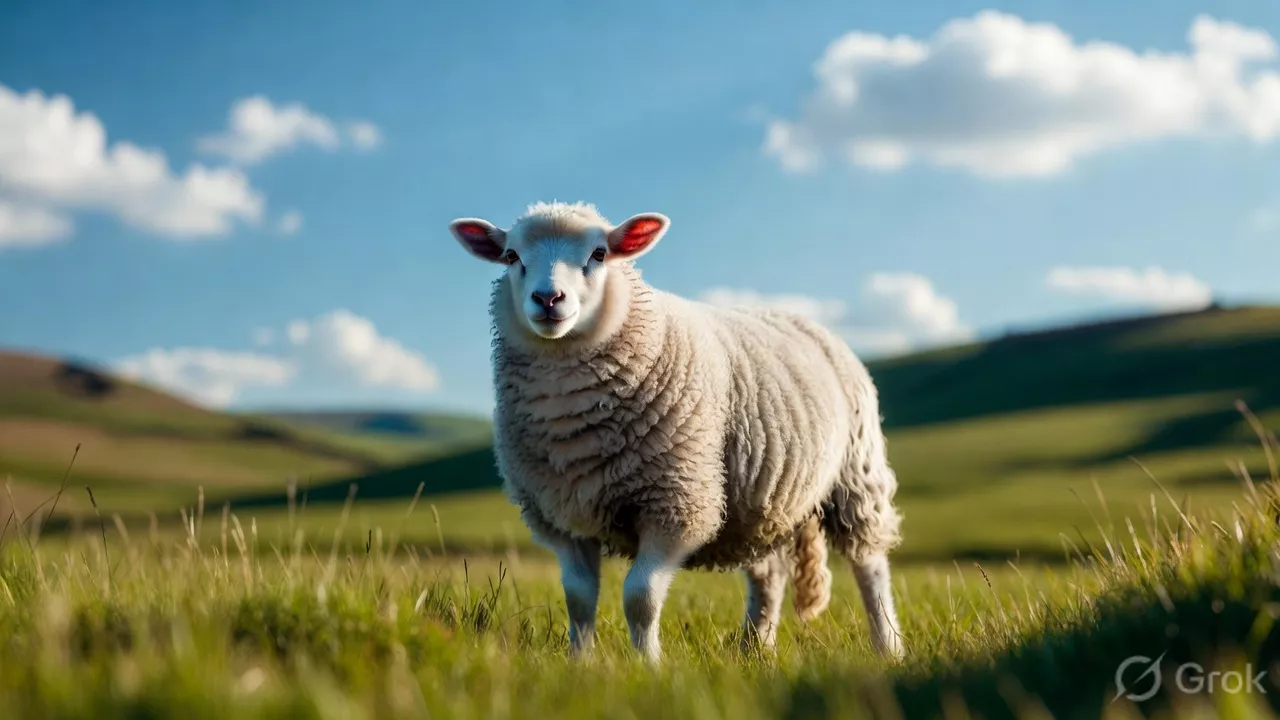
Plants contributed their bast fibers to humanity’s great textile enterprise. But what about animals? At first glance, the answer seems obvious: are not the thick coats of animals themselves natural textile fibers? In fact, not really. If animal hair could naturally be used for textiles just as it was, why would ancient humans have gone to all the trouble of dealing with those difficult bast fibers? Plant bast fibers are troublesome to process, but once the fibers are separated, they can be used for textiles. Animals are a different matter.
Thirty to forty thousand years ago, in the Paleolithic, the animals ancient humans encountered were very different from those of today. They were dealing with wild animals. None of those wild animals existed for the purpose of serving as textile raw materials for humans. The wild ancestors of today’s sheep, cattle, horses, and other domestic animals did not look as they do now: their hair was coarse and short, slick and greasy, and very unfriendly to textile use. It was extremely difficult to spin.
But difficult to spin does not mean impossible to spin. If the hair was coarse and short and did not twist together easily, then one could spin thicker yarn, spin more slowly, and add more twist. If it was greasy and prone to mildew, one could wash it several more times. With enough effort, every problem could in principle be solved. Yet archaeologists have found that only a long time after ancient humans began domesticating wild animals did traces of animal-hair textiles appear. In other words, for a very long period our ancestors did not seriously use the hair of wild animals for textiles at all; they left behind not even traces of attempts. No matter how hard it was to spin, as long as yarn could be made, even if coarse, that would still be better than having nothing. So the fact that Paleolithic humans did not use wild animal hair for textiles before domestication was clearly not simply because it was hard to spin. More likely, it was the result of both technical and non-technical factors working together.
The clothing of Paleolithic humans mainly came from animal hides. Hide garments were simple to make; one could finish a piece in a dozen days or so, which was quite convenient. Using wild animal hair for textiles was nowhere near so easy. One had to collect the hair, clean it, spin it, weave it, and sew it. Going through the whole process, it would be hard to finish in less than one or two months. Moreover, wild animals shed seasonally, and at ordinary times it was almost impossible to gather enough hair. When shedding season did arrive, one had to chase after the animals everywhere, trying to snatch up the hair before the wind blew it away, all while risking being kicked, bitten, or gored. And even after succeeding, one might collect only a little handful, meaning that many such risks had to be taken before enough could be gathered for a single garment. Ancient humans lived short, difficult lives; people fond of doing such foolish things generally had little chance to pass on their genes to the next generation. Compared with that, bast fiber seems positively graceful, refined, and charming.
In the early Neolithic (12,000–11,000 years ago), ancient humans gradually settled down. They soon began selecting gentle, easily bred animals for domestication, slowly cultivating the common livestock of later times. At that stage, animals were raised mainly for meat, milk, and hides. After some time, however, our ancestors discovered with delight that in certain breeds the hair had become finer and longer, more curly and soft, and easier to use for textiles. So they separated these animals out and selectively bred them specifically as sources of textile fiber. Around 6000 BCE, in Iran and Mesopotamia, people began to breed “woolly sheep.” The focus of breeding was on varieties that did not shed and whose fibers were curly, fine, and long. By around 3000 BCE, white wool had appeared.
After nearly three thousand years of effort, by about 4000–3000 BCE fragments of wool textiles appeared in eastern Iran, at the site of Shahr-i Sokhta. Humanity had finally begun to use wool for textiles. Soon afterward, around 3000 BCE, wool textiles appeared at Novosvobodnaya in the North Caucasus. Around 1954–1767 BCE, dyed wool textiles appeared in the Timna Valley in present-day Israel. Wool thus became the first animal fiber to be used for textiles after bast fibers.
Wool textiles did not have multiple completely independent points of origin, but neither did they have a single origin in the strictest sense. Sheep were certainly first domesticated in the Fertile Crescent, and wool textiles gradually developed there in turn. India began somewhat later to domesticate local wild sheep as well. But around 6000–7000 years ago, domesticated sheep from the Middle East were introduced into India, and a wool textile industry was established there. Its scale, however, was relatively small and could not compare with that of the Middle East.
China had wild sheep of its own, but no locally domesticated sheep of the textile type. Sheep used for textile purposes were mainly introduced around 5000 BCE through nomadic peoples from Central Asia. Wool textiles remained weak in China, being used mainly by northern minority peoples for clothing. In the Central Plains and the south, people relied much more on hemp and silk, and later on cotton, which spread widely in the Tang and Song periods. The establishment of a full-scale wool textile industry in China was basically a matter of the nineteenth century and later.
The spread of wool into Europe, by contrast, was highly successful. In the Neolithic (ca. 7000–5000 BCE), domesticated sheep spread from the Near East into Europe by way of the Balkans and the Mediterranean as part of the “Neolithic package” of crops and livestock. In the Bronze Age (ca. 2300–800 BCE), they spread rapidly across the European continent. In the Roman period (ca. 500 BCE–500 CE), Roman conquest and trade further accelerated the spread of wool textiles, and promoted wool production across the empire. Indeed, around 50 CE, the earliest wool factory was established in what is now Winchester in Britain. In the Middle Ages (ca. 500–1500 CE), wool became one of the main economic engines of Europe. In roughly the thirteenth to fifteenth centuries, England became a major producer of raw wool, exporting it to Flanders (roughly modern Belgium and the Netherlands) and to Italy. There, weavers—especially the specialist craftsmen of Flanders—processed imported wool into high-quality textiles such as broadcloth and tapestries, which were then exported back to England or to other European countries. Wool drove the large-scale development of Europe’s textile industry and helped stimulate the prosperity of European trade networks. Interestingly, England long remained an exporter of raw wool while its domestic wool textile industry lagged behind. It was only in the fourteenth century, when King Edward III invited Flemish weavers to immigrate to England, that the rise of local wool processing truly began. (And later, we shall see that the very strength of the wool industry indirectly suppressed the rise of cotton textiles and, in turn, influenced the emergence of spinning machinery.)
In Europe, wool was not merely a fabric; it became part of European history and culture.
The Roman Empire conquered southern Britain in 43 CE under Emperor Claudius. Britain had possessed the basis for sheep breeding since the Neolithic, but its native textile production was backward. The Romans saw this as a promising resource and introduced what were then advanced textile technologies from the Mediterranean, including looms and dyeing techniques. These were used mainly to supply the wool textile needs of the army and of urban populations. At the same time, the Romans crossbred local British sheep with Tarentine sheep to produce finer-wool varieties. It was at that time that the foundations of Britain’s wool textile industry were laid.
By around 50 CE, under Nero, Rome had established several fabricae in Britain for the large-scale production of wool textiles. The earliest was located at Winchester, known at the time as Venta Belgarum. It was used mainly for producing military supplies. These factories may be regarded as the starting point of the commercialization of wool textiles in Britain.
But by 410 CE, after the Roman Empire withdrew its troops from Britain, the island entered the so-called Dark Ages. The invasions of the Anglo-Saxons brought war and population movements; Roman cities such as Winchester declined, and the factories were abandoned. The continuity of knowledge was broken. Without the support of Roman engineers and craftsmen, the local population could not maintain complex technologies. Britain fell back into a self-sufficient small-farmer economy, and the textile technologies brought by Rome were lost with it.
Even as textile production declined sharply, the production of raw wool continued. To avoid competing with the textile industries of continental Europe, Britain shifted into the role of a raw-material exporter. It formed a symbiotic relationship with Flanders (modern Belgium and the Netherlands, including Bruges, Ghent, and Ypres) and with Italian cities such as Florence. Wool exports became a major source of tax revenue.
In the fourteenth century, however, the Hundred Years’ War disrupted trade between England and Flanders, and wool exports declined. Edward III (1327–1377) adopted protectionist policies, restricting wool exports and encouraging the development of domestic wool processing. Beginning in the 1340s, he invited Flemish weavers to settle in England. These immigrants brought advanced techniques, including water-powered workshops and fine spinning. By the fifteenth century, England had become a major exporter of woolen cloth.
In 1192, King Richard I of England—Richard the Lionheart—was returning home after the Third Crusade (1189–1192). Disguised as a commoner, he was captured near Vienna. According to legend, he was betrayed by his insistence on eating roast chicken and by the fine ring he wore. His captor, Duke Leopold V of Austria, handed him over to the Holy Roman Emperor Henry VI. Henry seized the opportunity to demand an astronomical ransom: 150,000 marks, roughly £66,000 at the time, equivalent to two to three times England’s annual revenue, and a record-breaking sum.
From 1193 onward, the English government scraped together money by every possible means, including imposing a 25 percent tax on income and movable property and confiscating gold and silver vessels from churches. Most strikingly, it seized the entire wool clip of the Cistercian monasteries. The Cistercian monks were among the major wool producers of the Middle Ages, owning tens of thousands of sheep and managing large pastoral estates in the English countryside. In 1193, the government ordered the confiscation of that year’s wool shearing output from the monasteries as part of the ransom. Exaggerated slightly, one might say that wool saved the king of England.
By the sixteenth century, the great naval power was Spain’s Armada. England, as an island kingdom, also sought control of the seas. King Philip II of Spain attempted to overthrow the Protestant Queen Elizabeth I of England, restore Catholic rule, and put an end to English harassment at sea. He assembled 130 warships, 27,000 soldiers, and 1,100 guns, and in May 1588 the fleet sailed from Lisbon, intending to join up with Spanish land forces in Flanders and invade England.
The English fleet, commanded by Charles Howard and Francis Drake, met it with hit-and-run tactics. In the Battle of Gravelines on 7–8 August, the English used fireships to attack the Armada and break up its formation. A northwesterly wind drove the Spanish fleet toward the shoals of Zeeland, and the English fleet took the opportunity to attack fiercely, sinking three Spanish ships and damaging many more. The Armada was forced to head north and attempt to return by circling around Ireland and Scotland. Unfortunately for Spain, autumn storms struck along the way, causing the loss of sixty ships and fifteen thousand men. In the end, only sixty ships made it back to Spain.
This battle ended the naval supremacy of the Spanish Armada. Spain was forced to conclude a treaty with England. One clause of that treaty, according to the story, involved sending Merino sheep to England. Merinos, bred in Spain, were the source of fine, high-grade wool, and Spain had long prohibited their export in order to preserve its advantage. The peace agreement ended Spain’s monopoly and helped stimulate the improvement of English sheep breeds and the rise of England’s textile industry.
The story of the Merino sheep does not end there. In 1789, King Charles IV of Spain presented Merino sheep as a gift to Prince William of Orange of the Netherlands, who had them transferred to the Cape Colony in South Africa for breeding.
In 1796, the governor of Sydney, John Hunter, ordered Henry Waterhouse and William Kent to sail on the Reliance and the Supply to the Cape of Good Hope to purchase livestock and supplies in support of the colony of New South Wales. The army officer and farmer John Macarthur used private connections to ask them to buy a few Merino sheep on his behalf. Waterhouse and Kent purchased twenty-six at the Cape and brought them back toward Sydney. More than half were lost on the voyage because of bad weather. In 1797, the ships arrived in Sydney. Macarthur bought most of the surviving sheep and took them to his farm. There he and his wife kept the animals in isolation to preserve the purity of the breed. By 1803, the couple already owned more than four thousand Merino sheep. In 1804 Macarthur imported additional rams directly from Spain to improve the stock further. From that point on, Australia became one of the main producers of high-quality wool. Today, Australia has some seventy-three million sheep, all ultimately resting on the foundation Macarthur established.
In the textile trades of antiquity there were “four great stenches.” The first was the flax retting mentioned earlier: because it depended on microbial fermentation, it produced an overpowering smell. Two others were related to dyeing. One was mordanting, in which animal dung or urine was used as a mordant to fix dyes onto cloth. The other was a costly dye called Tyrian purple. Because it was extracted from the glands of certain Mediterranean shellfish such as the murex snail, the process required soaking and fermenting the bodies of these mollusks, producing an appalling stench. It is said that even the finished dye itself retained a noticeable odor, and the smell could carry for kilometers. The last of the four stenches was the fulling of wool. Newly woven woolen cloth was soaked in urine and trampled underfoot for hours—later water-powered hammers and rollers were introduced—so that the wool would undergo controlled felting, making the cloth denser and warmer. What was used was stale urine, whose ammonia removed grease and dirt. Workers—in Roman times, often slaves—spent their days in dark, reeking sheds, endlessly treading cloth in urine under dreadful conditions. From the eleventh century onward, England began using water-powered hammers instead of human feet, reducing the labor intensity. But the stench remained, and the environment was still miserable.
More amusingly, Roman emperors even taxed urine. This happened under Vespasian, who reigned from 69 to 79 CE. Vespasian inherited a disastrous fiscal situation from Nero, and at the time urine was an important industrial resource. Public latrines therefore became the main collection points, managed by slaves or appointed attendants. The urine was gathered and sold to textile workers and leather tanners. Once a commodity was being traded, and in large quantities, the opportunity for taxation naturally appeared. Vespasian taxed those who bought the urine, with the proceeds going into the imperial treasury for public works. It became a kind of indirect resource tax. This also gave rise to the famous saying “Pecunia non olet”—money does not stink. Vespasian’s son Titus, who later succeeded him, criticized the tax as filthy and vulgar, whereupon Vespasian reportedly held up a coin from the tax revenue and invited him to smell it, saying, “Pecunia non olet.”
Among wool products there is one especially distinctive member. It belongs to the category of a “textile” that is not woven at all—indeed, in modern language textile has become a broad term for all kinds of fiber-based materials. This special product is felt. Felt is a kind of ancient non-woven fabric. It makes use of the felting properties of animal hair fibers: heat and moisture cause the scales on the fibers to open, and then by rubbing, trampling in an acidic environment, or mechanical needling, the fibers become entangled into a dense material. (As in fulling, urine was also used in antiquity as a cleansing agent.) Felt is warm and water-resistant, and has been used for tents, blankets, carpets, warm clothing, hats, shoes, shields, armor, and decoration. In modern times it is also used for soundproofing, insulation, waterproofing in construction, instrument making, handicrafts, and art.
Felt appeared around 6500 BCE. Wall paintings at the Neolithic site of Çatal Hüyük in Turkey are thought to depict felting techniques, and are dated to about 6500 BCE. At Beycesultan in Turkey, thick felt blocks embedded in the floor have been found, dating to about 3000–2700 BCE. This shows that felting technology was already known by then. At the same site, remains of a felt carpet dating to around 2600 BCE were also discovered, constituting the earliest evidence of actual felt products. In China, a felt hat was found in a mummy burial in the Tarim Basin of Xinjiang, dated to about 2000–1800 BCE. In Mongolia, felt rugs and carpets were found in the Noin-Ula burials, dated to about 800–500 BCE. In the Pazyryk burials of the Altai region of Siberia, felt objects including saddle felts and carpets were unearthed, dating to about 400–300 BCE.
These archaeological discoveries suggest a pattern in which felt originated in the Turkish region and spread from west to east. Given the limited archaeological evidence, one can only say that this is a fairly probable possibility. In reality, the spread of felt and felting technology depended chiefly on nomadic peoples. Nomads could easily obtain animal hair, and felting required neither spinning nor weaving, making it far less technically demanding than ordinary textile production. Its excellent waterproof and insulating qualities also made it especially suitable for nomadic life. As nomadic peoples migrated, felt spread eastward into China, southward into India, and westward into Eastern Europe through the Slavs, and from there into the Roman world.
After wool, other kinds of animals quickly joined the ranks of textile raw materials. Camel hair, after the initial domestication of camels around 2000 BCE, began to be used in blankets, robes, and other warm textiles. Around 1500 BCE, in the Turkish region, the hair of wild goats began to be used for rope and blankets. In the sixteenth century, goats domesticated in the Ottoman Empire developed the famous fiber known as mohair. Cashmere, from the Kashmir goat, was being used around 1000 BCE as warm filling, and during the Mongol Empire in the thirteenth century it developed into a complete branch of wool textiles. To this day, cashmere remains one of the most luxurious woolen materials. Angora rabbit hair was being spun by people in the Angora region around 100 BCE. Yet it was not until eighteenth-century France that rabbits began to be domesticated on a large scale for the production of woolen garments such as sweaters and scarves, which were also high-end textiles.
All of these were animals of Eurasia. The Americas were not so richly endowed. There, people had only the alpaca. Around 6000 BCE, the indigenous peoples of the Andes began domesticating wild alpacas. By the pre-Inca period (1500–1000 BCE), alpaca-wool textiles had developed into a mature industry on a considerable scale.
Mammals have now joined the story. Are there any others? We shall discuss that next time.
COMMENTS (0)
Please Login to join the discussion.