 MECHANICA PLANET
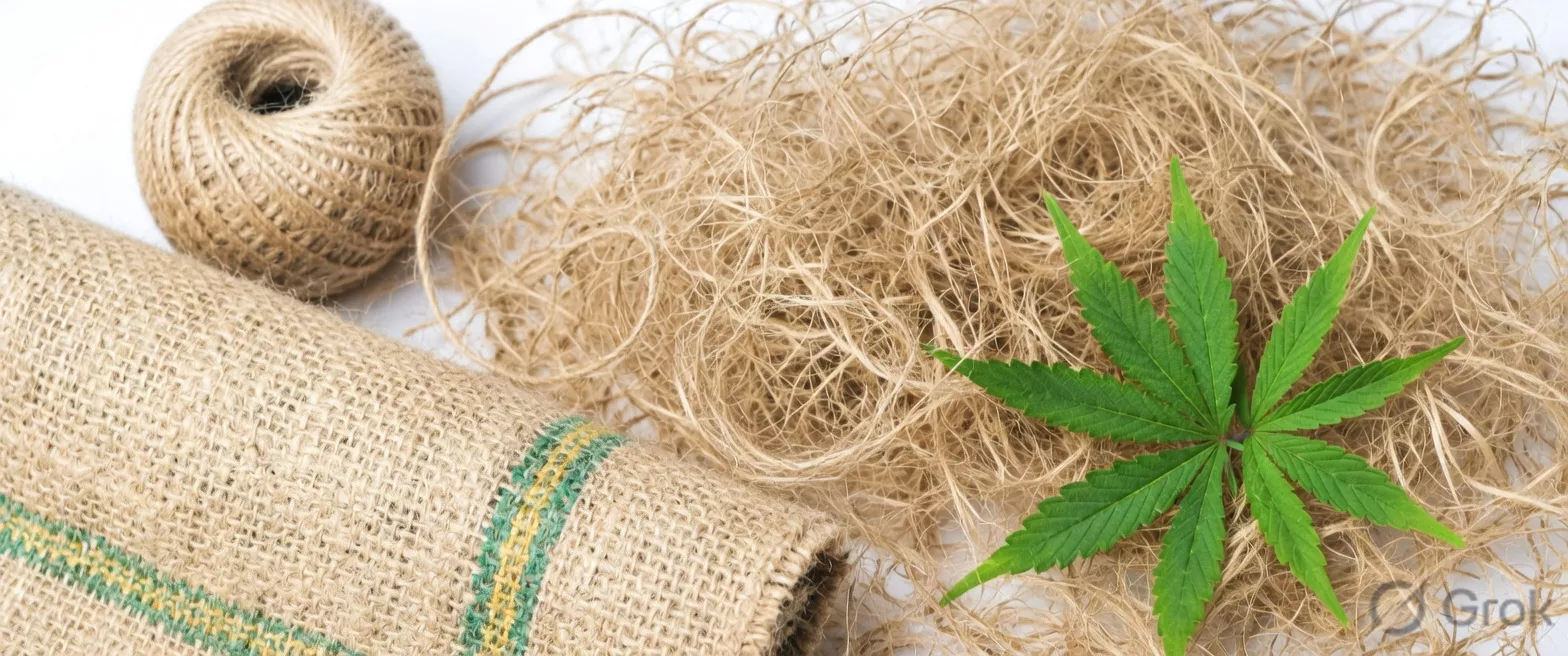
Imagine that you are a clever and dexterous Neanderthal living in the Late Paleolithic. You need thread and rope. You need thread to join animal skins together into clothing to keep out the cold; you need thin cord to lash a stone spearhead to a wooden shaft; you need thick rope to make traps; you need stout twine to weave fishing nets. There are just too many things that require thread and rope. Your parents and elders have taught you how to make cord from animal sinew, and how to cut hides into narrow strips to make thongs. They have also taught you to look for tough vines and grass stems to use as rope. But none of these works very well. Sinew and hide are too soft and too elastic; they do not bind things tightly, and they break easily. Given enough time, they also grow moldy and rot. Vines are strong, but too thick and too stiff. Grass stems are fine enough, but they snap too easily.
The last time the berries ripened, one of your cousins learned a marvelous technique somewhere else: by twisting grass stems together, one could make very strong rope. But with this method it was not easy to make finer thread. Grass stems were too coarse; they simply could not be made into anything more delicate. Yet, being clever, you found a way. One day your older brother snatched away your wolf-tooth necklace. You could not get it back, because you were not strong enough to beat him. Furious but helpless, you hid in a corner in misery. You grabbed a handful of grass stems, tore at them violently, and flung them into the air to vent your anger. A fine filament landed on your head. You pulled it out of your hair: it was a split grass fiber. Suddenly, an idea flashed into your mind. The thought seized your whole consciousness, and you stared blankly at the grass fiber in your hand. Soon you came to your senses, picked up a grass stem, and tried splitting it from the tip. You moistened one end with saliva, rubbed it, and loosened the tip. Then you began pulling off the fibers one by one. No longer angry, you excitedly rubbed and tore at the grass stem. At last, you gathered a small bundle of grass fibers together and twisted them continuously using the method your cousin had learned, producing a short length of fine cord. You added more fibers and kept twisting; the cord slowly grew longer. Once you had made a length as long as a cubit, you were convinced that you had discovered a new way to make fine cord from grass fibers.
Yet next, your intelligence gave you an even greater push forward. You quickly realized that as long as the grass fibers could be split finely enough, they could produce thread that was extremely fine and yet very strong. So you began searching for ways to split grass stems into still finer fibers. You discovered that water could soften the stems, and that beating them with a stick could break apart the bonds holding the fiber bundles together. But the fibers obtained from the reeds, cattails, and rushes once used for cord-making were not very long, and they broke easily. You decided that you needed to find a plant that could yield long, tough fibers.
You tried every kind of grass you could find, but none gave satisfactory results. Then one day you saw your mother snap a branch, and a bundle of fibers was exposed at the broken end. By now you had become hypersensitive to fibers, and that bundle excited you beyond measure. You snatched the branch away at once and, under your mother’s astonished gaze, ran wildly back to your “workbench,” clutching it in your hands. You began trying every method you could think of to separate the fibers from the branch: soaking it in water, roasting it over fire, drying it in the sun, smashing it with stones, even biting it with your teeth. At last you discovered that those fibers were located just inside the bark. Bark, too, was a material your people commonly used for binding things together; it was very tough and readily available. You understood that you had finally found the very thing you had been searching for. And so began your long journey of learning how to break down bark fibers...
This little fictional story gives a simple account of how our ancestors—or those of our cousin species—may have struggled to find ways of making thread and cord. The reality was perhaps not like this, and certainly not so dramatic. Our remote ancestors of that age had no writing, nor did they leave behind drawings on this subject. Still less do we possess archaeological evidence showing how they gradually discovered suitable materials and developed the techniques for separating fibers. But I believe the process must have been full of inspiration and creativity.
The earliest material used by ancient humans was probably bark. More precisely, it was bast fiber. What is bast fiber? In the cross-section of a plant stem, the layers from outside to inside are: the epidermis; the cortex; the phloem; the cambium; the xylem; and the pith.
The phloem is where bast fibers are found. The phloem is a transport tissue, and within it the bast fibers occur in bundle-like structures. These fiber bundles are composed of long, thick-walled dead cells rich in cellulose. The bundles are bound together by pectin and calcium ions. These bundles are extremely tough, and they are exactly what textile production requires. But in order to use these fibers for textiles, the pectin binding the bundles together must first be removed.
Ancient humans possessed none of the theories of physics and chemistry, nor did they have systematic experimental equipment or methods. All they could do was proceed by trial and error. After long periods of experimentation, they gradually developed a series of standard processing techniques for bast fibers. The most common was retting. The stripped plant bast tissue was soaked in water, allowing microorganisms to decompose the pectin and thus release the fibers trapped in the bast. This process is called degumming. Usually, one would choose a slow-moving stream, a small river, or a pond. If the scale was small, a large pit dug on the spot and filled with water could also serve. The bast tissue would be soaked in the water for one to two weeks. In summer, when temperatures were high, the process took less time; when temperatures were lower, it took longer. If warm water was available, the time could be shortened still further.
Most people probably do not react strongly to the phrase “microbial decomposition.” But if we use a more familiar word—fermentation—many would become wary. Yes, much like everyone’s beloved stinky tofu, bast tissue undergoing fermentation smells roughly like “a burst sewer,” or “the stench of excrement,” or even, “if you want to hide something, bury it there, because no one will dare come near.” For this reason, ancient flax workshops were often set up far from residential areas and close to rivers or water sources, so as to avoid subjecting people to a kind of “chemical attack.”
Another, somewhat more “civilized” treatment method was dew retting or field retting. In fact, this method was even simpler. The bast tissue—or even the whole plant—was spread out across the field and left to decompose naturally through the action of dew, sunlight, and microorganisms. This method produced almost no foul smell. But it also had obvious drawbacks. It required a longer time—several weeks—to complete the process. Moreover, the resulting fibers were generally inferior in quality and color to those produced by water retting.
After nearly ten thousand years of experimentation, our ancestors selected from among many plants and eventually discovered that certain dicotyledonous herbaceous plants possessed especially rich and excellent bast tissue. These are the various “hemp” or fiber plants familiar to us today:
- Flax (Linum usitatissimum)
- Hemp (Cannabis sativa)
- Jute (Corchorus spp.)
- Ramie (Boehmeria nivea)
- Kenaf (Hibiscus cannabinus)
- Nettle (Urtica dioica)
These herbaceous plants are small in stature, with well-developed bast tissue, and are easy to harvest and process. Of course, these characteristics are the result of domestication. Ancient humans discovered the textile potential of their wild ancestors and began domesticating them. After tens of thousands of generations of improvement, the practical cultivated varieties we know today finally emerged. Once these plants, seemingly born for textiles, became available, there was little reason left for people to keep turning to the bast of trees.
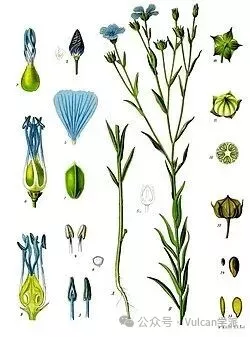
Flax
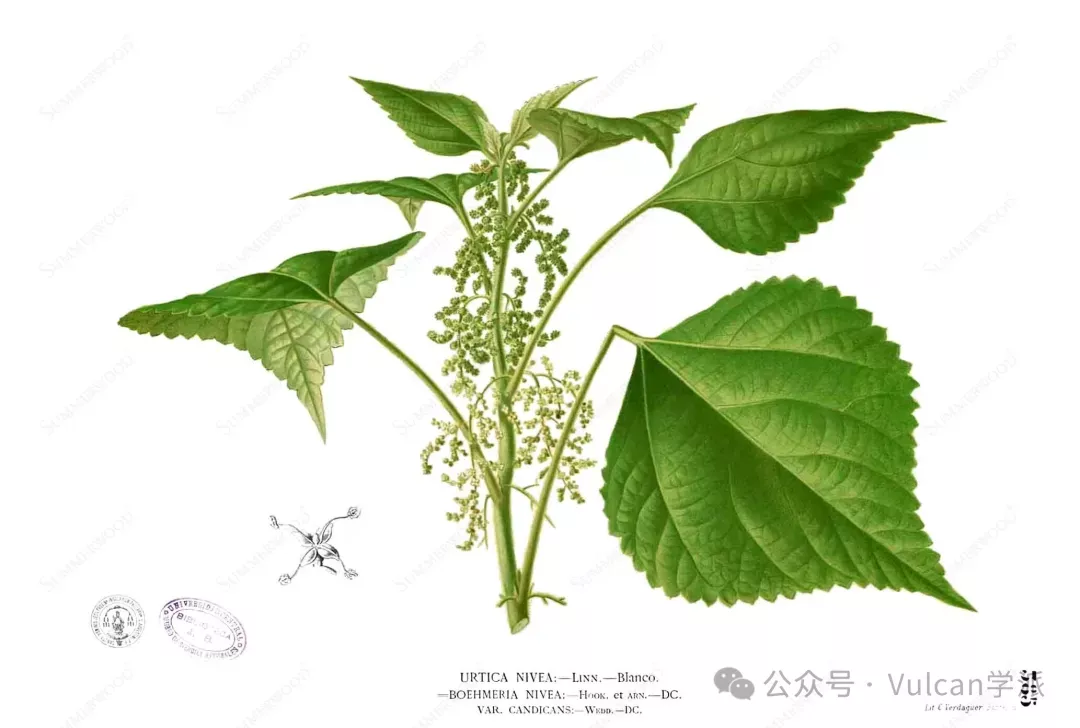
ramie
These various kinds of “hemp” each have their own distinctive characteristics. Flax fiber is fine and long, with a smooth surface and a cool hand; it is strong and tough, though prone to wrinkling, and has been the principal textile bast fiber. Hemp fiber is coarse and long, with high strength, but its surface is rough; it absorbs moisture well and is mostly used for rope and coarse cloth. Ramie fiber is the finest and longest of them all; its strength is second only to hemp, it has a silky luster, and its hand is crisp, smooth, and firm, making it an excellent fiber for summer fabrics. Jute fiber is short and coarse, with a rough, stiff feel; it is basically used only for sacks, packing materials, rope, and the like, and is generally not used for ordinary textiles. Nettle fiber is long, of medium fineness, with a good luster and a silky hand, and has earned the nickname “the silk of the North.” Kenaf fiber is medium in length, thickness, and strength, and feels somewhat like jute; these mediocre qualities mean that it can only be used for rough goods, or else made into paper pulp.
The kinds of “hemp” used by the ancestors of different parts of the world also varied. In the Middle East and the Mediterranean, flax was dominant, with hemp and jute secondary. In Europe, flax was the absolute mainstay, followed by nettle. In East Asia, especially China, the most widely used bast fiber was hemp, with ramie coming second. Over time, the amounts of the two gradually became comparable, and before the large-scale rise of cotton there was basically no clear hierarchy between them. In South Asia, jute was primary, with hemp secondary. Once cotton developed rapidly, however, these “hemp” fibers quickly lost their former status and were used less and less. Africa did not make much use of “hemp”; instead, people there used palm fiber and a small amount of nettle. Oceania, the Pacific islands, and some parts of Southeast Asia were rather distinctive, using bark and banana plants to make cloth.
Generally speaking, in antiquity—that is, before the Industrial Revolution—flax was used the most, followed by hemp and ramie, then nettle. The other kinds of “hemp” were only used sporadically, or were employed mainly for non-textile purposes such as rope.
Among all these fibers, flax occupied the most dominant position. Flax has excellent fiber properties; only in fiber length and strength is it slightly inferior to ramie. But its pectin is not so stubborn, and it can be processed by simple retting, which is why it was domesticated and used for textiles at a very early date. At the Dzudzuana Cave site in Georgia, the earliest evidence of spinning by Homo sapiens was discovered: some dyed flax fibers. They date to 34,000 years ago. What was used then was wild flax. About 10,000 years ago, the ancient peoples of the Fertile Crescent began to domesticate flax. They cultivated wild flax (Linum bienne, pale flax) in order to obtain flaxseed for oil extraction. Yet flax is flax: even oil flax is rich in bast fiber. The stems left over from oil production were also used for textiles. By around 3800 BCE, a more textile-oriented fiber flax had appeared in the wetland areas around the Alps. Small flax seeds—large seeds would certainly have been better for oil pressing—began to appear together with textile tools. By about 3500 BCE, this fiber flax had already spread widely across the Alpine region and had become dominant.
Somewhat later, flax varieties specially domesticated for textile use also appeared in Egypt. After continued development, ancient Egypt formed an extraordinarily advanced flax textile industry. In the Pharaonic and Ptolemaic periods, linen was used for clothing, everyday household textiles, ritual and sacrificial purposes, religious uses, and even mummy wrappings. Apart from flax, there was only a very small amount of wool. Cotton was basically nowhere to be seen. Beginning in the Roman period, the use of wool increased, and in some regions cotton began to appear. By late antiquity, flax and wool had reached a kind of balance. From the early Islamic period into the Middle Ages, flax began to decline, textile materials became more diversified, and wool, cotton, and silk all increased their respective shares. Flax, wool, and cotton together came to dominate Egyptian textiles.
In Europe, for its part, once domesticated fiber flax appeared in Alpine settlements from about 3900 BCE onward, stable flax textile production gradually emerged. By the 3700s BCE, this kind of flax had appeared in Ireland, though only in small quantities. Northern Europe also saw flax appear in the Late Bronze Age and the Iron Age, along with a number of retting pits, indicating the existence of a flax textile industry of considerable scale.
In the Roman period and the Middle Ages, flax was widely cultivated in Europe, and there were mature networks of production and circulation. Flax and wool were the principal textile materials. Their usage was roughly comparable, though wool was somewhat more common. Flax was mainly used for underwear, while wool and silk served as outer garments. From the later Middle Ages to the eve of the Industrial Revolution, cotton gradually increased, and cotton-linen blended fabrics began to appear. Fine, strong linen yarn was used for the warp, while thick, fluffy cotton yarn was used for the weft, producing a fabric whose wearing qualities were very close to cotton, yet which was durable and crisp. This fabric later occupied a very important position in the British textile industry and became the cradle of spinning machinery.
Ramie, moreover, deserves a few extra words. Ramie was another textile fiber distinctive to China—though later, like silk, it spread to other regions, it never became nearly as widespread as silk. One of ramie’s special features is that its fibers are both fine and long, while also smooth, crisp, and firm. It developed in southern China and was used to make a very famous fabric: xiabu, or summer cloth. Xiabu has become a distinctly Chinese textile craft. Even now, we can still see many videos online showing how summer cloth is made. In those videos, the maker strips off the ramie bast, moistens it and leaves it out for two or three days, then tears it by hand into fine filaments and twists and joins the “hemp fibers” together (jisha) to make yarn. But that is only an “extremely simplified version” of the summer-cloth process; the real production technique is highly complex. The drying step shown in the videos is called lupiao, “dew bleaching,” and is only one of many steps; its true function is to use sunlight for bleaching. Usually, before dew bleaching there is another crucial step called zhulian, “boiling and scouring.” The name itself already makes the method fairly obvious: the ramie bast is boiled in a pot. Of course, it is not merely boiled in plain water. Plant ash or lime must be added to make the solution alkaline. Ramie bast contains little lignin, but much pectin, and this gummy matter is stubborn. Therefore, simple retting and dew retting cannot easily separate the fibers. The boiling-and-scouring process rapidly breaks down the pectin, allowing the fibers to disperse quickly. In the production of high-grade summer cloth, artisans repeatedly carried out cycles of boiling-and-scouring followed by dew bleaching, thoroughly removing the pectin and obtaining extremely fine fibers. Summer cloth woven from such superior fibers could become “as fine as gauze and silk” and ranked among tribute goods.
Boiling and scouring appeared in the Warring States period and may be counted as one of the early attempts to apply chemical methods to textiles. The earliest use of chemistry in textiles was dyeing and bleaching; next came the use of alkaline wastewater by the ancient Egyptians between 5000 and 3000 BCE to wash flax; boiling and scouring came third. This technique was peculiar to ramie, and its effects on other bast fibers were not especially remarkable.
The long and fine qualities of ramie fiber gave it some astonishing possibilities. With the aid of boiling and scouring, dew bleaching, and the superb skill of artisans, ramie yarn could at its finest reach 2500–4500 metric count (Nm, a measure of yarn fineness in which the higher the number, the finer the yarn). That is nearly an order of magnitude finer than the finest modern cotton yarn—about 300 English count (Ne, another system for measuring yarn fineness), equivalent to roughly 500 metric count. Combined with ramie’s smooth, crisp, and firm hand, the summer cloth made from it was breathable, cool, and comfortable to wear in hot weather, and belonged to the exclusive wardrobe of princes and aristocrats. Naturally, such luxury fabrics consumed an enormous amount of labor and were produced only in tiny quantities: even a skilled ramie artisan could make only a few grams to a few dozen grams of ramie yarn in a day. Such high-end goods were far beyond the reach of ordinary people.
Plants contributed their bast fibers to humanity’s great textile enterprise. But what about animals? In the next installment, we shall turn to them.
COMMENTS (0)
Please Login to join the discussion.