 MECHANICA PLANET
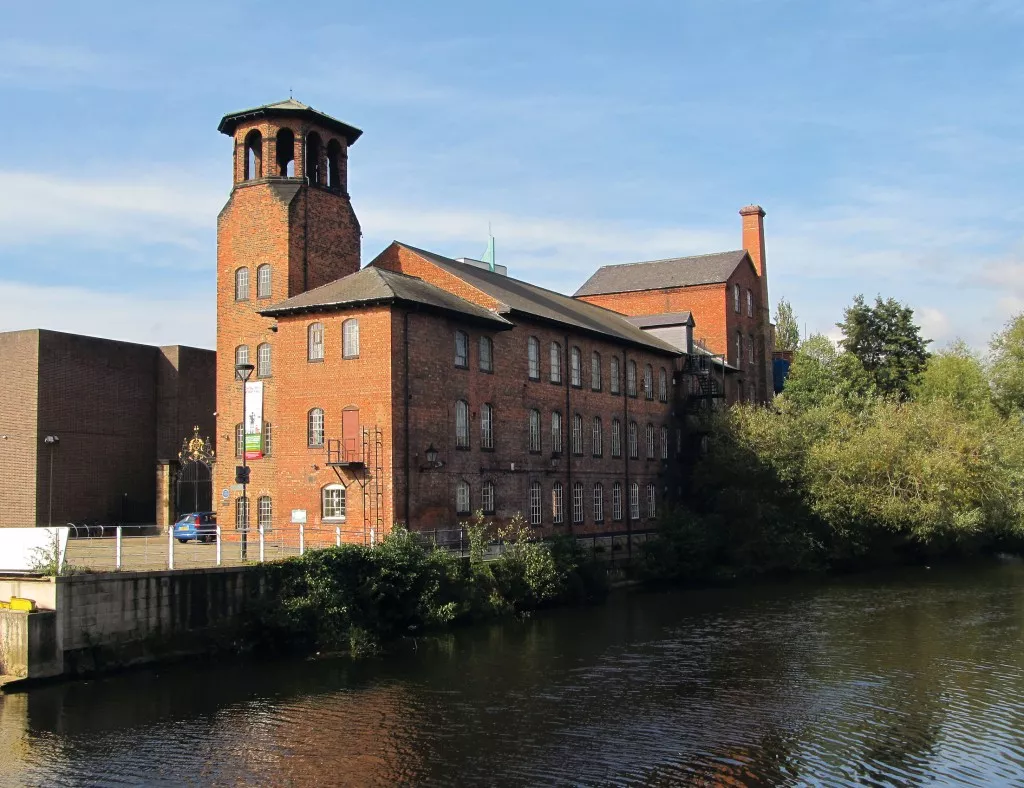
The rise of the Industrial Revolution can, more or less, be traced back to a breathtaking episode of industrial espionage…
In reality, things were not quite as dramatic as the legends suggest—but they were still fascinating. In 1715, a young Englishman named John Lombe, financed by his half-brother Thomas Lombe, travelled thousands of miles to northern Italy with the intention of stealing the technology of water-powered silk-spinning mills. For Britain, a long-established textile power, having to send someone to Italy to steal technology was indeed somewhat embarrassing. However, the circumstances made it understandable: the material in question was silk. The British had traditionally spun wool and flax, and were complete outsiders when it came to silk spinning.
The domesticated silkworm originated in China—this is well known. The use of silk can be traced back to the late Neolithic period, when the domestication of wild silkworms had already begun. There is a widely circulated folk legend about silkworm cocoons falling into the teacup of Leizu. For a long time, China supplied silk products to the West via the Silk Road. Limited output meant that silk was an expensive luxury commodity. As a result, acquiring the productive capacity to manufacture silk became an urgent ambition for many states across the Eurasian continent.
Not long after the opening of the Silk Road, sericulture spread to the Western Regions, and from there to India. Persia, during the Sasanian period, also developed the ability to raise mulberry silkworms. By around the mid-6th century CE, sericulture had finally reached Europe.
According to historical records, Emperor Justinian I dispatched two monks to China, who smuggled back silkworm eggs and mulberry seeds—an even earlier case of industrial espionage. Consequently, the earliest centre of European silk production developed in Byzantium. During the Second Crusade, the Norman king Roger II captured the Byzantine cities of Corinth and Thebes, taking large numbers of skilled silk workers captive and transporting them back to Italy. As a result, the centre of silk production in Europe shifted to southern Italy and Sicily. Beginning in the 13th century, driven by economic and commercial factors, the centre moved again, this time to northern Italy.
Later, in order to reduce costs and improve competitiveness against Chinese silk, a number of simple water-powered spinning machines appeared in northern Italy. In the 14th and 15th centuries, large-scale water-powered silk-spinning factories (the Bolognese silk mills) began to emerge. These workshops employed multi-storey circular frames, in which waterwheels drove a central shaft that rotated the spindles, allowing hundreds of silk threads to be processed simultaneously. Northern Italy possessed abundant water resources, and by the 16th century water-powered spinning workshops had expanded on a large scale, reaching a peak of more than one hundred mills.

Britain’s fascination with silk emerged relatively late. During the Roman period, silk did appear in Britain, but only in extremely small quantities. After the Romans withdrew, it disappeared altogether. From the 6th to the 8th centuries, small amounts of silk were obtained through trade across the North Sea and via the Frankish kingdoms. As an exceptionally precious textile, it was used almost exclusively by the Church and the royal court. From the 13th century onward, after the Italian silk industry had developed, England began importing finished silk goods from Italy. Domestic attempts at silk processing also began in England, but on a very small scale. The English government sought to promote a native silk industry through protective legislation. During the reign of Henry VIII (1491–1547), silk workers were brought in from Lyon in France, and small silk-processing communities were established. Under James I (1603–1625), attempts were made to grow mulberry trees and raise silkworms. Britain’s cold, damp climate proved intolerable for both mulberry trees and silkworms. As a result, Britain could only import raw silk from overseas and process it domestically.
At this point, under the leadership of the crown, British society as a whole began to develop a deep fascination with silk. The appearance of knitting machines greatly increased the output of silk stockings, making silk accessible to the upper classes and turning it into an object of fashion and aspiration. Demand for silk expanded rapidly.
In 1685, Louis XIV revoked the Edict of Nantes, forcing hundreds of thousands of French Protestants to flee France to escape persecution. Among them were large numbers of silk weavers who came to Britain, effectively solving the problem of silk weaving at a stroke. However, the raw material for weaving—silk yarn—immediately became the central bottleneck. Whether raw silk or thrown silk, it all had to be imported.
By the late 17th century, Britain began importing raw silk from India—that is, silk reeled from cocoons and simply wound, which could not be used directly for weaving—and carrying out silk throwing domestically (throwing: washing the raw silk, twisting it, and combining multiple filaments to produce thrown silk suitable for weaving).
Around 1702, Thomas Cotchett, a lawyer in Derby, developed an interest in the silk industry. After familiarising himself with its conditions, he decided to solve Britain’s need for silk yarn by mechanical means and water power, following the Italian example. He introduced designs for spinning machinery from the Netherlands, leased an island on the River Derwent, and hired the engineer George Sorocold to design a factory powered by the river, thus initiating Britain’s first attempt at mechanised silk spinning.
The factory was completed in 1704. It was at this point that John Lombe entered the mill as a mechanic. John was only eleven years old at the time, essentially serving as an apprentice and assistant. He showed considerable mechanical talent, taking responsibility for machine maintenance and operation, and assisting with the adjustment and tuning of the spinning machinery.
In the end, Britain’s first spinning mill proved technically inferior: its productivity was low, and the quality of its output was far below that of Italian silk. Around 1712, the factory went bankrupt. Cotchett withdrew from the project, and John left the mill as well. Nevertheless, the Lombes were not ready to give up on mechanical spinning. In 1715, the Lombe brothers purchased Cotchett’s abandoned factory for £200, preparing to make another attempt.
John realised that their technology was far too backward, and that repeating the effort would inevitably fail again. Italian water-powered silk-spinning technology had to be introduced. John made extensive preparations, but funding remained unresolved. At this point, Thomas Lombe decided to finance his brother’s bold plan. Thus began the infamous episode of technological theft that would later enter history.
Silk was a high-end textile, expensive and highly profitable. Faced with such enormous potential gains, silk merchants across Europe were naturally eager to act. Many attempted to build machines and establish silk mills. As early as 1607, a book had been published describing certain aspects of water-powered silk-spinning technology. Yet the British were never able to reproduce such machinery, and other countries faced much the same difficulty. Under these circumstances, stealing the technology became a more practical option.
To protect their industry, the Italian states adopted extreme measures to safeguard the commercial secrets of silk spinning. Water-powered silk spinning was treated as a state secret, and those caught attempting to steal it could face execution.
It was a dangerous undertaking. Nevertheless, John proved remarkably capable. Disguised as a migrant labourer, and by bribing various intermediaries, he successfully gained employment as an operator in a water-powered silk mill. Over the following months, John gradually mastered the operation of the machinery, secretly took notes, and drew detailed diagrams. To maintain secrecy, he wrapped his drawings and notes in silk and sent them back to Britain. His espionage activities were eventually discovered, and he immediately fled. He boarded a merchant ship bound for England. Legend has it that Italian authorities even dispatched a warship to pursue him, but failed to catch up due to inferior speed. In the end, he returned safely to Britain—accompanied by two Italian silk-spinning workers. The entire episode reads like a cinematic thriller.
Upon his return, John and Thomas immediately set about building a water-powered silk-spinning mill. In 1718, Thomas obtained a patent for water-powered silk spinning in order to protect their “new invention.” In 1719, the brothers’ mill began production, equipped with tens of thousands of spindles and capable of employing several hundred workers. This was the famous Lombe’s Mill (now converted into a museum known as the Museum of Making).

Unfortunately, John died in 1722 at the age of just twenty-nine. The cause of death is suspected to have been poisoning. According to legend, Italy dispatched a female assassin who killed him with a slow-acting poison.
The story of Lombe’s Mill is far more than that of “a spinning mill” or “an espionage tale.” It represents the first successful case in British history of large-scale, systematic, machine-based continuous production. Its success can be regarded as the “Big Bang” moment of the Industrial Revolution. What John stole was not merely machinery and techniques; he also brought back a core model of production organization. More importantly, the brothers localized and improved upon Italian technology:
- expanding the scale from three storeys to five, with the number of spindles reaching tens of thousands;
- employing large waterwheels to provide unified power to the throwing machines;
- abandoning high-cost skilled artisans in favor of cheaper labor (the poor and child workers);
- adopting a more modern, capital-intensive form of enterprise organization.
These improvements elevated the Italian-style “workshop” into a true “factory” in the modern sense.
The success of Lombe’s Mill gave British inventors and entrepreneurs enormous confidence and a powerful demonstration effect. Arkwright (inventor of the water frame, entrepreneur, and founding figure of the modern factory system, whom we will discuss in detail later) is known to have visited Lombe’s Mill and adopted many of its organizational and managerial practices in his own factories. Lombe’s Mill showed them that “large-scale mechanization combined with centralized factory production” was not only feasible, but also far more profitable. This strongly stimulated subsequent investment in innovation, especially in the textile sector, and drove the rapid advance of industrialization.
But wait—there is a hidden question here: the technology of Lombe’s Mill was stolen from Italy, where silk-throwing mills were numerous and long-established. Why, then, did Italy not experience an industrialization process as a result? The reasons are complex.
Italy did indeed construct large numbers of water-powered silk-throwing mills and achieved a significant degree of mechanization. It even experimented with fairly advanced industrial practices such as standardized components. However, these advances never coalesced into a coherent system; they appeared sporadically, like occasional bubbles rising in lukewarm water.
In the 17th and 18th centuries, Italy was not a unified nation-state as it is today. It was highly fragmented into city-states—Venice, Milan, Naples, and others—each governing itself, making the formation of a unified market impossible. Britain, by contrast, was rich in coal and iron, which provided a powerful boost to the Industrial Revolution. Italy was far less fortunate, lacking both iron and coal. In Roman times, Mediterranean trade had placed Italy at the center of commerce. With the onset of the Age of Discovery, trade routes shifted toward the Atlantic, and Italy’s commercial position declined sharply. The continuously shrinking scale of trade made it impossible to sustain large-scale industrial investment. The guiding role of the consumer market was also far weaker than in Britain. Italian society retained more characteristics of a smallholder agrarian economy; labor was cheap, while the financial system and educational penetration lagged behind. The overall social foundation was far less dynamic than that of Britain.
Italy’s failure to ignite an Industrial Revolution vividly illustrates why it is called an “industrial” revolution rather than a “machine” revolution. Machines alone do not produce a revolution; even many machines do not suffice. Britain possessed things that Italy lacked. By comparison: Britain had a unified national market; Italy did not. Britain was rich in coal and iron; Italy was not. Britain faced the Atlantic and enjoyed massive colonial trade; Italy did not. Britain’s capitalist commerce and industry were developing rapidly, generating a strong expansion of commodity demand, which in turn drove up labor costs. This persistent pressure propelled industrialization and technological innovation—and continues to do so to this day. In Italy, labor was cheap while energy was expensive, creating a situation in which “labor was cheap and coal was dear.” Under such conditions, it was natural to rely more on human labor and less on machinery.
Britain also possessed another crucial condition: the patent system. In 1624, Britain passed the Statute of Monopolies, formalizing patent law. Patents made innovation profitable and protected inventors’ interests for a limited period, unleashing a surge of inventive activity. At the same time, while protecting economic interests, the patent system required inventors to disclose technical details. This, in turn, accelerated the diffusion of new technologies and further stimulated innovation.
This series of structural shortcomings meant that Italy—despite being an ancient center of civilization—remained a regional power confined to one corner of Europe, fundamentally lacking the conditions necessary to trigger an Industrial Revolution. In the end, it rose early but arrived late. Britain’s distinctive socio-economic environment, by contrast, provided fertile ground for industrial transformation. Once the seed of Lombe’s Mill fell into this soil, it immediately took root and flourished.
Thus, British inventors began a fervent effort to use power and mechanization to solve the various productivity constraints they faced. The tender sapling of the Industrial Revolution would put forth its very first leaf in the spinning industry.
COMMENTS (0)
Please Login to join the discussion.